TelePIX Builds IPO Momentum as Korea’s Space AI Sector Seeks Global Scale – KoreaTechDesk
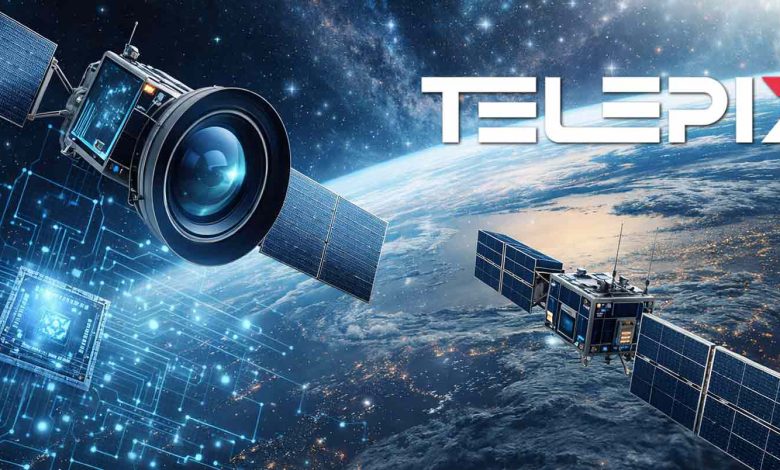
South Korea’s emerging space startup sector is beginning to move toward the capital markets. TelePIX, a satellite AI technology company developing onboard processing systems and optical payloads, is accelerating preparations for a KOSDAQ listing after hiring a veteran finance executive and securing a European satellite contract. The developments signal more than corporate expansion. They illustrate how Korean space startups are attempting to convert engineering breakthroughs into globally credible infrastructure businesses.
TelePIX Strengthens IPO Preparation with CFO Appointment
TelePIX recently appointed Kim Do-gyun as chief financial officer, bringing nearly two decades of experience in investment banking and corporate finance. His background includes more than fifteen years at Daewoo Securities and DB Financial Investment, where he worked on IPOs, capital raising, and deal structuring.
The company said the appointment will help restructure its financial system to meet public-company standards while preparing for a KOSDAQ listing targeted in the second half of the year.
Executives with deep capital market experience often join Korean technology firms during the late stages of IPO preparation. Their role extends beyond accounting. They translate complex engineering narratives into investor-ready financial strategies while building governance structures expected from listed companies.
TelePIX said Kim will oversee financial strategy, capital management, and investor communication as the company scales its operations.
Passing Korea’s Technology Evaluation Clears a Key IPO Barrier
TelePIX already crossed an important regulatory milestone earlier this year. The company passed the technical evaluation required for a technology-special listing on KOSDAQ.
Under Korea Exchange rules, the process evaluates a company’s technology in terms of innovation, commercial viability, and growth potential. Companies must receive A and BBB or higher grades from two designated evaluation institutions.
TelePIX emphasized that it became the first Korean space company assessed under the “AI and Big Data” category of the evaluation framework.
The technology-special listing track has become a common pathway for deep-technology startups in Korea that possess strong intellectual property but limited commercial revenue. Passing the evaluation signals that regulators consider the company’s technology credible enough to support public market access.
For international readers unfamiliar with Korea’s startup financing structure, this mechanism plays a similar role to specialized listing tracks used in other innovation markets to allow research-heavy companies to reach public investors earlier.
A European Satellite Contract Provides International Validation
Alongside its IPO preparations, TelePIX secured a major export deal that strengthens its commercial profile.
The company signed a contract to supply high-resolution electro-optical camera systems for Hungary’s national Earth observation satellite program HULEO. The agreement is valued in the tens of millions of dollars, according to company disclosures.
The HULEO program aims to establish Hungary’s independent low Earth orbit satellite capability. The project is overseen by REMRED, a space systems company under Hungarian ICT and defense group 4iG.

TelePIX won the contract through an international competitive tender involving multiple global suppliers. The company also stated that the technology passed European space industry certification and verification procedures.
The camera technology traces its origins to Korea’s public satellite research programs. TelePIX commercialized parts of the system after receiving technology transfers related to Korea’s Next-Generation Medium Satellite initiative.
For Korean space startups, such export contracts carry strategic weight. Many companies in the sector remain closely tied to domestic government programs. Securing overseas customers signals engineering reliability and commercial readiness in international markets.
Processing Satellite Data in Orbit
TelePIX positions itself around a technological shift within the satellite industry. Traditional satellites typically transmit raw observation data to ground stations, where processing occurs.
TelePIX is developing systems that allow AI processing directly in orbit.
One key component is the GPU-based onboard AI processor called TetraPLEX, which launched in 2024 and has been operating in space for more than a year. The company also operates BlueBON, an AI CubeSat that has remained in orbit for over a year.
Beyond hardware, TelePIX developed SatCHAT, an AI platform designed to automate satellite operations. The system integrates functions such as satellite assembly and testing, mission planning, mission control, and satellite data analysis.
Processing data in orbit can improve efficiency by reducing the volume of information transmitted to Earth while enabling faster decision-making in satellite missions.
The company therefore increasingly describes itself as a space AI infrastructure company, reflecting a strategy that blends aerospace engineering with data processing capabilities.
Vertical Integration at the Center of TelePIX’s Strategy
TelePIX highlights its vertically integrated architecture as a central advantage.
The company develops several layers of the satellite technology stack, including optical payloads, onboard AI processors, mission software, and satellite data analysis tools.
Such integration allows a single company to operate across multiple stages of the satellite data pipeline. In practice this means building the sensors that collect space imagery while also controlling the AI systems that process the information.
Industry observers note that value in the satellite sector is increasingly shifting toward data processing and analytics, rather than satellite hardware alone. TelePIX’s structure positions the company to participate in that transition.
Investor Attention Grows Around Korea’s Space Sector
TelePIX’s progress comes as investor interest in the broader aerospace sector grows.
According to investment banking sources cited in Korean media, TelePIX’s valuation in investment discussions rose from around 160 billion KRW to roughly 250 billion KRW, reflecting stronger market interest ahead of its IPO plans.
Several Korean space-related companies have also attracted attention in public markets. Firms such as Nara Space Technology, which develops small satellites, and Intellian Technologies, a satellite communications equipment supplier, have seen strong stock performance.
Rising valuations in listed companies can improve financing conditions for startups by increasing the likelihood of successful IPOs and investor exits.
Global industry forecasts reinforce the momentum. A report cited by Korean coverage, referencing research by the World Economic Forum and McKinsey, estimates the global space economy could reach USD 1.8 trillion by 2035, nearly three times its 2023 size.

Why Korean Space Startups Are Turning Toward AI
Artificial intelligence appears repeatedly in TelePIX’s technology narrative.
The company integrates AI across satellite operations, onboard computing, and satellite image analysis. This approach reflects a broader trend among emerging space companies that combine aerospace hardware with data infrastructure capabilities.
Such hybrid models attract attention from both aerospace investors and AI-focused venture capital funds. They also align with global demand for satellite-based insights in areas such as climate monitoring, infrastructure observation, and security.
In Korea, where many space technologies historically developed within government research institutes, startups are increasingly responsible for translating those technologies into commercial platforms.
The shift also reflects broader changes inside Korea’s space ecosystem. Earlier this year, industry leaders, government agencies, venture investors, and startups launched the K-Space Forum, a cross-sector initiative designed to support a private-led space industry.
Participants include TelePIX alongside organizations such as the Korea Aerospace Administration, Korea Aerospace Research Institute, and venture investors including IMM Investment and Bluepoint Partners.
The forum aims to expand Korea’s space sector beyond state-driven programs toward venture-backed commercialization and global partnerships.
What TelePIX’s IPO Attempt Signals for Korea’s Startup Ecosystem
TelePIX’s IPO preparation illustrates several changes taking place inside Korea’s emerging space startup sector.
First, the sector is gradually entering public capital markets, a stage that requires companies to convert technical achievements into sustainable business narratives.
Second, commercialization pathways are expanding beyond domestic government programs through international satellite contracts.
Third, startups are increasingly positioning themselves around AI-enabled infrastructure models, reflecting a shift toward data services within the global satellite economy.
For Korea’s startup ecosystem, these developments suggest the country’s space technology sector is beginning to transition from research-driven projects to companies seeking scalable global business models.
Defining The Next Decade of Korea’s Space Ecosystem
TelePIX’s progress toward a KOSDAQ listing does not yet guarantee a lasting presence in global space markets. Scaling hardware-intensive industries requires sustained capital and reliable commercial demand.
Still, the company’s trajectory highlights a broader transition within Korea’s technology landscape. Space startups are moving beyond experimental missions and early engineering milestones toward export markets, vertically integrated platforms, and investor scrutiny.
That transition may define how Korea’s space ecosystem evolves in the next decade.
Key Takeaways on TelePIX KOSDAQ IPO Preparation
- TelePIX is preparing for a KOSDAQ IPO, targeting the second half of the year after hiring veteran finance executive Kim Do-gyun as CFO.
- The company passed Korea’s technology-special listing evaluation, becoming the first domestic space company assessed under AI and Big Data criteria.
- TelePIX signed a multi-million-dollar contract to supply electro-optical satellite camera systems for Hungary’s HULEO Earth observation satellite program.
- Core technologies include TetraPLEX onboard AI processing and the SatCHAT satellite operations platform, enabling data processing directly in orbit.
- TelePIX’s vertically integrated approach combines satellite hardware, AI processors, and data analysis systems into a single platform.
- Investor interest in the sector is rising, with TelePIX’s valuation reportedly increasing to around 250 billion won during investment discussions.
- The company’s growth reflects a broader shift in Korea’s space startup ecosystem toward AI-driven satellite infrastructure and global commercialization opportunities.
🤝 Looking to connect with verified Korean companies building globally?
Explore curated company profiles and request direct introductions through beSUCCESS Connect.
– Stay Ahead in Korea’s Startup Scene –
Get real-time insights, funding updates, and policy shifts shaping Korea’s innovation ecosystem.
➡️ Follow KoreaTechDesk on LinkedIn, X (Twitter), Threads, Bluesky, Telegram, Facebook, and WhatsApp Channel.