Dow Jones, S&P 500, Nasdaq Mixed as Oil Prices Pull Back From $101 Amid Middle East Tensions; Gold, Bitcoin Steady at $73K
93
US Stock Market Today Updates: Friday was a day of mixed trading on Wall Street as an early relief rally faded. The Dow Jones Industrial Average fluctuated near the flatline, while the S&P 500 and Nasdaq Composite slid into negative territory. A dramatically revised GDP estimate that revealed the U.S. economy grew at a pitiful 0.7% annualized rate in the fourth quarter dampened the initial excitement, which was fueled by a modest decline in oil prices from the $101 level. Investor concerns about stagflation were rekindled by the combination of slowed growth and persistently high oil prices brought on by the protracted confrontation with Iran.
U.S. Market Snapshot
| Index | Last Price | Change | Change % |
|---|---|---|---|
| Dow Jones | 46,683.55 | +5.70 | +0.01% |
| Nasdaq | 22,159.34 | -152.64 | -0.68% |
| S&P 500 | 6,651.32 | -21.30 | -0.32% |
Dow Jones
The Dow Jones Industrial Average struggled to maintain positivity, hovering around the breakeven point. As oil prices continued to rise, energy components like Chevron (+2.70%) offered support. But this was countered by declines in IT and industrial stocks like Salesforce and Boeing (-4.36%), which reversed some of the gains from the prior session.
Nasdaq
The tech-heavy Nasdaq Composite dropped 0.68%, pressured by a sell-off in major software names. Adobe (-5.99%) led the decline after announcing its CEO would step down. Semiconductor stocks were mixed, with Micron (+4.08%) gaining ahead of its earnings, but others failing to lift the index. Investors continued to rotate away from growth-oriented tech sectors amid uncertainty about interest rates.
S&P 500
The S&P 500 slipped 0.32%, with eight of the 11 major sectors trading lower. Consumer discretionary names like Ulta Beauty (-10.49%) and Chipotle (-4.56%) were the biggest laggards following weak outlooks. In contrast, the energy sector was the sole bright spot, with CF Industries (+13.21%) and Chevron posting strong gains as crude prices remained near $100 per barrel.
NYSE
Widespread caution was evident in NYSE trading. Selling pressure continued in retail, industrial, and financial companies, while energy and several fertilizer firms surged due to supply issues arising from the Middle East and Black Sea. Even though they were not as high as they had been recently, the volatility indicators showed that investors are still uneasy.
Why is the US Stock Market Mixed Today?
The tug-of-war between declining oil prices and worsening economic statistics is what caused the stock market’s uneven performance on Friday. The Bureau of Economic Analysis lowered Q4 GDP growth down to just 0.7%, considerably below estimates, while Brent crude fell below the $100 mark following recent increases, offering some respite. This sparked fears that the economy is slowing just as energy-driven inflation persists, creating a stagflationary backdrop that complicates the Federal Reserve’s policy path.
The key factors driving today’s market action are:
- Easing, but still high, oil prices dipping to around $99 per barrel after hitting $101.
- Sharp downward revision of U.S. GDP growth to a 0.7% annualized rate.
- Sticky inflation as reflected in the PCE price index rising 2.8% annually.
- Tech and retail earnings jitters following cautious outlooks from Adobe and Ulta Beauty.
How Oil Prices Near $100 Are Driving Volatility
Brent crude futures, after spiking above $101, were last trading near $99 per barrel, while WTI crude hovered around $94. The slight pullback followed Iran’s Supreme Leader stating the Strait of Hormuz should remain shut as a “tool to pressure the enemy,” a route critical for 20% of the world’s oil supply. Analysts think the geopolitical risk premium will keep prices unpredictable, despite the IEA’s scheduled release of 400 million barrels from strategic reserves providing some confidence. Increased energy costs pose a danger to the economy’s production costs and corporate margins, especially for industries that depend on transportation and consumers.
Why Stocks Are Struggling as GDP Growth Stalls
The Bureau of Economic Analysis released revised data showing the U.S. economy grew at an annualized rate of just 0.7% in the fourth quarter, a significant miss from the 1.4% forecast. This significant slowdown, paired with the Personal Consumption Expenditure (PCE) price index growing 2.8% annually, has resulted in a stagflation signal. Slower growth often puts pressure on corporate earnings, whereas sticky inflation prevents the Federal Reserve from decreasing interest rates to help the economy.
IEA Oil Release Fails to Calm Markets Fully
The International Energy Agency’s agreement to orchestrate the largest-ever coordinated release of 400 million barrels of oil helped trigger Friday’s modest pullback in prices. However, the market’s relief was short-lived. According to strategists, the physical disruption to supply from the closure of the Strait of Hormuz and the ongoing US-Iran conflict are fundamental issues that a reserve release cannot fully offset. The market remains in a state of high alert for any further escalation.
Why Gold & Silver Are Steady as Safe-Haven Demand Persists
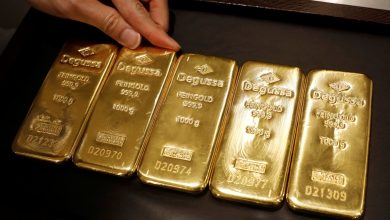
Gold and silver prices held relatively steady on Friday, with gold trading near $5,118 per ounce and silver around $84.32 per ounce. While both metals saw a slight pullback from recent peaks due to a strengthening U.S. dollar, they remain well-supported by safe-haven demand. The combination of geopolitical instability in the Middle East and the worrying economic data (stagflation) continues to drive investors toward traditional stores of value. Analysts suggest gold has support at the $5,100 level, with resistance at $5,264, while silver is trading in a range between $82.80 and $90.40.
In domestic Indian markets, silver prices remained elevated, though they saw a slight cool-down from the previous session’s surge to Rs 2.76 lakh per kg. The positive global cues and ongoing tensions in West Asia continue to underpin demand for precious metals.
Why Is Bitcoin Outperforming Today?
Bitcoin rose nearly 3% to trade around $72,735, significantly outperforming both stocks and precious metals. The leading cryptocurrency appears to be benefiting from a dual narrative. First, it is being viewed as a geopolitical hedge amid the Iran conflict, with some investors seeing it as “digital gold.” Second, it is recovering along with risk assets as oil prices briefly dipped, though it has held its gains better than tech stocks. Bitcoin is up about 11% since the recent conflict escalation, reclaiming key resistance levels near $73,000 and decoupling from the traditional risk-asset sell-off seen earlier in the week.
Bitcoin Key Stats
- Open: 71,200.00
- Day High: 73,345.59
- Day Low: 70,950.00
- Prev Close: 70,631.98
How Recent Economic Data & Fed Signals Are Shaping Market Moves
- Revised GDP came in at 0.7%, significantly below the 1.4% estimate.
- Core PCE inflation rose 0.4% monthly, remaining elevated.
- Consumer sentiment fell to 55.5 due to war concerns, per the University of Michigan survey.
- Fed policy: Markets no longer fully price in a rate cut by September, pushing expectations toward year-end.
The Latest Update on the US-Iran Conflict
- Iran’s Supreme Leader vowed to keep the Strait of Hormuz closed as a pressure tactic.
- The strait, through which about 20 million barrels of oil typically pass daily, has seen traffic virtually halted.
- Defense Secretary Pete Hegseth stated the U.S. is “managing the situation” and downplayed prolonged disruption risks.
- Tehran has previously warned oil could surge to $200 per barrel if tensions persist.
What Investors Should Watch Next in the US Stock Market
- Oil price trajectory in the Middle East, with the $100 level as a key psychological threshold.
- Federal Reserve meeting on March 17-18 for clues on interest rate policy and updated “Dot Plot” projections.
- Upcoming inflation data, including CPI and PCE reports for March.
- Tech and retail earnings for further signs of consumer and enterprise spending fatigue.
- Technical levels on the S&P 500, with support being tested around 6,650.
Today’s Biggest Stock Movers on Wall Street
- Bumble Inc. (BMBL) – Surged 34.15% to $3.81, continuing its rally on strong fourth-quarter guidance.
- Adobe Inc. (ADBE) – Dropped 5.99% to $253.63, following news that long-time CEO Shantanu Narayen will step down.
- Micron Technology (MU) – Rose 4.08% to $421.97 as analysts turned bullish ahead of its earnings report.
- Ulta Beauty (ULTA) – Tumbled 10.49% to $559.20 after issuing a disappointing 2026 revenue outlook.
- Strategy (MSTR) – Gained 4.9% as Bitcoin prices climbed toward $73,000.
- Western Digital (WDC) – Jumped 5%, benefiting from positive momentum in the memory and storage sector.
- CF Industries (CF) – Advanced 13.21% to $136.00, leading S&P 500 gainers as fertilizer stocks rose with energy prices.
- Dollar General (DG) – Slumped 6.14% after providing a weaker-than-expected annual sales forecast.
- KinderCare Learning (KLC) – Plunged over 30% following a disappointing 2026 earnings forecast.
- Boeing (BA) – Fell 4.36%, weighing on the Dow Jones index.
Top Gainers Today
Dow Jones:
Chevron (+2.70%)
Salesforce (+0.55%)
Walmart (+0.22%)
Nasdaq:
T-Mobile (+0.65%)
Costco (+0.42%)
NetEase (+0.38%)
S&P 500:
CF Industries (+13.21%)
Bumble Inc. (+34.15%)
Micron Technology (+4.08%)
Top Losers Today
Dow Jones:
Boeing (-4.36%)
Intel (-2.10%)
3M (-1.85%)
Nasdaq:
Adobe (-5.99%)
Applied Materials (-2.50%)
Micron (Gainer, no loser in top 3)
S&P 500:
Ulta Beauty (-10.49%)
KinderCare Learning (-31%)
Dollar General (-6.14%)
FAQs: Stock Market Today Updates
Q. Why is the US stock market mixed today?
A. Mixed trading is being driven by a tug-of-war between slightly easing oil prices and a sharply weaker GDP report, which has reignited stagflation fears.
Q. Which sectors were affected most?
A. Technology and consumer discretionary stocks were hit hardest, while the energy sector saw gains due to elevated oil prices.
Q. What is the impact of the weak GDP data?
A. The 0.7% growth rate signals a slowing economy, which pressures corporate earnings and complicates the Federal Reserve’s ability to fight inflation with rate cuts.
Q. How are gold and silver reacting?
A. Precious metals are steady but off their highs, supported by safe-haven demand but pressured by a strengthening U.S. dollar.
Q. Will markets recover soon?
A. Short-term volatility is expected to continue until there is stabilization in oil prices and more clarity on the Federal Reserve’s policy path following next week’s meeting.
Disclaimer: The information in this article is for informational purposes only and does not constitute financial advice. The Sunday Guardian suggests that readers consult with a certified financial advisor before