Bitcoin ETFs See $238M Inflow After Weeks of Massive Outflows
Bitcoin exchange-traded funds posted their first significant inflow in weeks on Friday, bringing temporary relief to a market battered by sustained capital exits. The funds recorded net inflows of $238 million, marking a potential turning point after November alone saw approximately $3.5 billion withdrawn from crypto investment products.
The development comes as Bitcoin
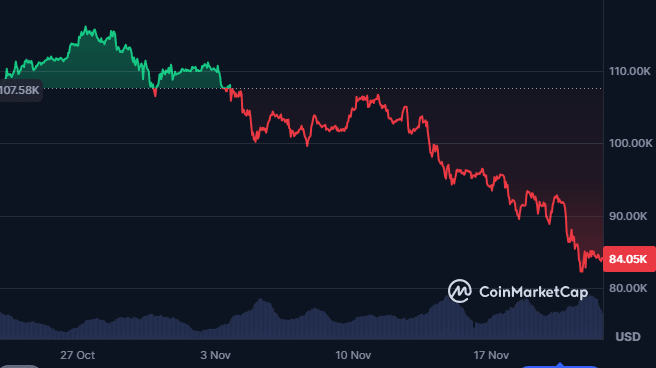
BTC price action in the last month, Source: CoinMarketCap
Fidelity and Grayscale Drive Recovery
Fidelity’s FBTC emerged as the leading performer in Friday’s session. The fund attracted $108 million in fresh capital, bringing its total net inflows to $11.8 billion since inception. Grayscale’s Bitcoin Mini Trust contributed $84.9 million to the rebound, while the legacy GBTC product added $61.5 million.
BlackRock’s IBIT
The Friday inflows represent a sharp reversal from earlier in the week. Bitcoin ETFs experienced one of their worst single-day performances on record, with nearly $1 billion exiting the products. BlackRock’s IBIT alone shed $355 million during that session, followed by approximately $200 million each from GBTC and FBTC.
Market Liquidations Reach $630 Million
The cryptocurrency derivatives market remains highly volatile. Data from CoinGlass reveals that over 205,000 traders faced liquidations in the past 24 hours. Total liquidated positions reached $630 million, with long positions accounting for $413 million or 65% of the total.
The largest single liquidation occurred on Binance. A BTC/USDT position valued at $16.5 million was forcibly closed as prices moved against the trader’s position. The dominance of long liquidations indicates that many market participants anticipated a price recovery that failed to materialize.
Weekly performance metrics paint a challenging picture. Bitcoin declined more than 12% over the past seven days. During the same period, Bitcoin ETFs
Macroeconomic conditions may be shifting in favor of risk assets. The probability of a Federal Reserve interest rate cut in December surged to 69%