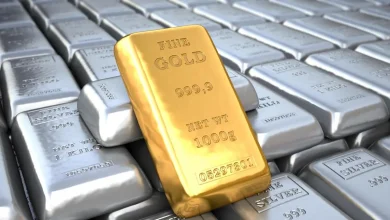
Gold Prices Rise but Stay Below $4,900/oz as Inflation, Iran Risks Weigh
Global Gold Prices are moving higher again, but they continue to remain below the key 4,900 dollars per ounce level, as investors balance inflation concerns with rising geopolitical risks linked to tensions involving Iran. The precious metal is once again in focus as a safe-haven asset, but its upside remains limited due to mixed macroeconomic signals.
Gold is often seen as a store of value during uncertain times. When inflation rises or geopolitical risks increase, investors tend to shift capital into gold. However, current market conditions show a more complex picture.
While inflation fears are supporting gold demand, strong bond yields and cautious central bank policies are preventing a breakout above the important resistance level.
So what is really happening in the gold market right now?
Let us break it down step by step.
Gold Prices remain below 4,900 dollars despite rising demand
The latest market data shows that Gold Prices have climbed modestly, but they remain capped below the key psychological level of 4,900 dollars per ounce.
This level has become a strong resistance zone in recent sessions.
According to market coverage by Investing.com titled Gold Prices Rise but Still Pinned Below 4900 oz Amid Inflation Iran Uncertainty, the precious metal is facing pressure from competing macroeconomic forces.
On one hand, inflation remains a concern across major economies. On the other hand, rising interest rates and strong bond yields are limiting gold’s upside.
Why does that matter?
Because gold does not pay interest. When interest rates rise, investors often prefer bonds or other yield-generating assets.
This reduces the attractiveness of gold, even during uncertain times.
What is driving the recent rise in Gold Prices?
Several factors are pushing gold higher.
• Persistent inflation concerns across global economies
• Increased geopolitical tensions linked to Iran
• Safe haven demand during periods of uncertainty
• Currency fluctuations, especially movements in the US dollar
• Central bank gold purchases supporting long-term demand
These factors combined are helping gold maintain its upward bias despite resistance near 4,900 dollars.
Inflation trends and their impact on Gold Prices
Inflation remains one of the biggest drivers of Gold Prices.
When inflation rises, the value of fiat currencies declines. Investors then look for assets that can preserve purchasing power.
Gold has historically played that role.
Recent inflation data from major economies shows that price pressures are still above central bank targets. Although inflation has cooled from peak levels, it remains sticky in sectors such as housing and services.
This creates a supportive environment for gold.
But here is the key question.
If inflation supports gold, why is it not breaking higher?
The answer lies in interest rates.
Central banks, especially the Federal Reserve, have maintained relatively tight monetary policies to control inflation. Higher interest rates increase the opportunity cost of holding gold.
This is why gold is rising slowly rather than surging.
Geopolitical risks and their influence on Gold Prices
Geopolitical tensions are another important factor.
Recent developments involving Iran have added uncertainty to global markets. Whenever geopolitical risks increase, investors tend to move funds into safe-haven assets like gold.
This trend was visible in the latest market movements.
A social media update discussing global economic uncertainty and gold demand highlighted the situation.
Events like these often lead to short-term spikes in gold prices.
However, if tensions do not escalate further, the impact may remain limited.
Bond yields and the ceiling for Gold Prices
One of the biggest factors limiting gold’s upside is rising bond yields.
When government bond yields increase, they offer investors a relatively safe return. This reduces the need to hold non-yielding assets like gold.
Currently, US Treasury yields remain elevated compared to previous years.
This creates a natural ceiling for Gold Prices.
Even when demand rises due to inflation or geopolitical risks, higher yields can offset that demand.
Gold market sentiment and investor positioning
Market sentiment around gold is currently mixed.
Some investors believe gold could break above 4,900 dollars if inflation remains high or geopolitical tensions escalate.
Others think the metal may remain range-bound due to strong economic data and central bank policies.
Another social media post from the mining sector also reflected ongoing discussions around gold supply and demand dynamics.
Investor positioning in gold futures markets also shows cautious optimism rather than aggressive bullish bets.
Key factors influencing Gold Prices today
The following factors are shaping the direction of Gold Prices in the current market.
• Inflation expectations across major economies
• Interest rate outlook from central banks
• Geopolitical developments involving Iran and other regions
• Movements in the US dollar and global currencies
• Demand from central banks and institutional investors
These variables interact in complex ways, making gold price movements difficult to predict in the short-term.
Global demand for gold and central bank activity
Central banks have been major buyers of gold in recent years.
Many countries are increasing their gold reserves to reduce reliance on foreign currencies and strengthen financial stability.
This trend provides long-term support for Gold Prices.
According to industry data, central bank gold purchases have remained strong, with several emerging economies leading the buying trend.
This demand helps stabilize prices even during periods of market volatility.
How do currency movements affect Gold Prices?
Gold is typically priced in US dollars.
When the dollar strengthens, gold becomes more expensive for investors using other currencies. This can reduce demand.
When the dollar weakens, gold becomes more affordable globally, which can increase demand.
Currency fluctuations, therefore, play a key role in gold price movements.
A recent update discussing global financial conditions also highlighted how currency and geopolitical factors are influencing gold markets.
Technical Outlook for Gold Prices
From a technical perspective, gold is currently trading within a defined range.
The key resistance level remains near 4,900 dollars per ounce.
Support levels are seen around 4,750 dollars and 4,650 dollars.
If gold breaks above 4,900 with strong volume, analysts believe the next target could be 5,000 dollars per ounce.
However, if the price fails to hold support levels, it could move lower toward the mid-4,600 range.
Technical indicators such as moving averages and momentum oscillators suggest a neutral to slightly bullish trend.
How are investors analyzing Gold Prices today?
Modern investors use a combination of traditional analysis and advanced tools to evaluate gold markets.
Some rely on macroeconomic data such as inflation and interest rates.
Others use advanced trading tools to track price movements, volume patterns, and technical indicators.
In addition, some institutional investors integrate AI Stock research into their strategies to analyze correlations between commodities, equities, and macroeconomic trends.
These methods help investors make more informed decisions.
Long-term Outlook for Gold Prices
The long-term outlook for gold remains positive, according to many analysts.
Several structural factors support higher prices over time.
These include:
Persistent inflation risks
Geopolitical uncertainty
Growing global debt levels
Central bank diversification strategies
Some forecasts suggest that gold could reach 5,200 to 5,500 dollars per ounce over the next few years if these trends continue.
However, short-term volatility is expected to remain.
Role of technology and data in gold market analysis
Technology is changing how investors study gold markets.
Advanced AI stock analysis systems now process large datasets including economic indicators, market sentiment, and historical price trends.
These tools can identify patterns that may not be visible through traditional analysis.
They are increasingly used by hedge funds and institutional investors.
Conclusion
Gold Prices are rising, but they remain below the key 4,900 dollars per ounce level as inflation concerns and geopolitical risks provide support while higher bond yields limit gains.
The market is currently balancing multiple forces.
Inflation and uncertainty are pushing gold higher, while interest rates and strong economic data are holding it back.
For investors, the key is to watch how these factors evolve in the coming weeks.
If inflation remains elevated or geopolitical tensions increase, gold could break higher.
If interest rates stay high, the metal may continue trading within a range.
Understanding these dynamics is essential for making informed investment decisions in the gold market.
FAQs
Gold Prices are rising due to inflation concerns and geopolitical risks, which increase demand for safe-haven assets.
Higher interest rates and strong bond yields are limiting gold’s upside despite strong demand.
Geopolitical risks push investors toward safe assets like gold, often causing prices to rise.
Disclaimer
The content shared by Meyka AI PTY LTD is solely for research and informational purposes. Meyka is not a financial advisory service, and the information provided should not be considered investment or trading advice.