Ramadan Invites Us to Imagine a Better Future | Essay
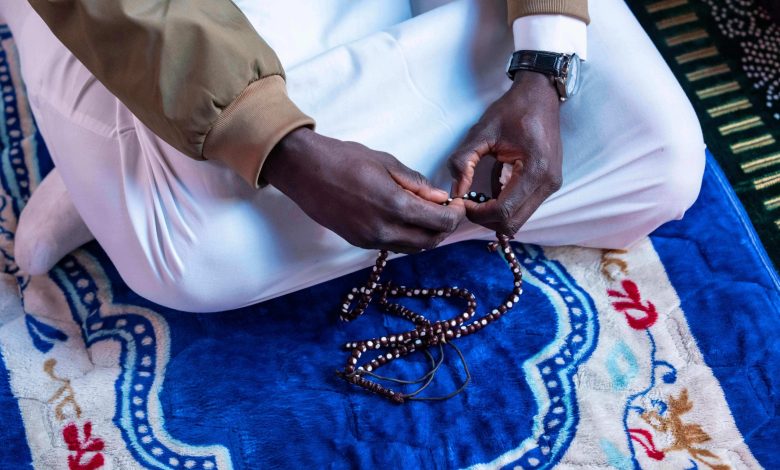
Ramadan is a futurist practice. Ritual fasting and increased spiritual contemplation are ruptures in Muslims’ daily habits, not just in eating, but in our movement through the world. They force you to pay attention, with eyes misty with spirituality—to feel viscerally what is wrong with the world.
Ramadan invites Muslims to imagine how we can remake reality and push it in a more just, equitable, and inclusive direction.
As we come to the end of this Ramadan, I am reflecting on a world that has changed radically for Muslims in the U.S. During the 1979 Iran Hostage Crisis, Muslims became an enemy; in the years since, the United States went to war, in a functional if not legal sense, with numerous Muslim countries, with little sense of the differences among them; now the U.S. is back at it in Iran. At the same time, we have a Muslim mayor of New York City, who continues a longstanding tradition of underfunding our libraries, showing how utterly unexceptional his election is, and thus how unexceptional Muslims are.
Thinking about this history and this present, I could sit in despair. But misty-eyed Ramadan lets me look beyond systems that deny my humanity. I see potentials and realities that have yet to be made. To think about futures in a moment of crisis is a blessing and an act of resistance. Shadows are only possible because of light. A better world is possible. To believe this is an act of faith.
This perspective has provided many gifts—most recently among them, being invited to contribute to Muslim Futures, a new prose anthology that offers visions rooted in this sacred tradition, that think and dream beyond our existing world. This type of futurist thinking has a long pedigree. In the U.S., Afrofuturism—imagining futures of liberation for all people, sometimes through the lens of technology—shines in the writings of Octavia Butler, the music of Janelle Monáe, the art of Basquiat, and various iterations of the Black Panther character. It is a cultural movement that seeks to move beyond trauma to understand and express humanity.
These futures are grounded in pasts. We bring who we are to this work, as individuals and as members of the communities that shaped us. My Muslim future is no exception. As a teenage child of immigrants to the U.S., I rejected my parents’ religious teachings—my desire to fit in made me want to forget where I had come from. But in college, a wonderful non-Muslim professor of Islam made me appreciate what my family had offered me. I began to form my own understanding of the religion that worked for me. It is not the only thing in my life—I’m also the nerd into The Hobbit and Star Wars and X-Men—but it is a very important part of how I ground myself in the world.
I believe the Qur’an guides us to love, justice, and creativity. God is explicit when they say we are to love the Prophet Muhammad and his family (peace be upon them all). The Divine says in the Qur’an to stand for justice, even against those with more power than us and against our own selves, when we’re tempted toward injustice. God is the Creator. They simply have to say “Be!” and it is. We strive to manifest the divine in ourselves. We, too, have the ability to create. Speculative fiction, which is a broad term to encompass genres like science fiction and fantasy, can channel this creative urge for more just visions of society.
You Might Also Like
The story I contributed to Muslim Futures, “Ho Jamalo,” is an intimate family portrait that takes place during Movie Night. Set sometime in an undefined future, it is the name of a rite of passage, when parental units sit with children and learn from their past: exploring what injustice has meant in their family history, the costs their ancestors paid to get them where they are today, and the life their own descendants—insha’allah—will one day have.
The story explores its themes through language, an inheritance with special resonance for me. My parents and grandparents knew six or seven languages, a gift that had offered them, and their communities, ways of describing and experiencing the world and connecting with other people with incredible depth. Yet, when my parents came here from Tanzania in the ’70s, Americans looked down on them for speaking anything other than English. To help me acclimate, my parents emphasized English at home. I missed out on experiencing the world in hi-def and HDR colors.
Yet, as I studied English, I realized how flexible it could be. Lewis Carroll’s poem “The Jabberwocky” is full of made-up words. Authors from English colonies like Chinua Achebe write in hybrid tongues, seamlessly weaving their traditional languages together with English to invite readers into their real conversations.
So, in my imagined Muslim future, I wanted to play with an English that is radically different, which would offer not just one way of looking at the world, but a thousand. I tried to include the languages my ancestors spoke (Gujarati, Swahili, Persian), and a few of the languages I have picked up along the way (Arabic, Tajik, French). All told, I think the story points to a dozen languages. Reading it is disorienting, and that is the goal. By mixing languages and scripts, I want to force the reader to think about what is lost in monolinguality, and what forced monolingualism costs all of us.
Writing “Ho Jamalo” gave me a chance to think through what languages I thought in and when, and to consider the feelings they gave me. I had to learn these languages, so my experience of them lacks the fluidity and grace I heard from my family. But the words still bring up memories of comfort and joy. Seeing love (English), પ્યાર (Gujarati), and عشق (Arabic, Persian, Urdu, and Sindh, which share a similar script) together on the page — this translated word that can be understood in so many different ways—provides a vision of who I am, even if that image is incomplete.
Each of the 16 pieces in Muslim Futures explores a facet of Muslim life. My story about language lives alongside others about ancestors, descendants, and schools. This compilation is a kaleidoscope of the community envisioning a plethora of dreams, refracted through the kaleidoscope of our lives.
The first chapter of the Qur’an includes a prayer asking God to put us on the path of the righteous, sometimes called “the straight path.” To be on that path is to be queer with the world. It is a call to recognize that all of us do things that hurt others, and to rectify that. It is a call to see that we have built a world where not everyone feels we can belong.
To imagine futures beyond oppression is to draft a blueprint to build new structures informed by love, justice, and creativity. To believe those futures are possible is an act of faith.
As Ramadan ends, I am reminded that it is the month of burning, a smelting process that melts away excess so we can think about what is important. As my fast comes to an end, as my eyes clear, I remain focused on what can I do today for the sake of the world I want tomorrow.
Hussein Rashid is an academic, an advocate, an educator, a cultural strategist, and a futurist. He is the co-director of Religion and Public Life at Union Theological Seminary in New York City.
Primary editor: Jackie Mansky | Secondary editor: Eryn Brown