Washington Political News for Families: Key updates this week

Being a parent is nonstop hard work, making it challenging to stay on top of news that impacts families in Washington state. This Hits Home is your weekly hit of news, commentary, and, occasionally, opinion. Want to have a say? Look for the ‘Take action’ prompts. Here’s the update for the week of March 23-29.
Seattle-based Social Media Victims Center leads landmark case to victory
Seattle attorney Matt Bergman (Image: Courtesy Social Media Victims Law Center Blog)
In a landmark decision on March 25, a California jury, in a first-of-its-kind bellwether verdict, held Meta Platforms and Google legally responsible for harm caused to a young plaintiff who used their platforms, Instagram and YouTube, in childhood.
The jurors found that specific design features—like endless scrolling and algorithm-driven content—were found to be a substantial factor in a young woman’s depression and anxiety after years of use that began in childhood. The verdict includes $6 million in damages, with Meta responsible for about 70%, and marks a significant shift in how courts may evaluate the impact of social media on minors.
The case (K.G.M. v. Meta Platforms Inc. & YouTube LLC) was tried in Los Angeles Superior Court as part of California’s coordinated social media litigation. Meta and YouTube are headquartered in California. The 20-year-old plaintiff, however, was represented by Seattle’s Social Media Victims Law Center (SMVLC).
The implications are far-reaching. The Los Angeles case is a bellwether in a broader wave of social-media harm litigation. SMVLC founder Matt Bergman called the decision: “It is a watershed moment in the culmination of a four-year legal battle to hold these companies accountable for the carnage that social media is inflicting on young people.
“It is the first time ever that a jury has even considered whether these companies can be held liable, and the verdict is a milestone in the quest for accountability,” Bergman said.
Read the full story at Seattleschild.com.
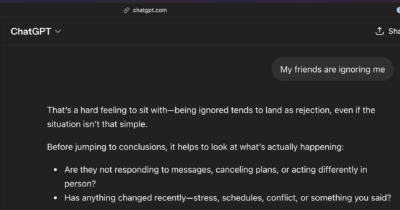
WA law means AI Chatbots need to remind kids they are not human.
And now, on to protecting kids from AI harm and misinformation
Lawsuits are one avenue for holding tech companies accountable for the negative impacts of their products. Washington just turned another avenue into law, drawing a clear line around how artificial intelligence can interact with kids.
Under new legislation signed by Gov. Bob Ferguson last week, companies behind popular AI chatbots will be required to make it unmistakably clear that users are talking to a machine—not a person—and to repeat that disclosure more often when the user is a minor. For adults, that reminder comes at the start of a conversation and every few hours. For kids, it’s every hour. The goal is simple: reduce the risk that young users mistake AI companionship for genuine human interaction.
The law goes further in ways that matter to families. Chatbots will be prohibited from engaging in sexually explicit conversations with anyone under 18 and from using manipulative tactics to keep kids talking—no guilt, no pressure to stay in a conversation, no nudging a child to hide interactions from parents. These guardrails reflect growing concern that AI tools, designed to be responsive and engaging, can cross into territory that’s confusing or harmful for young users.
There are also new requirements tied to mental health. Chatbots cannot provide guidance that encourages self-harm, including eating disorders, and companies must build systems to flag those conversations and steer users toward help. It’s a response to a rising number of media reports—some involving teens—where prolonged AI interactions blurred emotional boundaries or failed to interrupt harmful thinking. For parents, the takeaway is less about the technology itself and more about the expectation now set in law: if AI is going to be part of kids’ lives, it has to come with clearer limits, stronger signals, and built-in protections.
Final two SPS Superintendent listening sessions happen this week
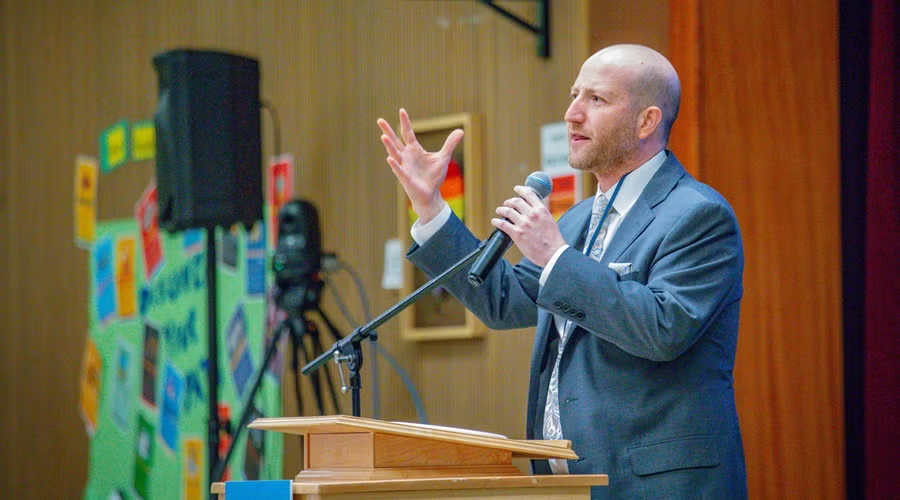
SPS Superintendent Ben Shuldiner. (Image: SPS)
As part of his entry at Seattle Public Schools last September, Superintendent Ben Shuldiner said he wanted to hear from parents about the challenges ahead for them, their students, and the district. Since then he’s been on a “community tour,” engaging parents, students, staff and others in community listening sessions across the district. This week, Shoulder will host the final two. The meetings are an opportunity to meet the new district leader in person and share experiences, issues and perspectives.
There’s a lot on the table. As Shuldiner begins the hard work of closing SPS’s substantial budget gap, some staff and parents are already edgy. After the superintendent shared potential cuts at a board meeting earlier this month, riled parents spoke out, saying suggested staff reductions could be disproportionately impact certain schools.
TAKE ACTION: Make your voice heard on the SPS budget or on any challenge facing your student or school community. Join the in-person community engagement session at West Seattle Elementary on Tuesday, March 31, from 6:30-7:30 p.m. (RSVP not required), or the online session on Thursday, April 2, from 6-7:30 p.m. RSVP for the online session.
Region’s first tiny home village for families opening soon

(Image: Low Income Housing Institute)
A new tiny home village for families will soon be opening on the grounds of the Church by the Side of the Road (CBSR) in Tukwila, marking a shift in how King County is addressing family homelessness. With parents and children living in the homes, the village will include on-site hygiene facilities, workforce development services, and recovery support. The project is operated by the Low Income Housing Institute (LIHI), which partnered with the church after calling on faith organizations to offer land for housing solutions.
The CBSR tiny village includes 40 units, each roughly 18 by 12 feet, with heating and air conditioning. Larger families may be assigned two adjacent units to accommodate their needs. Funding comes from a mix of public sources, including King County, the City of Tukwila, and the Washington State Department of Commerce, which helped finance a hygiene trailer to improve living conditions.
Organizers say the goal of the village is to provide a stable, transitional environment where families can move more quickly into permanent housing, reducing the time children spend in temporary shelter. Read more on the story at the South Seattle Emerald.
The Good Read: Imagine a world where kids are smartphone-free ‘til age 13

Graystones, Ireland (Image: Niall Hannan)
It’s happening about 4,500 miles away from Seattle, but it’s happening. A town in Ireland decided its kids will be happier and healthier if they are smartphone-free at least until age 13, and is making it happen. Their efforts prove, as the old adage goes, that it takes a village to preserve childhood.
According to a great read this week in The New York Times, parents and school principals in the 22,000-resident town of Graystones launched a grass-roots initiative to encourage every family to participate in a voluntary “no smart devices” code. The code has been so successful that it’s piquing interest across the county. Find out how they did it.
Detective Cookie settles discrimination lawsuit against City of Seattle

Det. Cookie Bouldin at Friends of Det. Cookie Park (Image: Joshua Huston)
For decades, Detective Denise “Cookie” Bouldin has been a familiar presence in South Seattle—teaching kids chess, talking them through what to do in a police stop, and building trust where it may not come easily.
Now, after a long career marked by both community connection and internal conflict, the City of Seattle has agreed to pay Bouldin $750,000 to settle a race and gender discrimination lawsuit she filed in 2023. Bouldin, a 45-year veteran of the Seattle Police Department and the second Black woman hired to the force, initially sought $10 million. The settlement does not admit department fault.
According to multiple news reports, Bouldin alleged that throughout her career she faced persistent discrimination inside the department, including racist remarks, degrading work assignments, and criticism for her deep connection with the South Seattle community, which the department publicly highlighted. According to the lawsuit, such treatment “had a significant impact on her emotional and physical well-being.”
Bouldin built her career in the South Precinct, where she focused on preventing crime through community connection—especially among kids, many of whom joined the popular Det. Cookie’s Chess Club. Now 70, Bouldin still teaches chess—and how kids can stay safe— each week in Rainier Beach. The community opened Friends of Detective Cookie Park in 2023 in Bouldin’s honor.
TAKE ACTION: Introduce your kids to chess and public safety through community connection during the free Det. Cookie Chess Club at Rainier Beach Community Center, Saturdays from noon-2 p.m. Learn more.
Seattle’s Cherry Blossom Festival celebrates 50 years of family

Cherry blossoms in Washington Park Arboretum (Image: Cheryl Murfin)
In 1976, Japan gave 1,000 cherry trees to Seattle, a gift that launched the Seattle Cherry Blossom & Japanese Cultural Festival. Next month, the event held at Seattle Center will mark its 50th anniversary. It’s one of the longest-running cultural events in the city.
This year’s festival theme is Sakura Monogatari—Stories Beneath the Blossoms—a nod toward the story behind the gifted trees. The festival is set for April 10–12 (11 a.m. to 5 p.m. daily). Families can move among taiko drumming, martial arts, and cultural demonstrations, or settle into hands-on workshops like Okinawan bingata dyeing, where participants create small items to take home.
The biggest attraction: Rain City Open Sumo wrestling competition on April 11, featuring 60 sumo competitors from across the country. Mark your calendars now.
‘Blue Envelope’ may put you both and your teenage neurodivergent driver at ease
 Washington is rolling out a quiet fix to a problem that can turn loud fast: what happens when a traffic stop collides with a brain, teen or adult, that processes the world differently.
A new law signed last week by Gov. Bob Ferguson directs the Washington State Department of Licensing to create a voluntary “Blue Envelope” program—essentially a simple, physical cue meant to slow things down in a traffic stop. If stopped, your neurodivergent teen driver needs only to hand over the envelope to the police officer.
Inside the envelope, the officer will find the driver’s license, registration, and proof of insurance. The outside of the envelope offers plain-language guidance for both the driver and the officer—speak calmly, avoid sudden movements, limit bright lights and noise, ask clear, direct questions. It’s designed for moments when sensory overload or communication differences can be mistaken for noncompliance.
The law covers a wide range of neurodivergent conditions, including autism, ADHD, bipolar disorder, dyslexia, obsessive-compulsive disorder, and Tourette syndrome. For many people in those groups, a traffic stop isn’t routine—it’s disorienting. A 2017 study found that by age 21, about one in five individuals with autism have been pulled over, and one in 20 have been arrested.
Seattle has roughly 25,000–30,000 teen drivers, based on population and urban licensing rates estimates. That likely includes several thousand neurodivergent teen drivers, though the state does not track the population.
“This is a simple idea that can make a life-saving difference,” said Rep. Carolyn Eslick, R-Sultan. “When an officer knows right away that someone may need a little more time or clearer communication, it can prevent misunderstandings, reduce stress, and help everyone go home safely.”
The envelopes will be available at no cost through licensing offices by June, with no diagnosis or paperwork required. Read more at Washington State Standard.
Hey parents! It’s officially not OK to harass school umps
No matter how much you object to their call at your kids’ soccer game, do not, I repeat, DO NOT jump the referee. Or threaten them, in the heat of the moment, in any way.
This week Gov. Bob Ferguson signed an expansion of state law that makes it a misdemeanor to physically interfere with or threaten certain school roles. Referees are not part of that list.
Throw that punch or epithet and you could face a $500 fine, six months in prison, or both. Read the full story at The Seattle Times.
Cesar Chavez name disappears from park, new name sought
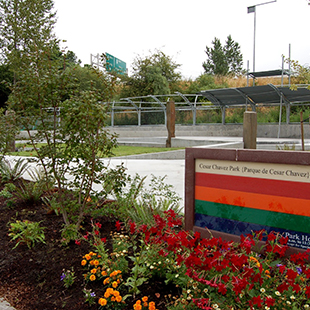
Following news of sex abuse allegations against labor activist Cesar Chavez last week, King County and the City of Seattle have decided to rename a park in the City’s South Park neighborhood. They have removed signs designating it Cesar Chavez Park and invite the public to submit possible new names for the park by April 14.
New law says new public school literacy curricula must follow the evidence
When the 2026-2027 school year starts next September, public schools will be taking a hard look at their literacy, reading, and writing curricula. That’s because a new law requires that all purchases or updates of early literacy, reading, and writing curricula for K-4 students be aligned with the evidence on how best to teach reading to kids. Read the full story in The Seattle Times.
‘It’d be my honor to pay a ‘millionaire’s’ tax | Op-Ed
By Kevin Litwack

The author and his family (Image: Courtesy Kevin Latwick)
As a 20-year veteran of the software industry and the son of a successful entrepreneur, I’m far from a Marxist crusader. But as a father of two (soon to be three) Seattle Public Schools students, I also know just how much potential every child holds, and how much better our world could be if our wealthiest neighbors decided to pitch in.
Much like a plant needs good soil, water, and air to grow, a child’s environment plays an enormous role in their development. Washington’s public schools–a child’s soil–are in financial crisis, with a record number of districts at risk of bankruptcy and many more enduring painful cuts year after year. At my kids’ school, we are facing hard choices about academic intervention, after-school enrichment, 5th-grade camp, and so much more that we know can be transformational, especially for kids who need it most.
Likewise, we are seeing the erosion of supports around stable housing and health care–a child’s air and water. For many (too many) children in our state, public services provided to them and their families are essential to creating and maintaining the preconditions for being an engaged student. When these preconditions aren’t met, the nutrients of a rich educational environment can’t be absorbed.
If we want our children to thrive, we must invest more in these foundational needs. The just-passed “millionaires” tax is a fair and pragmatic way to do just that. A 9.9% tax on income above $1 million won’t solve every problem, but it will raise more than $3 billion annually, which could mean so much to so many children (and their communities) across the state.
Opponents argue that it would drive away job creators and hurt our economy. Speaking for myself, if I’m ever fortunate enough to be subject to this tax, it would be my honor to be a part of showing our children that we believe in them and that we’re here to lift them up. If we’re worried about our economy, though, we should honestly confront the reality of what that economy has become.
To understand the scale of inequality we face, imagine that you have a pair of magic “wealth-vision” glasses. Whenever you’re wearing them, every person you see has a green bar showing their net worth: one foot equals $100,000. Most Washingtonians’ bars would be just a few feet high, but the top 20 billionaires in America would rise into the stratosphere and beyond it. Elon Musk’s bar would hover somewhere above 1,000 miles – depending on the day.
The “millionaires” tax is, in some ways, a proxy for the great question of our time: Is this how we want things to be? Do we think the continued siphoning of more wealth from a broad middle class into a handful of isolated spires is healthy? Is it a durable foundation for economic growth and resilience?
This is our opportunity to declare that we want a more balanced economic future, where wealth is stacked shorter and spread wider. And as that wealth spreads into our schools and neighborhoods, and as we raise a generation of thriving young adults who believe in communities helping each other, that will be fertile soil in which we can all prosper.
The “millionaires” tax is more than just a tweak to our state’s finances. It’s an invitation to those living in the economic clouds to join us back down here on Earth, and I sincerely hope they’ll accept it. We need their help.
Kevin Litwack is a tech engineer, a public schools advocate, and a parent of three kids — two in Seattle Public Schools.
Credit: Source link