The SpaceX IPO Is Generating Massive Hype. Here’s What Investors Need to Know Before Musk’s Latest Project Goes Public.
Founded with the audacious goal of making humanity multi-planetary, Elon Musk’s SpaceX has become one of the most anticipated initial public offerings (IPOs) in history. The company is reportedly targeting a valuation as high as $1.75 trillion — a capital raise that could eclipse Saudi Arabian Oil’s record $1.7 trillion debut in 2019.
Indeed, going public could unlock unprecedented capital. But smart investors who grasp the nuances around SpaceX will be able to separate legitimate buy signals from the noise of clickbait headlines.
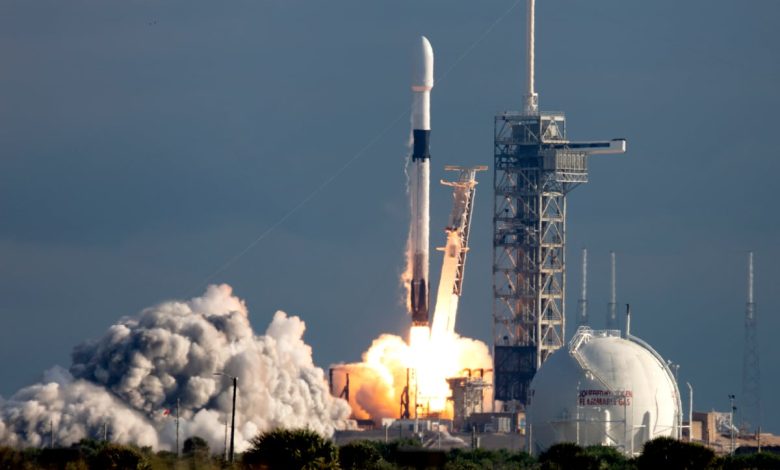
Image source: Getty Images.
SpaceX’s advantages are launch dominance and reusability
At its core, SpaceX’s value proposition is its ability to reduce the cost of reaching orbit. The company’s reusable Falcon rockets have turned what was previously a one-time throwaway expense into a repeatable advantage — enabling periodic launches for satellites and NASA cargo.
These operational efficiencies create a virtuous cycle: Lower launch prices attract more contract demand, which subsequently funds innovation. While SpaceX’s technological moat is impressive, the company’s success requires flawless execution given the high-stakes nature of its missions.
Any delays in commercial certifications or hiccups during a launch can stall business momentum — pressuring post-IPO operating margins.
Starlink is the secret revenue catalyst fueling SpaceX
While rocket launches are great for headlines, Starlink represents SpaceX’s most direct path to sustained cash flow. The low-Earth-orbit constellation delivers high-speed internet access to underdeveloped regions — from rural farms to maritime fleets and disaster zones.
Starlink’s subscription model offers more predictable, high-margin revenue that helps offset SpaceX’s research and development (R&D) and infrastructure costs.
Smart investors will keep a keen eye on Starlink’s subscriber growth and average revenue per user (ARPU) trends as leading indicators pertaining to SpaceX’s ability to turn a profit.
What are some alternatives to investing in SpaceX?
Despite an exciting narrative, investing in SpaceX comes with notable risks. Intense regulatory scrutiny from aviation and communications authorities could bring vulnerabilities to future launches or spectrum use.
Perhaps most critically, though, SpaceX’s future remains closely designed by founder Elon Musk. The billionaire entrepreneur already spreads his attention across multiple ventures. For instance, SpaceX alone includes xAI and X (formerly Twitter) underneath its umbrella. Each of these platforms have different goals and business models.These dynamics introduce outsize execution and governance risks that public markets might punish if progress is unsatisfactory.
Although SpaceX offers unique exposure to the space economy, its ambitions essentially hinge on converting a lofty innovation road map into measurable, concrete profits. While direct shares of SpaceX await public listing, savvy plays already exist:
- AST SpaceMobile (ASTS +10.45%) and Rocket Lab (RKLB +3.37%) are pure-play satellite and rocket operators.
- Big tech giants Alphabet (GOOGL 0.55%) (GOOG 0.15%) and Nvidia (NVDA +0.87%) offer overlapping artificial intelligence (AI)-themed synergies given their ambitions with space-based data centers.
- The KraneShares Artificial Intelligence and Technology ETF (AGIX +1.18%) holdings include a direct stake in the xAI-SpaceX ecosystem, giving investors immediate indirect participation.

KraneShares Trust – KraneShares Artificial Intelligence And Technology ETF
Today’s Change
(1.18%) $0.39
Current Price
$33.50
Key Data Points
Day’s Range
$32.15 – $33.61
52wk Range
$20.82 – $40.01
Volume
333K
Owning each stock above is a diversified approach that touches several different layers of the value chain powering the space economy. In my view, investing in any (or all) of these companies is a more prudent option compared to buying a narrative-driven, hyped up SpaceX IPO.
Adam Spatacco has positions in Alphabet and Nvidia. The Motley Fool has positions in and recommends AST SpaceMobile, Alphabet, Nvidia, and Rocket Lab. The Motley Fool has a disclosure policy.