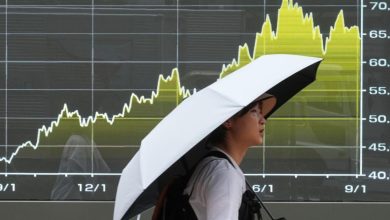
Why Did Stocks Shift on April 7, 2026?

Global markets overnight traded cautiously as oil volatility and geopolitical risks shaped investor sentiment.
Asian markets were mixed, while European equities posted modest gains.
Investors remain focused on energy supply risks and global economic uncertainty.
(STL.News) Global markets overnight reflected a cautious, reactive tone as investors navigated rising geopolitical tensions, fluctuating oil prices, and growing concerns about an economic slowdown. The trading session spanning Asia and Europe revealed a fragile balance between resilience and uncertainty, with markets responding more to risk headlines than to traditional economic indicators.
From Asia’s mixed performance to Europe’s modest gains, the global financial system appears to be entering a critical phase where sentiment can shift rapidly. Energy markets, particularly oil, remained the dominant force shaping investor behavior, reinforcing inflation fears and influencing equity movements worldwide.
Global Markets – Asia-Pacific Markets Reflect Uncertainty and Fragmentation
Across the Asia-Pacific region, trading activity highlighted a lack of clear direction. Investors appeared hesitant, weighing the potential risks associated with geopolitical developments against the opportunities created by recent price corrections.
Japan’s benchmark index posted modest gains, supported primarily by export-oriented companies. A relatively stable currency environment allowed exporters to remain competitive, encouraging selective buying among institutional investors. However, the upward movement lacked strong momentum, suggesting that confidence remains limited.

Hong Kong’s market performed more strongly, as investors stepped in to capitalize on recent declines. Bargain hunting became a key theme, particularly in sectors that had experienced sharp pullbacks in previous sessions. While this contributed to upward movement, the recovery was cautious rather than aggressive.
Mainland China’s markets remained largely unchanged. Domestic investors showed restraint, reflecting ongoing concerns about economic growth, regulatory pressures, and external geopolitical risks. Trading volumes indicated a wait-and-see approach, with participants reluctant to make significant moves without clearer signals.
South Korea’s market declined, reversing some of its recent gains. Technology and export-heavy sectors faced renewed pressure, highlighting the sensitivity of these industries to global developments. Meanwhile, Australia’s market moved lower, weighed down by uncertainty in commodity pricing and broader global concerns.
India’s market also edged lower, as global macroeconomic risks overshadowed domestic optimism. While the country continues to show long-term growth potential, short-term sentiment remains tied to global conditions.
Overall, the Asia-Pacific region demonstrated a fragmented and cautious outlook, with no unified trend emerging across major markets.
Global Markets – European Markets Show Resilience Despite Global Risks
European markets opened with modest gains, signaling a degree of resilience despite the challenging global backdrop. Investors appeared willing to re-enter positions following recent weakness, particularly in sectors perceived as more stable.
The broader European index advanced, supported by gains in financial and industrial sectors. Banking stocks led the upward movement, benefiting from expectations that interest rates could remain elevated for longer than previously anticipated. Higher interest rates generally improve profitability for financial institutions, making the sector more attractive to investors.
The media sector also contributed to gains, driven by corporate activity and speculation surrounding potential acquisitions. These developments added a layer of optimism, even as broader market concerns persisted.
Major national indices across the region posted gains, with Germany, France, and the United Kingdom all advancing. Southern European markets also performed well, reflecting a broad-based recovery across the continent.
However, not all sectors participated in the rally. Technology stocks lagged behind, particularly companies linked to semiconductors and advanced manufacturing. Concerns about export restrictions and global supply chain disruptions weighed heavily on these stocks.
Despite the overall positive performance, European markets remain highly sensitive to external developments. The gains observed overnight are best viewed as cautious optimism rather than a strong bullish signal.
Global Markets – Oil Prices Continue to Drive Global Market Behavior
Energy markets remained at the center of global trading activity, with oil prices experiencing significant volatility throughout the session.
Prices surged early, reflecting fears of supply disruptions, before pulling back as traders reassessed the situation. This pattern of sharp upward movement followed by partial retracement underscores the uncertainty currently dominating the energy market.
The Strait of Hormuz remains a focal point for investors, as it serves as one of the most critical pathways for global oil transportation. Any disruption in this region has the potential to create immediate and widespread impacts on supply and pricing.
The volatility in oil prices is not only affecting energy markets but also influencing broader economic expectations. Rising energy costs contribute to inflationary pressures, which in turn impact central bank policies, consumer spending, and corporate profitability.
As a result, oil has become a key driver of market sentiment, with price movements closely watched by investors across all asset classes.
Global Markets – Key Themes Defining Overnight Trading
Geopolitical Risk as the Primary Driver
Geopolitical developments continue to dominate market sentiment, overshadowing traditional economic indicators. Investors are closely monitoring events in the Middle East, as any escalation could have far-reaching implications for global markets.
The current environment is characterized by rapid shifts in sentiment, with markets reacting quickly to new information. This has created a more volatile and unpredictable trading landscape.
Renewed Inflation Concerns
The rise in oil prices has brought inflation concerns back into focus. Higher energy costs can lead to increased prices across a wide range of goods and services, putting pressure on both consumers and businesses.
Central banks may be forced to maintain tighter monetary policy for longer, which could weigh on economic growth. This dynamic is particularly relevant in Europe, where inflation has already been a persistent challenge.
Signs of Slowing Global Growth
Economic indicators from several regions suggest that growth may be slowing. Business activity has shown signs of weakening, while consumer confidence remains subdued.
These trends are contributing to a more cautious outlook among investors, who are increasingly concerned about the potential for a broader economic slowdown.
Defensive Positioning Across Markets
In response to rising uncertainty, investors are adopting more defensive strategies. This includes shifting capital toward sectors that are perceived as more stable and less sensitive to economic fluctuations.
Such positioning reflects a broader desire to preserve capital while maintaining exposure to potential upside opportunities.
Global Markets – Currency Markets Reflect Cautious Sentiment
Currency markets remained relatively stable overnight, but underlying sentiment pointed to caution.
Safe-haven assets continued to attract interest, as investors sought protection against potential volatility. At the same time, major currency pairs traded within relatively narrow ranges, indicating a lack of strong directional conviction.
The overall tone in currency markets aligns with broader global trends, where uncertainty and caution are the dominant themes.
Global Markets – Implications for U.S. Markets
The overnight session sets the stage for a potentially volatile trading day in the United States.
Investors will be closely watching several key factors, including oil price movements, geopolitical developments, and economic data releases. These elements are likely to influence market direction and investor sentiment throughout the day.
U.S. futures may reflect the cautious tone seen overseas, with traders adjusting their positions amid evolving global conditions.
Global Markets – Outlook: A Market Searching for Direction
Global markets are currently navigating a complex and uncertain environment. While there are signs of resilience, particularly in European equities, the underlying risks remain significant.
Energy market volatility, geopolitical tensions, and slowing economic growth are all contributing to a fragile outlook. Investors are increasingly aware that the situation could change rapidly, depending on how key developments unfold.
At present, markets do not appear to be fully pricing in worst-case scenarios. However, the margin for error is narrowing, and any negative developments could trigger sharp reactions.
Conclusion of the Global Markets
The overnight trading session on April 7, 2026, highlights the delicate balance currently shaping global markets.
Asia delivered mixed results, Europe showed modest strength, and oil markets remained highly volatile. Together, these factors reflect a market environment defined by caution, resilience, and uncertainty.
As investors move forward, the focus will remain on key developments that could influence market direction. In a landscape where risk often outweighs data, the ability to adapt quickly will be critical.
Other Business News published on STL.News:
© 2026 St. Louis Media, LLC d.b.a. STL.News. All rights reserved. No content may be copied, republished, distributed, or used in any form without prior written permission. Unauthorized use may result in legal action. Some content may be created with AI assistance and is reviewed by our editorial team. For official updates, visit STL.News.