Is Your Car Making You a Distracted Driver?
(Image credit: Bloomberg / Contributor)
April is distracted driving awareness month and the safety statistics show that awareness is needed. Despite laws in most states banning the use of phones while driving, distracted driving remains a deadly and expensive problem in the United States.
29% of car accidents are caused by distracted driving, resulting in over 3,200 deaths and causing an estimated $395 billion in damages each year, according to a 2024 report by the National Highway Traffic Safety Administration (NHTSA).
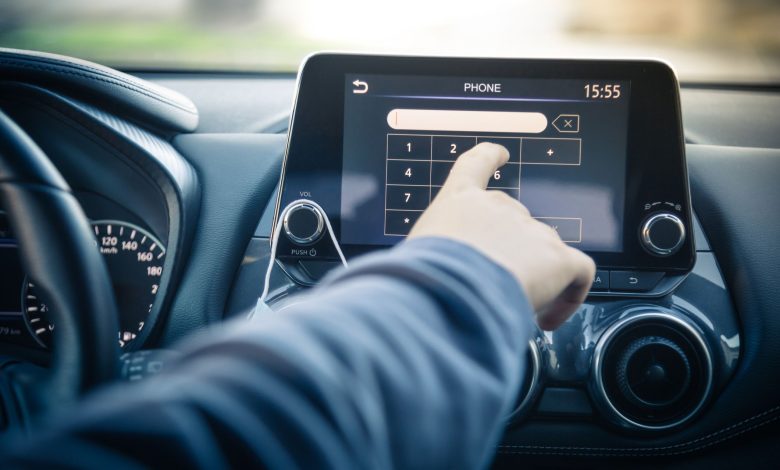
The same report said one of the biggest challenges to addressing the problem is “the breadth of distraction sources and activities available to a driver.” In other words, it’s not just your phone. As technology continues to advance, the distraction is now coming from inside the car. New features meant to make driving more comfortable and stress-free end up encouraging drivers to pay less attention to the road.
Sign up for Kiplinger’s Free Newsletters
Profit and prosper with the best of expert advice on investing, taxes, retirement, personal finance and more – straight to your e-mail.
Profit and prosper with the best of expert advice – straight to your e-mail.
You’re driving distracted more often than you think
The NHTSA describes three types of distraction and you’re almost certainly falling into at least one of them as you drive. Those distractions are visual, manual or cognitive:
- Visual distractions require you to take your eyes off the road, putting you at risk of not seeing a potential hazard.
- Manual distractions require you to use your hands for something other than driving, delaying your ability to react to hazards as quickly as you might need to.
- Cognitive distractions take your mind off of the task of driving, making you less alert to your surroundings.
Most distractions fall into two or more categories. Texting, for example, fits all three: it takes your eyes off the road, your hands off the wheel and your attention away from driving.
But even if you’re smart enough to avoid texting while driving, you’re likely engaging in activities that distract you in at least one of the three ways described above.
Not happy with the song on the radio? Changing the station or skipping to the next song on Spotify is a manual distraction. Unsure of where your next turn is? Your GPS navigation system is a visual distraction. Driving in a car with handsfree calling capabilities? You might have your eyes on the road and your hands on the wheel, but now your mind is distracted by the task of talking on the phone.
Your car isn’t helping you stay focused on driving

(Image credit: Getty Images)
As vigilant as you try to be, modern cars come with multiple features that make it easy to get distracted and may even make you feel safe enough to pay a little less attention. One of the culprits is your car’s infotainment system.
A report by the AAA Foundation for Traffic Safety evaluated the infotainment systems of 40 different vehicle models, ranging from high-end Audis to entry-level Toyotas measuring the time it took drivers to complete tasks using systems in 2017 and 2018 vehicles. 29 of the models studied were found to have systems that made “high demand” or “very high demand” of your attention. The remaining 11 still commanded “moderate demand” of a driver’s attention.
The ratings were based on how often the technology required your visual or cognitive attention and how long it took to complete a given task. This included common tasks you might do while driving like program your navigation, use voice commands, make a call, or adjust your audio entertainment.
The Tesla Model S, for example, allows drivers to search the internet while driving and features so much information on the screen that navigating the different menus and submenus can take up a lot of the driver’s time (and attention). The voice commands meant to allow drivers to complete tasks without their eyes or hands were still slow, error-prone and imposed a high cognitive demand on drivers. Tesla isn’t alone. The report found similar issues with many of the other cars studied.
The other major culprit of distracted driving is the rise of self-driving and driver assistance technologies.
At a board meeting last month, the National Transportation Safety Board (NTSB) urged congress to establish minimum safety standards for this technology following two fatal crashes linked to Ford’s Blue Cruise system.
Ford’s driver assistance system promises “hands-free highway driving,” according to the manufacturer’s website. The automated features can accelerate, brake and steer the vehicle for you.
The website also says drivers are supposed to keep their eyes on the road while using the feature. Cars with the technology also come with internal cameras that are meant to detect if a driver’s eyes are no longer on the road. But the NTSB investigation into the two crashes alleges that these cameras failed to detect that, in both accidents, drivers were not looking at the road at the time of the crash.
“Our brains are just wired in that if we think that a system is going to take over and reliably handle a driving task, we get bored and we look for something else to do,” said Cathy Chase, president of Advocates for Highway and Auto Safety, during the board meeting.
While the focus was on the recent crashes involving Ford, the NTSB stressed that this is an industry-wide problem. As more and more carmakers add self-driving or driver assistance features to their vehicles, it’s going to enable more and more drivers to use their “hands-free” driving time to navigate their increasingly distracting infotainment systems.
How to drive safely in a distracted world

(Image credit: Getty Images)
With distractions everywhere, it can be difficult to stay focused on the road. But even partial distractions — like struggling with a voice command system or trying to skip a song you’re tired of hearing — can be dangerous.
Here are a few tips to help minimize distractions and drive more safely.
Program your navigation and audio before you drive
Some cars already limit your ability to program these things while the vehicle is in drive. But even if yours doesn’t, you should get yourself set up before you hit the road. Cue up a long enough playlist to cover the length of your drive, for example.
If your steering wheel has volume or skip buttons, use those instead of the touchscreen. If you need to adjust your navigation, pull over to do so.
Don’t take calls or answer texts (even with voice-to-text) while driving
If it’s urgent enough to answer right away, pull over. If it’s not worth pulling over to respond, it can wait until you’re done driving.
Some phones allow you to turn on a driving mode which will temporarily pause notifications while you’re on the road and automatically send a message to callers or texters, letting them know that you can’t answer right now. Using this can help reduce the temptation to respond immediately.
Limit or avoid the use of assisted driving features
As the Advocates for Highway and Auto Safety president mentioned during the NTSB meeting in March, assisted driving features can lull you into a false sense of security. Sticking to old-fashioned manual driving keeps you more engaged with the task at hand.
Use Android Auto or Apple CarPlay instead of your car’s native system
In the distracted driving report mentioned earlier, AAA found that both Android Auto and Apple CarPlay were still potentially unsafe, but they were far less demanding of drivers’ attention than the sometimes clunky proprietary systems designed by automakers.
This isn’t always an option in all cars. But if it is an option in yours, use it (just not while you’re driving).
Don’t assume other drivers are paying attention
With the rise of driver-assist technology and in-vehicle touchscreens, more drivers on the road may be distracted. An attentive driver might brake or slow down when traffic changes—but a distracted one may not react in time. That makes it even more important to stay alert and responsive behind the wheel to protect yourself.
Take a defensive driving course to boost your skills
There are many defensive driving courses available, including plenty of convenient online options. These cover everything from recognizing hazards to best practices for handling various road conditions. Some of it is sure to be a repeat of things you already know, but you’ll likely learn a few new things as well.
If you’re not convinced a course is worth your time (or money), remember that many insurers offer discounts on your premium if you take an approved course. They typically take about six hours to complete and can help you save on car insurance.
Just make sure you choose an approved defensive driving course, like one of the following:
Don’t let a false sense of security lull you into an accident
Between the built-in car features that are demanding your attention and the convenience features that make you feel safe enough to take your eyes or hands off the task for a minute or two, it’s getting easier to forget that you’re sitting in a 4,000-pound hunk of metal barreling down the road at high speeds.
But driving is, in reality, the most dangerous mode of transportation by a long shot. According to the Bureau of Transportation Statistics, the overwhelming majority of transportation fatalities occur on highways.
In 2023, for example, over 40,000 of the 42,920 transportation deaths in the United States happened while driving. Likewise, over 99% of the 2.4 million transportation injuries that were reported that same year occurred on the road. The stats are similar for other years. By staying alert and minimizing your use of those convenient features your new car has (at least while driving), you can reduce your risk of becoming part of that statistic.