AI Euphoria Trumps War Risk as Global Stocks Reprice Faster Than Fundamentals

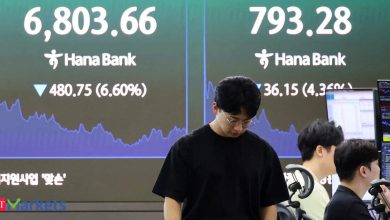
Global equities have moved past the shock of the Iran conflict with unusual speed, erasing early losses and pushing into record territory, in a rally that reflects not just improved sentiment but a deeper shift in how investors are pricing geopolitical risk.
The MSCI World Index, after dropping 3.29% in the immediate aftermath of the outbreak, has rebounded to trade nearly 2% above its March 2 level. The recovery places it firmly beyond pre-conflict pricing, even as the underlying geopolitical situation remains unresolved and fragile.
At the core of the rebound is a rapid compression of the “war-risk premium” that had briefly inflated asset prices across multiple markets. During the peak of tensions, investors priced in a chain of adverse scenarios, including sustained disruption to oil flows through the Strait of Hormuz, a spike in inflation, and tighter global financial conditions. As those scenarios receded from the base case, capital rotated back into risk assets with equal intensity.
This pattern reveals a structural feature of current markets where geopolitical shocks are increasingly treated as transient unless they directly impair economic transmission channels such as energy supply, trade routes, or financial liquidity. In this instance, the absence of immediate, large-scale disruption allowed investors to recalibrate quickly, effectively treating the selloff as a tactical opportunity rather than a sustained downturn.
Positioning dynamics amplified the move. Hedge funds and macro investors that had built defensive exposures—long energy, long dollar, short equities—were forced to unwind those trades as ceasefire prospects emerged. That repositioning created a feedback loop, accelerating the rebound and compressing volatility across asset classes.
Yet the speed of the recovery also points to a market anchored by a powerful secular narrative: artificial intelligence. Capital expenditure linked to AI infrastructure continues to expand at a pace that is reshaping earnings expectations, particularly in technology-heavy indices. Investors are increasingly willing to discount near-term geopolitical noise if long-duration growth drivers remain intact.

This helps explain why equity markets have shown a higher tolerance for risk than other asset classes. While stocks have rallied, fixed income markets continue to price a more cautious outlook. Yields and inflation expectations suggest lingering concern about the potential for energy-driven price pressures, especially if the conflict escalates or supply chains are disrupted at a later stage.
Policy expectations have also played a stabilizing role. The resilience of U.S. economic data has reinforced the view that the Federal Reserve retains flexibility to begin easing later this year without responding to crisis conditions. That outlook supports equity valuations by lowering the discount rate applied to future earnings, particularly in sectors with strong forward growth profiles.
The Fragility Still Much Around
The current rally has come with fragility. Statements from Donald Trump threatening renewed military action against Iran highlight how quickly the narrative could shift. Markets are effectively pricing a contained conflict with a diplomatic off-ramp. Analysts expect any deviation from that assumption, whether through escalation or prolonged instability, to reintroduce volatility and rebuild the very risk premium that has just been unwound.

There is also a question of sustainability. Much of the recent upside has been driven by positioning rather than a fundamental reassessment of earnings outside AI-linked sectors. While technology continues to deliver strong growth, other parts of the market remain sensitive to interest rates, input costs, and global demand conditions.
What emerges is a market operating on two tracks. One is cyclical and reactive, driven by geopolitical developments and macro data. The other is structural, anchored in expectations of technological transformation. For now, the structural narrative is dominant, allowing investors to look through near-term uncertainty.
However, this equilibrium is believed to be hanging on a delicate balance: geopolitical risks must remain contained, and the AI-driven earnings cycle must continue to validate elevated valuations. If either pillar weakens, the market’s current confidence could be tested. In that sense, the rally is not a dismissal of risk but a repricing of it.