The Second Time Will Be The IPO Charm For Cerebras
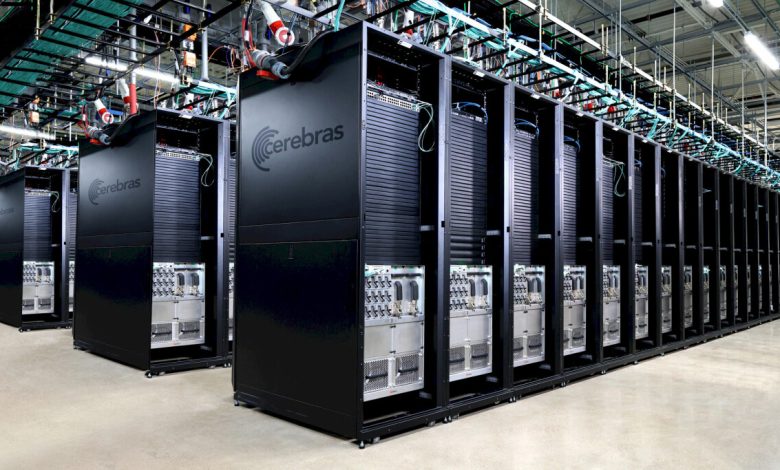
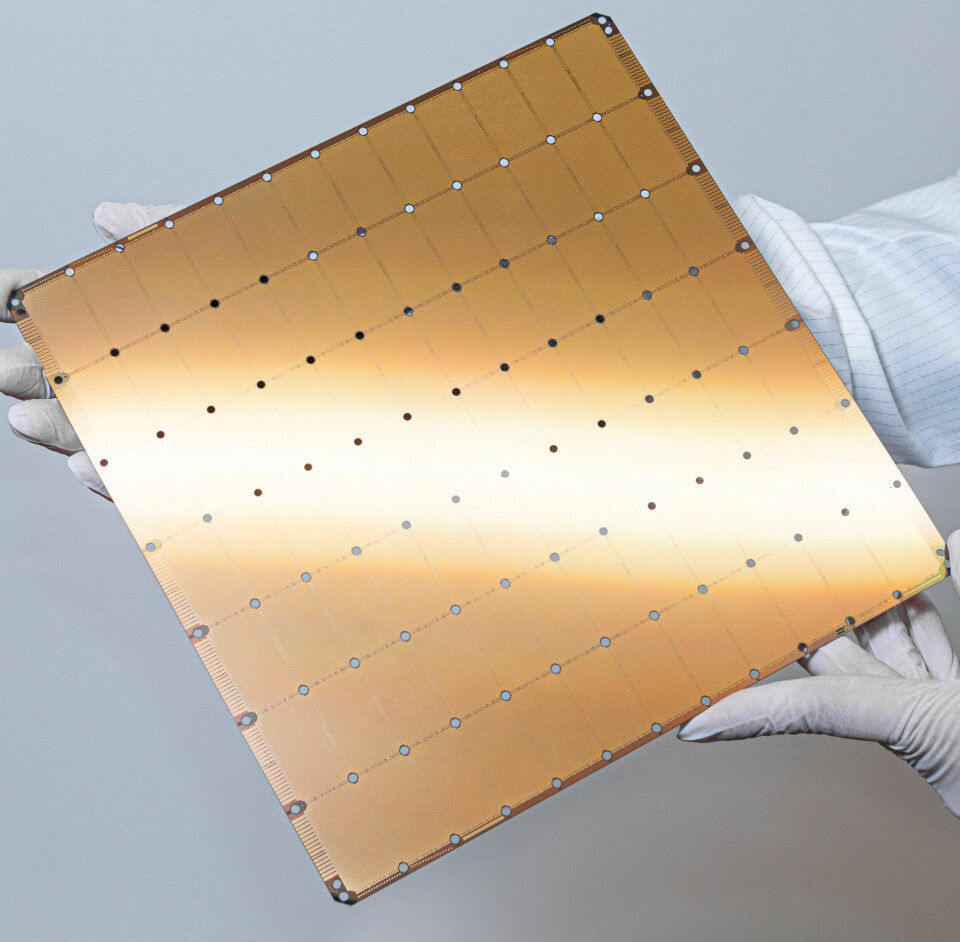
Waferscale
chip pioneer and AI systems maker Cerebras Systems filed
to go public back in September 2024 because it needed a Wall Street cash
infusion so it could expand its customer base. At the time, it had raised $720
million in five rounds of funding, and its Series F raise was three years in
the rear view mirror. With a valuation of $4 billion, it was time.
Particularly
because 85 percent of the company’s revenue in 2024 was being driven by one lighthouse
customer: Group 42, the Arabic AI model maker formed in 2018 in Abu Dhabi and
backed by the government of the United Arab Emirates. G42, as the company is
commonly known, inked
a deal with Cerebras in July 2023 to buy $300 million of hardware, software,
and services from Cerebras, and in May 2024 it upped the ante and said it
would buy another $1.43 billion in gear and also purchase 22.85 million shares
in Cerebras for $335 million within a year.
As
far as we can tell from the S-1 reports that Cerebras has filed
in September 2024 and then
again this week as it has a second go at going IPO, G42 has spent $434.5
million on Cerebras gear and support for its cloud buildout of a mix of CS-2
and CS-3 waferscale systems from 2023 through 2025, representing 49.4 percent
of revenues for Cerebras for those years. We have combed the two S-1 reports to
give you a composite picture of the financials:
The
biggest money maker for Cerebras in 2025 was not G42, however, but was a new
customer added last year: the Mohamed bin Zayed University of Artificial
Intelligence, which is a graduate-level research institution that was
established in April 2020 and that also located in Abu Dhabi. So these two
customers have pull from the same money bag and accounted for 86 percent of the
$510 million that Cerebras brought in last year.
But
some funny things happened on the way to that initial IPO attempt. First, code
assistants became the killer app for the GenAI era. And second, agentic AI – systems
talking to systems – started being a thing, and latency matters a whole lot
more than it does with chattybots with humans asking questions. Third, people
started figuring out that very expensive GPU clusters made by Nvidia were very
good at batching up inference work with reasonable response times for chattybots,
but some of those exotic machines created by Cerebras and rivals Groq and
SambaNova Systems and loaded up with SRAM cache and not so dependent on HBM
stacked memory, had a memory bandwidth-to-compute ratio advantage that allowed
for very low latency at low levels of interactivity. (Meaning small or no
batches, but real-time and often single user.)
And
so, private equity companies started lining up to give Cerebras big bags of
money and the company quietly pulled the plug on the initial IPO attempt. The
company’s Series G funding round came in at $1.1 billion in October 2025,
pushing its valuation up to $8.1 billion, and another $1 billion in Series H
funding came in this year in February, driving the company’s valuation to $23
billion.
As
these funding rounds were happening, model maker OpenAI and cloud builder Amazon
Web Services inked deals to install Cerebras to drive their AI inference workloads.
While much has been made of the
transformative $10 billion deal that Cerebras inked with OpenAI back in January,
which includes a $1 billion working capital loan to help Cerebras scale up its
manufacturing operations. The latest S-1 says that this OpenAI deal has the potential
to scale to $20 billion over multiple years, but confirms that the initial install
is for 750 megawatts of CS systems to be installed through 2028 and options for
another 3 gigawatts of gear in 2029 and 2030. We believe that OpenAI will be mostly
installing CS-4 machines, based on a new WS-4 architecture that we expect to
come out later this year, but that is a hunch. OpenAI and Cerebras are also
doing some sort of co-development for future CS machinery, something that has
not been detailed at all.
In
March this year, Cerebras inked a “binding term sheet” with AWS to marry CS-3
systems to its homegrown and current Trainium 3 and as well as its future
Trainium 4 AI systems, which Cerebras characterized as a multi-year deal “to
bring fast inference to an even bigger scale through global distribution.” The
contrast in that sentence snippet above referred to the OpenAI deal. We do not
know if that deal has been fully negotiated and signed, but the latest S-1 says
the term sheet is “binding with respect to pricing, exclusivity, minimum
capacity, and certain other protections in favor of AWS.” The prospective deal
also includes a warrant for 2.7 million shares of Cerebras, and depending on
the valuation that Cerebras gets on Wall Street, could be worth a lot. The
vesting of this warrant is pegged to product purchases – something we have seen
from other AI infrastructure suppliers.
Of
these two deals, AWS could end up being more important in the long run than
OpenAI because AWS has both a lot of customers and a lot money it can pull from
other businesses to invest in expensive AI systems. OpenAI is ambitious and clever,
but is almost certainly losing as much money each quarter as it is generating
in revenues – if not more.
Here’s
the thing to contemplate as Cerebras files to go public again, and this time,
we think it will finish out.
Nvidia
“acquihired” most of Groq as last year came to an end for an enormous $20
billion to add Groq LPU motors to its inference stack, allowing for consistent low
latency that its GPU systems cannot deliver. Nvidia co-founder and chief
executive officer showed
precisely how much Nvidia needed Groq in his keynote at the GTC 2026
conference in mid-March. That keynote showed full well how breaking inference
into two pieces – the prefill part where context is provided and tokens of that
context are chewed on and analyzed and the decode part where the model
generates tokens as a response – results in better overall GenAI performance,
and perhaps overall better price/performance. Certainly better user experience,
whether that user is human or an AI agent.
With
Nvidia basically owning Groq, everybody else is hunting around for a fast GenAI
decode engine, and the wonder is why Intel has not already bought SambaNova and
why AMD has not already bought Cerebras. Arm/SoftBank might be able to create something
interesting for low latency inference from the
Graphcore acquisition SoftBank it did in July 2024 and sell it to system
makers, much as it is now doing with Arm server CPUs as evidenced by the
AGI CPU that Arm co-created with Meta Platforms and that it will be selling
to any and all buyers later this year.
For
now, Cerebras is content to have pocketed that $2.1 billion in equity and
expanded into a cloud builder, provided the deal gets done, and a dominant AI model
builder, which has to come up with the money to serve up tokens to its customers,
one way or another.
A
few thoughts to wrap this up.
The
cash and equivalents line from the latest S-1 does not report the full
liquidity of the company right now, or even at the end of December last year.
There was another $228.7 million in restricted cash at year end, and Cerebras
had another $406.5 million in marketable securities by the end of Q4 2025, too.
That is $1.34 billion in liquid assets. In January 2026, Cerebras got $1
billion net from the Series H round and the $1 billion in working capital from
OpenAI, too. So it has $3.34 billion of liquidity.
However,
that OpenAI buildout is expensive, and Cerebras has the money to start tackling
it. A few more billion dollars from Wall Street will certainly help. But doing the
IPO is also about expanding the company enough – and making it famous enough –
to attract other customers who may not buy gigawatts of capacity, but who will
add up to a proper customer pyramid if all goes well.
The
real pressure is that Cerebras has raised $2.55 billion in funding, and now all
of those investors want to make some money off that cash and the GenAI boom
before something turns. There may not be a better time for Cerebras to go
public than 2026, because even AI cannot predict what 2027 might look like in
this crazy world we all live in.