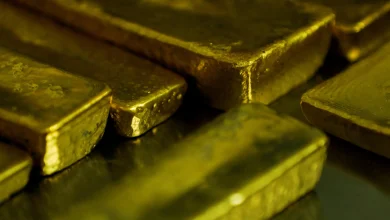
Analysis: Gold market undergoes normal consolidation despite talk of collapse

Recently, headlines have increasingly focused on the decline of gold, with some even suggesting a ‘collapse’ of 20% to 25%. However, when looking at the full picture, the situation is different. Gold underwent a correction after hitting an all-time high at the beginning of 2026, but has since recovered a significant portion of that drop. Currently, it is approximately 10% to 12% below its peak, which clearly indicates we are not seeing a real crash, but rather a normal adjustment following accelerated growth.
Analysis by Daniel Văduva, Partner at Avangard Gold
The correction was primarily influenced by short-term factors: the strengthening of the dollar, high interest rates, and profit-taking following the 2025–2026 rally. This is normal behaviour in a market that has grown significantly in a short period.

The role of the Iran conflict
The situation in Iran brought substantial volatility to the market and created contradictory short-term reactions. Initially, gold rose sharply as investors turned to safe-haven assets. Essentially, immediately after the escalation of the conflict, the price climbed rapidly towards record highs. Afterwards, however, the market recalibrated: oil prices rose alongside uncertainty regarding navigation through the Strait of Hormuz, inflation became a problem again, and interest rates remained high or even increased. In this context, gold faced short-term pressure as yields from other assets became more attractive to investors.

It is important to understand that these types of conflicts do not move gold in a single direction, but rather in stages. What does this mean for the long term? Such conflicts do not weaken gold – on the contrary.
Historically, geopolitical instability increases interest in gold, as investors seek safe assets and states consolidate their reserves. Even now, we see central banks buying gold at record levels, retail demand is at historic highs, and large investors are shifting capital toward defensive assets. Furthermore, there are real risks that such conflicts could lead to higher inflation, economic slowdowns, and pressure on the global financial system. All of these are, traditionally, positive factors for gold.

How the broader market views gold
Finally, institutional positioning also matters. Major banks such as JPMorgan Chase or Bank of America are discussing scenarios in which gold could exceed USD 6,000 per ounce in 2026, depending on the evolution of interest rates and the global economy.

From the perspective of Avangard Gold, what we are seeing now is a cyclical correction, not a fundamental one. Gold rose strongly, corrected, and then began to recover. The fact that it remains close to its peak shows that market interest has not disappeared. In conclusion, if we only look at the headlines, it appears that gold ‘fell sharply’. If we look at the context, we see something else: it is still near its highs, demand remains very high both at retail and institutional levels, and global instability persists.
From our perspective, gold is not in a decline. It is in a normal phase of consolidation within a trend that remains upward.