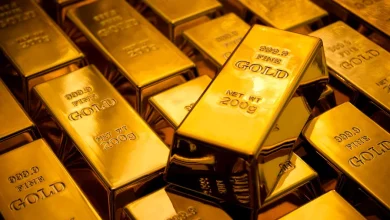
Deutsche Bank sees gold at $8,000 in a less dollar-dependent world
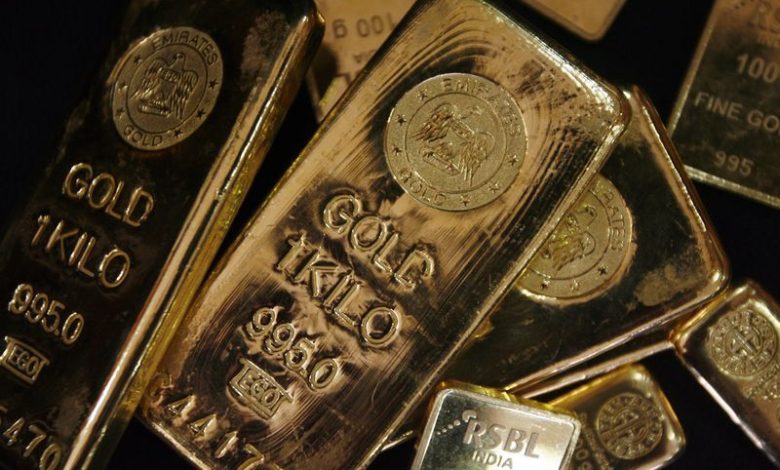
In a research note published on Monday April 27, Deutsche Bank presents an ambitious thesis for gold, framing it no longer merely as a hedge against inflation or the dollar’s weakness, but as a primary beneficiary of a fragmenting world. For the German bank, the era that began after the fall of the Berlin Wall – dominated by globalization, American hegemony, and the accumulation of dollar reserves by emerging markets – is coming to an end.
According to Deutsche Bank, this “return of history” could drive gold’s share of global central bank reserves towards at least 40%, up from nearly 30% today. The bank points out that the dollar’s share of these same reserves has already fallen from a peak of over 60% in the early 2000s to about 40%, while gold’s share has tripled since its lows.
The primary driver is expected to come from emerging markets, as their central banks have added over 225 million troy ounces to their reserves since the 2008 financial crisis. While China, Russia, India, and Turkey remain the largest holders, Deutsche Bank emphasizes that the trend is broadening to include Poland, Kazakhstan, Saudi Arabia, Qatar, Egypt and the United Arab Emirates. In both Eastern Europe and the Middle East, a significant portion of gold reserves has been accumulated since the invasion of Ukraine.
The bank believes that this official gold rush is primarily driven by a logic of financial security. The 2022 freezing of Russian dollar and euro reserves served as a reminder to sovereign states that traditional reserve assets could be vulnerable to sanctions. Gold, by contrast, can be stored locally and does not rely on the promise of any issuer. Deutsche Bank further notes that emerging countries that are militarily closer to China and Russia hold, on average, more gold than those integrated into the Western bloc.
According to Deutsche Bank’s simulations, even if emerging market FX reserves were to decline to 5 trillion USD from approximately 8 trillion USD today, gold could reach nearly 8,000 dollars per ounce within the next five years if these central banks target a 40% allocation of gold in their total reserves.
However, the bank clarifies that this is not an official forecast, but rather a conceptual framework. Nevertheless, the message remains clear: gold is no longer just a function of investor demand or interest rate expectations, but also an indicator of mistrust towards the dollar-dominated monetary architecture. The future trajectory will therefore depend as much on purchases by emerging central banks as on the evolution of geopolitical tensions and the future role of the dollar in global trade.