How will the 2026 Senedd election change Welsh politics?
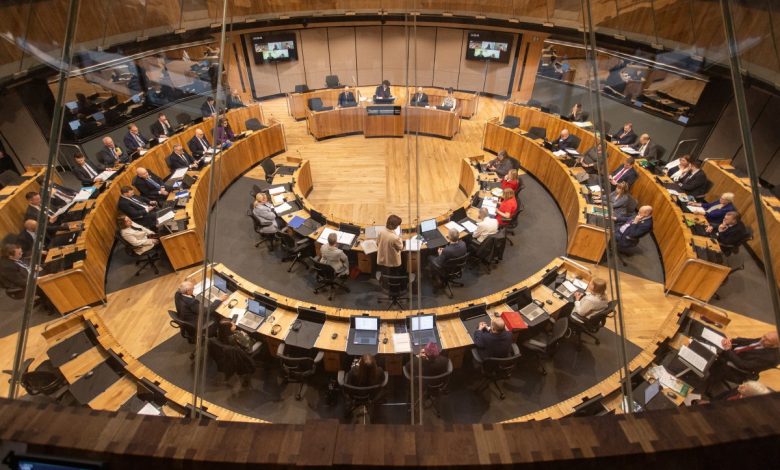
Next week, a new Senedd will be elected in Wales, using an altered electoral system. The result will be an enlarged Senedd, with more members than previous incarnations. Jess Blair explains the changes that have been made, analyses their pros and cons, and argues that the chosen electoral system of closed lists should be replaced with the Single Transferable Vote system (STV).
On 7 May 2026, voters across Wales will elect not just a new Senedd, but a fundamentally different one. This is due to the practical level of how the election will work in Wales, where we will see an entirely new set of arrangements in place for the very first time.
The changes to the Senedd
When the Senedd was established in 1999, it was with 60 Members (MSs) elected via a combination of 40 First Past the Post seats and 20 regional Closed List seats.
Following changes in the previous Senedd it will be 96 Members taking their seats in May, bringing the Senedd into line with the Scottish Parliament at 129 MSPs and the Northern Ireland Assembly at 90 MLAs. This is an appropriate increase, especially given Northern Ireland has a smaller population than Wales.
Alongside this increase Welsh voters will use a new electoral system. All 96 MSs will be elected via a Closed List system, where parties will field a list of candidates in each constituency. Voters will be able to cast a vote for a party or an independent candidate, but not an individual on a party’s list. So, if your favourite candidate is stuck at fourth on their party’s list, you have no way of moving them up.
To facilitate these changes, 16 new constituencies have been created, which mirror the 32 Westminster constituencies, with six MSs returned in each. On top of this elections are moving from a five-year to a four-year term, and the limit on the number of government ministers allowed is increasing from 12 to 17, which could increase further to 18 or 19, subject to the Senedd’s approval.
How have we got here, and why?
It has been a long road to get here. The need to increase the number of MSs has been discussed since the early days of devolution. An Expert Panel, chaired by Professor Laura McAllister, was established in 2017, which recommended an increase in the size of the Senedd, and was followed by a number of Senedd committees which concurred with the panel’s recommendations. After the 2021 election, we saw the outline of a deal between Welsh Labour and Plaid Cymru that led to a formal agreement on the details.
Finally, in 2024, the Senedd Cymru (Members and Elections) Act received royal assent, and the changes that followed are now in effect for the first time.
The Senedd has long needed an increase in its capacity. It is not acceptable for a national parliament with law making and tax raising powers to be smaller than many local authorities. Ten of Wales’ 22 local authorities are either the same size or larger than the Senedd was at 60 members.
That’s not to say that these reforms were easy. There will always be a difficulty in making the case for more politicians, and some political parties were opposed to the changes.
However, let’s take the case of committees in the Senedd. In practice, having 60 MSs has actually meant a lot fewer than that are able to sit on committees, as government ministers, party leaders of official groups in the Senedd, and the Presiding Officer do not sit on committees. The reality of the Senedd until now has been one of Members sitting on multiple committees, and of sub-committees of just a couple of MSs scrutinising vital legislation.
This has not been good enough.
Imagine you were a Member of the Senedd with two committee meetings that week, with hundreds of pages of notes and evidence submitted by external organisations for each of these meetings. That’s not including the two pieces of legislation and hundreds of amendments you need to look at ahead of crucial votes in plenary, a debate you need to prepare for, and a budget vote. Compare this with Westminster where MPs will typically be on only one committee, although lots aren’t on any. This allows MPs to develop expertise in a particular area and be really across their brief. Increasing the size of the Senedd to 96 while not substantially increasing the number of committees should allow for MSs to have to sit on far fewer committees and develop the expertise on their issue that will lead to better scrutiny of both crucial legislation and substantial budgets. Our parliament needs to be sufficiently resourced to properly scrutinise a Welsh government budget of over £27 billion.
The increase to 96 members will hopefully lead to a much more effective parliament and scrutiny function.
The problem with the electoral system
Because of the increase to 96 Members the previous electoral system was found to be not workable (insufficient) and a new system has been put in place – the aforementioned Closed List system. This is despite it being ruled out by the Expert Panel on Assembly Electoral Reform and despite it being hugely flawed.
Voters will head to the polls on 7 May this year and find themselves unable to vote for their preferred candidate. This means voters will have to endorse a party’s list of candidates. The people who represent us in our national parliament will ultimately be chosen in some cases by party members and in others by party HQs in London or Cardiff.
An effective voting system needs to do a number of things, including being proportional, which in plain language means that the Senedd looks the way the Welsh people voted, and the seats parties get match the votes they won. However, a good electoral system also needs strong accountability between voters and the politicians who represent them. The Closed List system, whilst good on proportionality, falls down on the voter link and accountability.
There is a chance to change this system in the next Senedd. A review mechanism was built into the legislation reforming the Senedd, and pretty soon after May, Members may well find themselves voting on whether to establish this review. Whether this will happen will depend on the makeup of the next Senedd. Some political parties have pledged to enact this review in their manifestos, while others have not.
If this system is reviewed, there is an obvious alternative to replace it, one recommended for the Senedd by the Expert Panel and a Senedd committee: the Single Transferable Vote (STV).
STV is a system that is tried and tested in the UK and has been working well in Scotland (for local elections), Northern Ireland, and the Republic of Ireland for decades. This is a system of proportional representation, where voters number the candidates on their ballot paper. Their favourite candidate is marked as number one, their second favourite number two, and so on. Voters can put numbers next to as many or as few candidates as they like. This system ensures proportionality and gives voters much more choice. For example, if your favourite candidate has no chance of being elected, your preferences will tell the people counting the votes to move your vote to your second preference candidate.
When voters in Wales head to the polls on 7 May, they will be electing a very different Senedd. Change may well be the buzzword for this election, but it feels unlikely that there won’t also be a call for further change, especially when it comes to the arrangements for future elections. At a time when trust in politics is at an all-time low, we need to ensure that the Senedd, and all parliaments in the UK, not only properly reflect how people voted but also maintain a strong link and accountability between voters and elected politicians.
This post is based on remarks made by the author at the Unit event, How will the 2026 Senedd election change Welsh politics?. The event’s chair was Unit Deputy Director Professor Alan Renwick and the other panellists were Professor Laura McAllister, former Co-Chair of the Independent Commission on the Constitutional Future of Wales, and Paul Silk, former Clerk to the National Assembly for Wales and Chair of the Commission on Devolution in Wales.
About the author
Jess Blair is Director of Electoral Reform Society (ERS) Cymru.
Related
Credit: Source link