Supreme Court ruling could hurt Black, Hispanic representation in D.C.
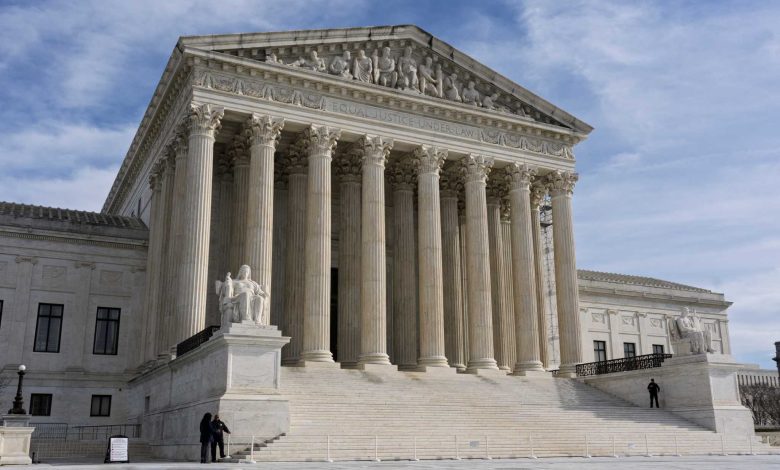

FILE – The Supreme Court is seen on Capitol Hill in Washington, Dec. 17, 2024. (AP Photo/J. Scott Applewhite, File)
J. Scott Applewhite/Associated PressHouston with no Black members in
Fewer Hispanics from Texas in the U.S. House despite their growing population numbers?
Both are more possible outcomes
Article continues below this ad
In the majority opinion, Justice Samuel A. Alito Jr. wrote that in the court’s updated view of the Voting Rights Act, states no longer need to draw districts based on racial considerations. If a state dismantles districts that favor Black or Hispanic candidates, challengers would have to provide evidence showing states “intentionally drew its districts to afford minority voters less opportunity because of their race.”
Critics in Texas
“Now it’s going to be virtually impossible to prove that maps are being gerrymandered in a way that is racist,” said Menefee, who is also an attorney.
Menefee warned that Republicans could now split Harris County’s 1 million Black residents into 10 different congressional districts to limit their power. Houston currently has three Black members of Congress, two Democrats and one Republican. U.S. Rep. Wesley Hunt, R-Houston, did not seek reelection and Menefee and U.S. Rep. Al Green have been pitted against each other in a primary assuring one of them will not return next year.
Article continues below this ad
But not everyone is worried about that. Hunt has said his skin color is irrelevant to the conversation.
“I’m not here because I am Black, I am here because I’m a qualified representative for Congressional District 38,” he said. “I don’t care how many Black people are here. I want the most qualified people here.”
Texas can’t redraw districts this year, but other states are showing a pathway the GOP can follow here. Louisiana Gov. Jeff Landry, a Republican, is already suspending that state’s elections next month to draw new maps to help GOP numbers in Congress.
And in Tennessee, U.S. Sen. Marsha Blackburn, a Republican, called on that state’s legislature to redraw maps to wipe out that last Democratic-held seat in Memphis, based on the ruling.
Texas Sen. José Menéndez, D-San Antonio, said Republicans in the Texas Legislature could similarly push to reduce the number of Democrats in Texas by going after Hispanic districts in the Legislature and Congress with even fewer protections from the federal government.
Article continues below this ad
“We’ve seen the carving and the painful gerrymandering that has taken place to this point,” Menéndez said. “Now with this decision by the Supreme Court I belive that it will only magnify the desire to maximize their representation, regardless of the price.”
Menéndez said we’ve already seen a sneak preview of things to come.
“Over the last 10 to 20 years, 90% of our growth has been minorities, yet we haven’t seen any new Hispanic opportunity seats,” he said.
Credit: Source link