Falling bond yields ‘show Rachel Reeves has won markets’ confidence’
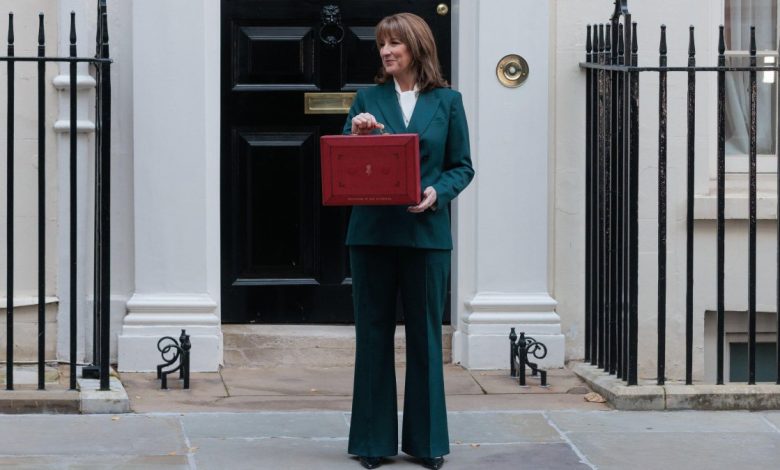
Market confidence in Sir Keir Starmer and Rachel Reeves has gained momentum since the summer, prompting experts to proclaim the end of the UK’s “risk premium”, which could save taxpayers billions of pounds.
The sharp increase in UK government borrowing costs relative to peers in the G7 since Labour won the general election in July last year has partially unwound since the chancellor again emphasised her commitment to keeping to her fiscal rules.
Since September, the yield on government bonds, or gilts, has fallen 0.2 percentage points more than the equivalent rates on debt in the United States and the eurozone, according to the Institute for Public Policy Research, a think tank with close ties to the Labour Party.
Researchers at the IPPR said that “confidence is clearly growing in the government” among investors, particularly since Reeves recommitted to the fiscal rules — funding daily public spending solely with tax revenues and cutting the debt stock — in her speech at the Labour Party conference at the end of September.
Earlier this year, and compared with 2022, the yield on the benchmark ten-year UK government bond had risen 1.1 percentage points more than the US equivalent and 0.6 points more than the typical eurozone ten-year bond.
The difference in the yield on the UK 30-year bond was even higher, at 1.5 percentage points compared with the US and one point relative to the eurozone.
This additional yield on UK debt is what traders call a “risk premium”, which often reflects market anxieties about fiscal credibility, high inflation and uncertainty about the trajectory of an economy.
“The reasons for this premium are not straightforward, especially given that the UK’s economic fundamentals are stronger than those of many countries with lower borrowing costs,” the IPPR said, pointing to the country’s debt-to-GDP ratio of around 100 per cent, which is below that of the US, Italy and Japan.
Dave Ramsden, a deputy governor at the Bank of England, told MPs on the cross-party Treasury committee on Tuesday that bond market volatility was lower in the run-up to Reeves’s budget last month than for fiscal events overseen by the Conservatives at the end of their parliamentary tenure.
Markets were orderly after the budget and there “were no concerns” about financial stability, “which of course there have been on previous occasions in the UK and in other jurisdictions”, he said.
Bank officials said that the budget could lower inflation by up to 0.5 percentage points from its present level of 3.6 per cent. Britain has had the highest government borrowing costs in the G7 for some time, initially caused by the financial market chaos after Liz Truss’s mini-budget three years ago.
Britain’s economic fundamentals are stronger than those of many of its peers
NIGEL JARVIS/GETTY IMAGES
This risk premium increased after Starmer and Reeves took office about 18 months ago, but the IPPR thinks that it will continue to unwind after Reeves more than doubled her fiscal headroom at the budget to £22 billion through back-loaded tax rises and spending cuts. Under plans set out by Reeves last month, borrowing is set to halve by the end of the current parliament in 2029, the fastest drop of any G7 country.
Despite the recent fall in yields, UK borrowing costs are still much higher than those in the US and eurozone. Debt interest spending is forecast to exceed £100 billion in each of the next five years, according to the Office for Budget Responsibility.
• Gerard Lyons: Labour should stop obsessing about fiscal headroom and focus on debt
Carsten Jung, associate director for economic policy at the IPPR, said: “With clear, credible fiscal plans, the UK could be a star performer in the G7 — and simply reassuring markets that we’ll stick to those plans could save billions.”
Totally eliminating the UK’s risk premium could save taxpayers as much as £7 billion a year by 2029-30, the IPPR said.
Jung also urged the Bank of England to “pull its weight” and cease selling government bonds that it purchased under its quantitative easing programme. The central bank thinks that it has pushed UK gilt yields up by as much as 0.25 percentage points from its bond disposals, known as quantitative tightening.
The IPPR also said that UK yields had been pushed up because of a reduction in demand for bonds from final salary pension funds.