The Battle of iShares ETFs: Should You Buy the S&P 500 ETF or Russell 2000?
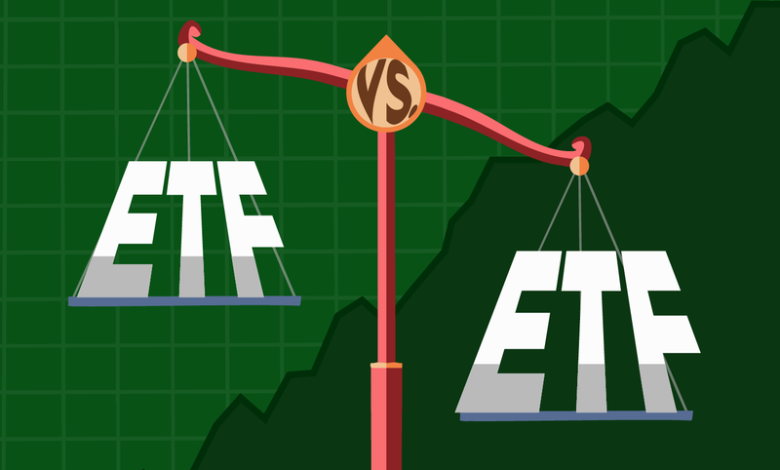
Investors choosing between the iShares Core S&P 500 ETF (IVV +0.71%) and iShares Russell 2000 ETF (IWM +0.75%) are essentially deciding between lower-cost, technology-heavy large-cap stability and volatile small-cap exposure.
Both iShares offerings provide foundational broad-market exposure, but they target opposite ends of the capitalization spectrum. While IWM tracks small-cap companies, IVV follows the S&P 500, making it a staple for those seeking large-cap growth and stability within a diversified portfolio.
Today’s Change
(0.71%) $5.33
Current Price
$751.07
Key Data Points
Day’s Range
$747.09 – $753.02
52wk Range
$578.31 – $753.02
Volume
125K
Snapshot (cost & size)
| Metric | IWM | IVV |
|---|---|---|
| Issuer | iShares | iShares |
| Expense ratio | 0.19% | 0.03% |
| 1-yr return (as of May 13, 2026) | 36.9% | 27.8% |
| Dividend yield | 0.9% | 1.1% |
| Beta | 1.30 | 1.00 |
| AUM | $78B | $828B |
Beta measures price volatility relative to the S&P 500; beta is calculated from five-year monthly returns. The 1-yr return represents total return over the trailing 12 months. Dividend yield is the trailing-12-month distribution yield.
The cost difference is notable; the iShares Core S&P 500 ETF is significantly more affordable with an expense ratio of 0.03%, compared to 0.19% for the iShares Russell 2000 ETF. Additionally, the iShares Core S&P 500 ETF currently offers a higher yield for investors seeking income.

iShares Trust – iShares Russell 2000 ETF
Today’s Change
(0.75%) $2.11
Current Price
$284.78
Key Data Points
Day’s Range
$281.96 – $285.65
52wk Range
$199.65 – $287.58
Volume
1.1M
Performance & risk comparison
| Metric | IWM | IVV |
|---|---|---|
| Max drawdown (5 yr) | (31.9%) | (24.5%) |
| Growth of $1,000 over 5 years (total return) | $1,393 | $1,944 |
What’s inside
The largest positions in the iShares Core S&P 500 ETF include Nvidia at 8.6%, Apple at 6.9%, and Microsoft at 4.7%. This fund holds 508 securities and is heavily weighted toward technology at 37%, followed by financial services at 11% and communication services at just under 11%.
In contrast, the iShares Russell 2000 ETF focuses on industrials (19%), technology (18%), and healthcare (16%). Three of its largest positions are Bloom Energy (1.9%), Credo Technology (0.9%), and Fabrinet (0.7%). Both the IVV and IWM launched in 2000, providing a long record of performance.
For more guidance on ETF investing, check out the full guide at this link.
What this means for investors
Both iShares funds are solid long-term performers, but investors need to think carefully about their goals. Each fund serves a different role in an investor’s portfolio.
Aside from the cost and sector differences, these ETFs have delivered very different returns over the last decade. A $1,000 investment in the IVV would be worth about $4,300 today, significantly outperforming the IWM’s value of $2,933.
This reflects how small-caps can go in and out of favor among investors, which is the key thing to consider here. The S&P 500 occasionally experiences volatility, but the Russell 2000’s small-cap focus means it sees larger price swings, as noted by its higher beta, and can go through longer periods when it underperforms large-cap stocks.
However, after five years of underperformance, small-caps are starting to outperform. The IWM has beaten the IVV over the past 12 months, and it may continue to do so for another few years.
Overall, the iShares Russell 2000 ETF is the better choice for investors who are already heavily weighted toward large caps and want exposure to small caps. But for investors just starting, the iShares Core S&P 500 ETF is a better choice due to its more stable performance and focus on industry-leading companies.