Investing in war and peace through dual-use technology
The writer is the author of Tech Money
When wars break out, there are very few winners in the stock market. One group that should defy this trend are defence stocks. Demand explodes. Price sensitivity diminishes. When your soldiers are in the trenches, you don’t have the luxury of prolonged negotiations.
But this is not actually how things have been playing out, neither throughout history nor in the current US/Israel war with Iran. Enter the defence stock paradox. While arms makers thrive in anticipation of conflict, they actually fare poorly once the first rockets are launched.
Before the attack on Pearl Harbor in December 1941, for example, US aircraft manufacturers had highly profitable years, only to underperform the markets from 1942 to 1945.
Since the start of Operation Epic Fury, legacy contractors are falling approximately as much as the broader market, with aerospace stocks even down 15 per cent and more.
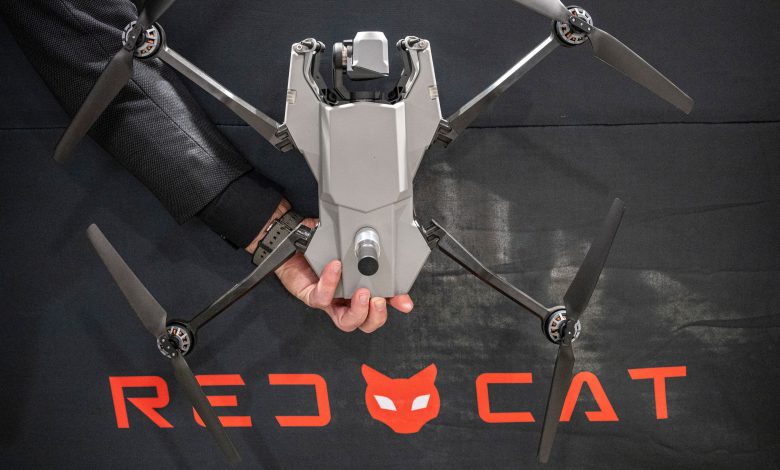
There is one group, however, that defies this trend: modern defence tech firms. Many companies like AI-specialist Palantir, drone manufacturer Red Cat Holdings and private autonomous platform expert Anduril have seen better stock performances, or have closed large new defence contracts.
This is even more remarkable, as tech stocks are high beta equities, meaning that when the market is down, they usually go down more. This success is the direct result of the consequential progression from industrial age wars to software age wars.
Software shift
It is no secret that a shift is happening towards software and AI-driven warfare, but this shift does not just add an additional set of companies and capabilities, it completely changes the rules of the game.
To understand why the defence stock paradox does not apply to tech companies, we first have to understand why the paradox exists in the first place.
The major reason defence stocks underperform in times of war is the scale mismatch of demand and supply. What the battlefield consumes is higher by magnitudes than what contractors can deliver. These are comparably simple to manufacture, but the machinery, material, and staff needed to churn them out can’t be added overnight, especially because of fragile, international supply chains. Even the U.S. Army fell short of its monthly target of 100,000 155mm artillery rounds, reaching only a capacity of 40,000.
Contrast that to the new generation of defence firms. Things like data fusion, counter-drone tech and battlefield decision support have no such scaling problems and most of them can be provided instantaneously.
In fact, scale even makes the business case more compelling as software’s marginal costs are close to zero. New defence tech companies can thus thrive and scale much quicker during armed conflicts.
Asymmetric strategies
The software age has also heaved asymmetric warfare onto a new level. Comparably cheap drones can wreak havoc on critical infrastructure or at least make the enemy waste expensive missiles to shoot them down. Iran’s Shahed drones cost between $20,000 and $50,000 to build, but it takes a $3mn Patriot missile to shoot them down.
Thanks to AI and autonomous control systems, drones can also be deployed at massive scale to destroy traditional war assets like tanks and fighter jets, exacerbating the mismatch of supply and demand. At the same time, this plays into the hands of new defence tech firms, which provide the vary essentials for asymmetric strategies.
Of Palantir’s $4.5bn revenue in 2025, 46 per cent were purely commercial uses, including hospitals, banks and industry. This hybrid nature also helps to keep defence stocks more stable when wars end
A prolonged war means higher financing costs, rising energy and commodity prices, and often a severely diminished workforce. At the same time defence companies are perceived as being the winners of war, so politicians routinely strong-arm them and squeeze their profits.
Contracts are renegotiated. Share buybacks can be prohibited. Investors end up disappointed. Pure-play defence companies that build fighter jets, tanks, and missiles are clear targets.
Software-first contractors are in a different position, thanks to their dual-use approaches. Their products can serve both military as well as civilian applications. It is thus difficult to label them war profiteers. Of Palantir’s $4.5bn revenue in 2025, 46 per cent were purely commercial uses, including hospitals, banks and industry. This hybrid nature also helps to keep defence stocks more stable when wars end.
Defence dividends
War is the ultimate innovation booster, and those companies can take wartime innovation and put it to commercial use later. They can therefore not only avoid the traditional post-war slump but actually open up new product markets.
As the hardware-centric, industrial-age war paradigm yields to a software-centric one, a strong opportunity presents itself to tech investors.
War is still unpredictable and some defence tech products and technologies will falter on the battlefields, as will the companies behind them. But as a category, this new generation of defence tech will, unfortunately, make war more profitable.
And just as with so many other sectors of the economy, tech is rewriting the rule book from the ground up. Investors must follow technological cycles and trajectories more than traditional wisdom and metrics, but the opportunities are undeniable.
Igor Pejic, author of Tech Money, addressing the new rules of investing in the technology age