Tinoos Seeks Hong Kong IPO
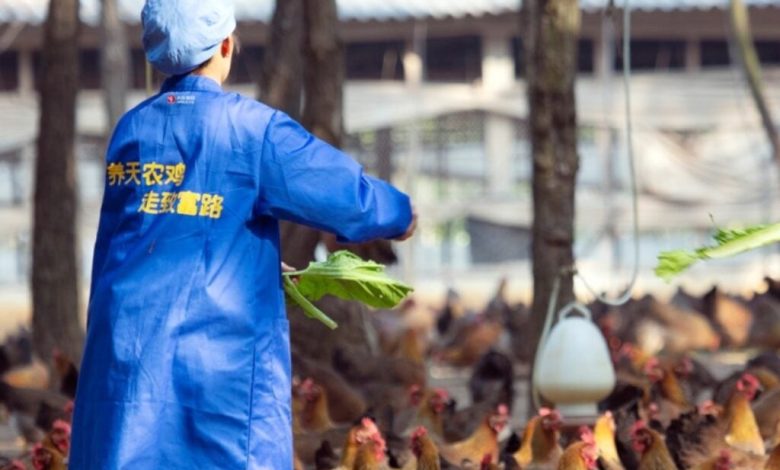
The pig and chicken breeder has filed to list in Hong Kong, with mid-sized underwriter CMS International as the sponsor
image credit: Bamboo Works
Key Takeaways:
- Tinoos Group has filed for a Hong Kong IPO, reporting gross profit for both its Qingyuan chicken and pork businesses both fell substantially last year
- The meat producer’s revenue dropped by more than 10% in 2025 to 4.3 billion yuan on falling meat prices, sending the company’s bottom line into the red
Founded in 2003 as a poultry farmer, Tinoos has evolved into one of China’s leading providers of high-quality meat products. The company runs a vertically integrated whole-industry-chain system centered on its core Qingyuan chickens, pigs and other meat products, encompassing breeding, feed production, slaughter, and food processing, as well as brand marketing.
Tinoos is the clear king of China’s Qingyuan chicken roost, accounting for about two-thirds of the national market, according to third-party data in the prospectus. It ranks sixth among all yellow-feathered broiler providers in China. Its pork business, based in the city of Chongqing, ranks tenth among pig breeders in Southwest China.
Boosted by policy support and growing “brand” awareness, Tinoos points out that the market for Qingyuan chickens is expected to expand from 1.88 billion yuan ($276 million) in 2025 to 2.92 billion yuan by 2030, representing 10.4% annual growth.
But don’t let its Qingyuan reputation fool you. While Tinoos is indeed China’s largest supplier of Qingyuan chickens, its core business is actually pork. In 2025, its pig business accounted for 62.4% of the company’s revenue, reaching 2.66 billion yuan. Qingyuan and other local chickens accounted for just 22.9% of the pie, amounting to 975 million yuan.
The company’s gross profit last year totaled 457 million yuan, sliding 49% year-on-year. Within that, the live pig business supplied 306 million yuan, or 67.1% of the total, down 53.5% year-on-year; gross profit from Qingyuan and other chickens was a slimmer 57 million yuan, down by an even sharper 67.6%, accounting for just 12.5% of the total.
The gross profit plunge owed mostly to tumbling prices. The prospectus reveals that while Tinoos’ live pig sales volume was flat last year at 1.4 million heads, the average selling price fell 16.8% from 2,281.6 yuan per head in 2024 to 1,897.8 yuan last year.
The story was similar for Qingyuan chickens, whose average price fell 15.9% from 37.2 yuan per head in 2024 to 31.3 yuan last year. Unlike pork, sales volume for the chicken business actually grew 8.2% year-over-year last year to reach 31.1 million heads. Furthermore, a 2% year-on-year rise in the first quarter for yellow-feathered broilers, which tend to move in tandem with Qingyuan chickens, shows chicken prices may finally be stabilizing.
War fallout
The corn-growing process requires intensive use of nitrogen fertilizer that generally accounts for 60% to 70% of total fertilizer costs for the crop. The main raw material for nitrogen fertilizer production is urea, which is typically refined from natural gas. That’s where the Middle East comes in, since its high capacity for low-cost natural gas has given it more than 30% of the global export market for urea.
The ongoing U.S. and Israeli war with Iran, and resulting closure of the Strait of Hormuz, caused the price of urea to briefly soar above $700 per ton in April, representing a massive 80% increase over February. Observers believe the big price jump will ultimately trickle down into feed prices, which could deal a fresh blow to Tinoos as it struggles with low pork and chicken prices.
Oversupplied pork market
To subscribe to Bamboo Works weekly free newsletter, click here
Benzinga Disclaimer: This article is from an unpaid external contributor. It does not represent Benzinga’s reporting and has not been edited for content or accuracy.