Jessica Anderson on CNBC: Why 50 Million Uncovered Workers Can Finally Claim an Edge
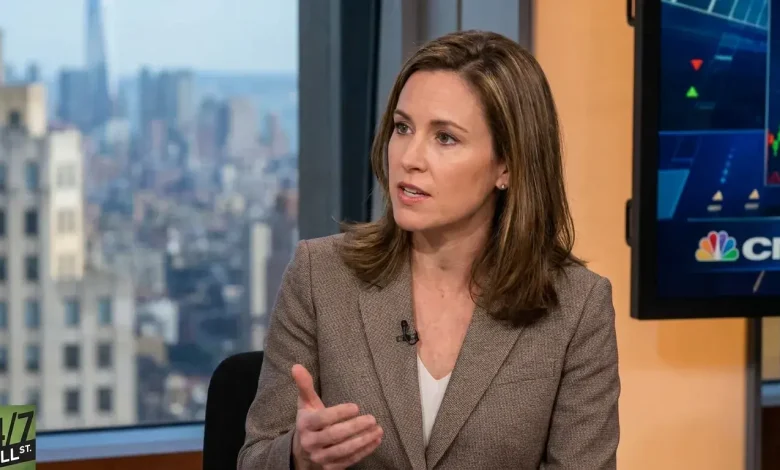
On CNBC this week, Jessica Anderson, president of Sentinel Action Fund and spokesperson for Save Match Grow, made the case for President Trump’s new retirement vehicle in plain terms: “This is targeted for the 50 million American workers that don’t have access to an employer sponsored plan. So think of it like a TSP, a thrift savings plan. But now for all these workers, gig economy workers, small business owners, entrepreneurs, they now have access to this investment long term investment vehicle, something that they would never have access to before.”
The stakes are concrete. If you drive for a rideshare app, freelance, or run a one-person LLC, you have watched W-2 employees get an automatic 3% to 6% employer match while you got nothing. President Trump signed an executive order last month creating American Dream Accounts, which offer a federal match of up to $1,000 annually on worker contributions invested in low-cost index funds. Miss the mechanics and you leave free money on the table for your entire career.
When you look closely at the financial reality for independent workers, the stakes are incredibly concrete. If you drive for a rideshare app, freelance, or run a one-person LLC, you have watched W-2 employees get an automatic 3% to 6% employer match while you got nothing. President Trump signed an executive order last month creating TrumpIRA.gov, which offers a federal match of up to $1,000 annually on lower-income worker contributions invested in low-cost index funds. Missing these mechanics means you leave free money on the table for your entire career.
The verdict: real money, but only if you fund it
When you look closely at the underlying financial projections, Anderson’s pitch is mathematically defensible. The example she walked through on air: “If you’re a 40,000 worker today, for instance, and you put in, let’s say $1,200, 3%, by the time you’re 65 at retirement age, you could have $1.6 million saved.“
To understand how to actually reach that massive seven-figure nest egg, we have to look at what that scenario requires. A lower-income worker contributes $2,000 a year. The federal match adds up to $1,000, bringing the annual deposit to roughly $3,000. Invested in a stock index fund earning a long-run historical average near 8% to 10% annually, that contribution stream over 40 plus years produces a seven-figure balance through compounding. The federal match nearly doubles the contribution before a dollar of return is earned. That is the entire game.
The plumbing of this new system is designed so that the structure tracks an IRA on the tax side. “It’s going to operate a lot like an IRA. The thing that it tracks closest to is on the back end. When you take your money out, there’ll be a tax on that side, right? Just like an IRA for the worker,” Anderson told CNBC. Contributions go in pre-tax, growth compounds untaxed, and withdrawals in retirement are taxed as ordinary income.
The flexibility of the plan highlights why portability is the second structural feature that matters. “It’s portable. That’s right. Because think of the gig worker, right? They’re going from job to job to job. And you want an investment vehicle that goes with you,” Anderson said. For someone who stitches together income from three platforms, that solves a problem 401(k)s never could.
The variable that flips the math
The single factor that determines whether American Dream Accounts change your retirement is your age at first contribution. The $1.6 million figure assumes a 40-year runway. Compress the timeline and the outcome collapses. Now, run the same $2,200 combined annual contribution at 8% for someone who starts at 25: roughly $570,000 by 65. Start at 40 with 25 years to compound, and you get closer to $170,000. Start at 55 with a 10-year window, and you finish near $34,000. In other words, you put the same dollars in, but get vastly different dollars out. This means that timing matters more than the match.
However, this same math runs into an uncomfortable backdrop. The U.S. personal savings rate has fallen to 4% in the first quarter of 2026, down from 6% in early 2024. University of Michigan consumer sentiment sits near 50, the lowest point in the past year and near recessionary levels, all while workers feel squeezed. Average hourly earnings are near $37, but core PCE inflation sits in the 90th percentile of its 12-month range, eroding the real value of what does not get invested.
The political fine print
The executive order is just the opening move. Auto-enrollment and a potential expansion of the match to $3,000 still require congressional action. Auto-enrollment is the feature that lifts participation rates from roughly half of eligible workers to north of 90%. Without it, this program will help the disciplined people who opt in and miss the workers it was designed for. The $200 billion 10-year cost is also a moving target if the match expands.
What to do this week
If you’re wondering where to get started, these are the steps to follow:
- If you are a gig worker, freelancer, or small business owner, watch for the Treasury’s account-opening guidance. Anderson indicated the structure mirrors the federal Thrift Savings Plan, so expect a small menu of low-cost index funds.
- Run your own compounding math before you decide what to contribute. Plug your age, target contribution, and an 8% return into any free retirement calculator. The result will tell you whether you need to contribute the minimum to capture the match or push higher.
- If you already fund a SEP IRA or Solo 401(k), do not abandon it. Coordinate. The match is the unique benefit here; your existing tax-advantaged space is not going away.
- Until Congress acts on auto-enrollment, treat enrollment as something you must do yourself. The default outcome is no account.
The headline number is 50 million workers, but the number that matters to you most is the one you contribute in year one.