Oil supply risk rises as Hormuz choke pushes down global stocks
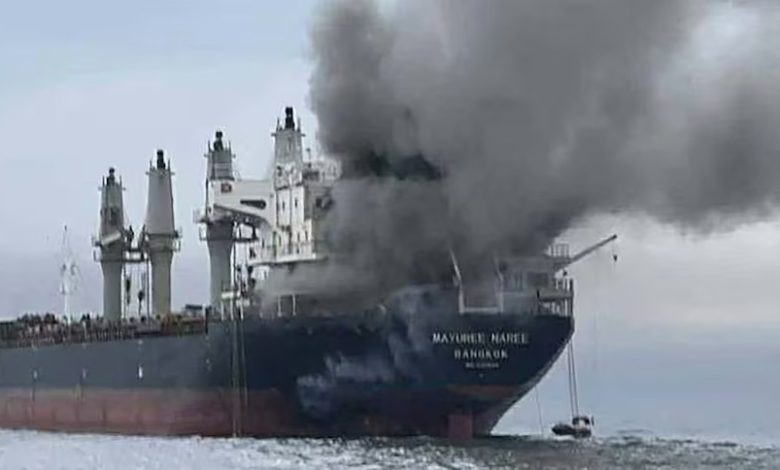
A major strain is building on global oil supply chains as between 17 million and 21 million barrels of crude oil and petroleum products pass daily through the Strait of Hormuz, one of the world’s most critical energy corridors, raising concerns over potential long-term supply disruptions and inventory depletion.
The narrow maritime passage, which accounts for roughly 20 per cent of global seaborne oil trade, is particularly vulnerable due to its limited navigable channels. At its tightest point, shipping lanes are just about two miles wide in each direction, creating what analysts describe as a highly concentrated supply risk zone for global energy flows.
Unlike other strategic chokepoints such as the Suez Canal or the Strait of Malacca, there is no fully viable alternative route capable of handling equivalent volumes of crude oil exports. While partial bypass options exist including Saudi Arabia’s East-West pipeline linking its Eastern Province oil fields to the Red Sea port of Yanbu these alternatives only carry a fraction of the volumes that typically move through Hormuz under normal conditions.
Energy analysts warn that the vulnerability of the corridor is compounded by its centrality to global producers and exporters across the Middle East, making it a critical artery for global energy stability.
According to veteran energy analyst Paul Horsnell, sustained supply disruptions could result in global crude inventory losses approaching 1.2 billion barrels if current drawdown trends continue. He cautioned that some commercial storage systems may reach minimum operating levels as early as August 2026, raising the risk of prolonged market stress.
Energy pricing platform OilPrice.com also warned that any major disruption in the region could have lasting effects on global energy systems, extending far beyond the immediate period of supply shock and reshaping market dynamics for years.
Analysts say the current market condition reflects a growing imbalance between supply strain and demand resilience. Despite sustained price pressures, global oil demand has remained unexpectedly strong, defying conventional expectations of rapid demand destruction.
Consumption of diesel and other distillates has remained particularly resilient, supported by continued freight movement, agricultural activity and industrial operations that have yet to significantly scale back output. Commercial inventory buffers have also helped shield end users from immediate physical shortages, muting the full impact of tighter supply conditions.
In addition, many industrial and household fuel contracts are locked in over multi-month periods, delaying the transmission of higher spot prices into actual consumption behaviour. This has slowed the pace at which demand adjusts to market stress.
Analysts note that meaningful demand reduction typically begins only when price increases become both sharp and sustained. Historical patterns suggest transport operators begin adjusting usage when fuel costs rise between 40 and 60 per cent over a prolonged period, while energy-intensive manufacturers reduce output once higher input costs significantly compress profit margins.
For households, demand contraction is typically observed when fuel spending rises to around 8 to 10 per cent of disposable income, a threshold not yet broadly reached across most economies.
Experts caution, however, that the continued absence of large-scale demand destruction should not be interpreted as market stability. Instead, they say it reflects a delayed response to price signals, with underlying risks masked by inventories and contractual structures that have so far softened the immediate impact of the supply shock.
They warn that once inventory buffers are exhausted or price pressures persist long enough to break consumption thresholds, the adjustment could be abrupt rather than gradual, potentially triggering sharper volatility in global oil markets.