US tech stocks start to struggle

There’s not much steer from the US-Iran talks for us to hang much on. Hezbollah rejected a US-brokered ceasefire between Lebanon and Israel. Meanwhile, US President Donald Trump said he would be “honoured” to meet Iran’s Supreme Leader “if we make a deal”.
All of this means shares are steadily in the green this morning with traders having nothing to hang their negativity on. The FTSE 100 is up 0.35 per cent, with the Cac the same, and the Dax slightly lower. Overnight in New York, things turned around slightly after a bruising Wednesday session, with the S&P 500 rising 0.4 per cent; however, there’s still issues with US tech stocks.
This morning, UK tech stock Raspberry Pi shares surged to a record high on a strong earnings update. Management reported profitability “materially ahead” of the first half of 2025, with earnings on track to be “significantly ahead of current market expectations”. Shares leapt 21 per cent. More on that and other company updates here
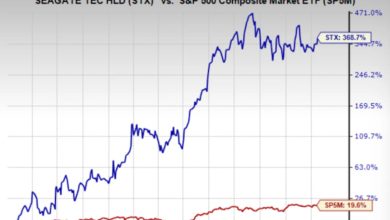
So, the AI rally looks tired and ripe for a pullback: Tech took a bit of a bashing for another day, following the soft read from Broadcom, which prompted profit-taking across AI-linked names. While the Nasdaq slipped a touch, the Dow Jones rallied 1.7 per cent for a record close. Banks were strong performers, and non-tech names rallied. Broadcom dragged Micron and AMD lower, while Nvidia and Alphabet rallied. It was less of a rotation out of broad tech and more a shift out of some of the most bid-up and most profitable trades in semiconductors and hardware stocks, which means South Korea is down 5 per cent today, led down by its AI hardware giants.
Today’s US jobs report is going to be super important for how the market views the Federal Reserve’s next move as we await the first meeting with new chairman Kevin Warsh in a couple of weeks.
The headline non-farm payrolls print is expected to come in around 85,000, down from the 115,000 in April and 150,000 average over the past two months. Unemployment is expected to be steady at 4.3 per cent, with average hourly earnings rising 0.3 per cent month-on-month and 3.4 per cent over 12 months.
Warsh indicated in his confirmation hearing that he expects productivity gains from AI to allow for lower rates. However, he assumes the role at a time when the effects of the US and Israeli war with Iran were once again pushing up inflation. The effect of AI may well be deflationary in the long term, but it does not seem to be the answer yet.
Markets have swung decisively away from pricing in rate cuts this year to pricing in a hike by December. My expectation is for the Fed to swing behind a rate hike even sooner due to the strength of the labour market and rising inflation. June will see the FOMC relinquish its easing bias, and we could have a hike as early as July. This will form a key test of the Fed’s independence under the new regime, as a hike will put Warsh on a collision course with the President.
By Neil Wilson, investor strategist at Saxo UK