Investors shouldn’t count on gold continuing to glitter
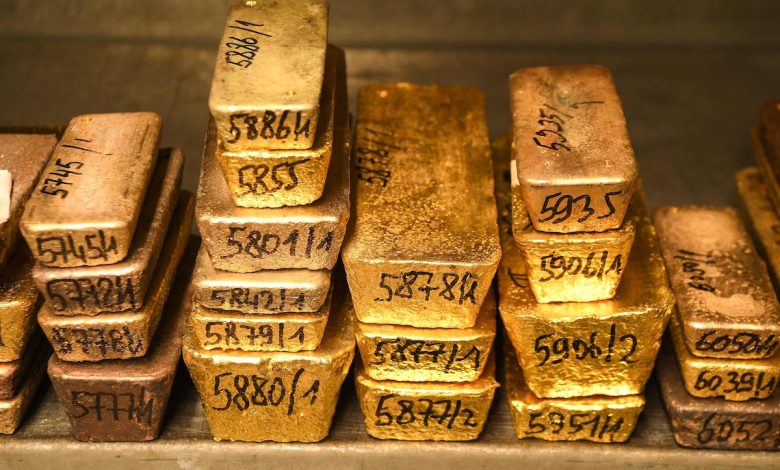
Gold bars and others precious metals at Germany’s Agosi factory in April, 2019. There is no real historical evidence to suggest gold is a tariff shield.PATRICK HERTZOG/AFP/Getty Images
At historic highs, gold bulls believe its rally will persist. Maybe. It trounced Canadian and global stocks this year. Big Canadian mining companies’ varied expansion plans at Juby, Blackwater and more shimmer with the gold boom’s excitement.
My advice? If you rode gold up, thank your lucky stars. Because with gold, investing success depends almost entirely on luck, not skill. Now is a great time to rethink your way to a strategy that doesn’t.
Note: This isn’t a forecast of gold’s direction. I learned more than 50 years ago not to predict gold’s price, up or down – and I make abundant public forecasts. No one can with any consistency, really. And that is my point.
My previous gold column, from May, 2023, showed that most arguments for gold are myths – useless in forecasting. That column noted that gold is historically far more volatile than stocks and bonds, with little industrial use and lower long-term returns. Returns cluster in big booms, big busts and long fallow periods, requiring impeccable market timing … or, more likely, luck.
Since that column, gold meandered through 2023, lagging both the MSCI World Index and the TSX. Then, came big 2024 gold gains and 2025’s boom – putting Au at record highs now.
Gold forecast to glitter again next year despite biggest gain since 1979
Global central bank body BIS raises concerns of double bubble in gold and stocks
Most pundits say tariffs and geopolitical tensions spurred a global flight to “safety” – and that supposedly, more U.S. Federal Reserve rate cuts ahead will fuel its rise higher, as lower rates allegedly render no-yield gold more competitive. Maybe.
But these are just new twists on old, wrongheaded gold myths. Consider: Many pundits now presume that tariffs are inflationary (they aren’t – inflation is about excess money creation by central banks) or recessionary. This allegedly spurs hedge demand one way or the other. But a simple, provable statistical fact: Gold doesn’t hedge anything even partly reliably.
There is zero historical evidence that gold is some tariff shield. The only major precedent since the gold standard ended in the 1970s was Donald Trump’s first term, when he tariffed China and threatened others.
Yes, gold beat the TSX from 2017 to 2020, but that stemmed from Canada’s big and badly negative energy companies’ returns driving TSX lag. Gold slightly lagged the MSCI World Index then. Moreover, flagship indexes for the two countries involved – the S&P 500 and MSCI China – both beat gold returns!
Yes, gold soared amid 2025’s tariffs and related fears. But tariffs themselves didn’t drive that boom. What did? Not fundamentals. Gold hasn’t much of any – and only slight industrial usage – about 9 per cent of global gold production. It has no profits, dividends or yield.
It swings on pure sentiment. Full stop! That is why gold returns cluster in irregular and unpredictable wild rides, a trend that recent gold returns may echo. Superior returns with gold require participating in those huge booms … and avoiding the busts and fallow periods between them. Tough! Can you time markets that reliably? Few can. I can’t. If you can, you need no advice from me.
Consider: Gold’s returns were positive in 59 per cent of rolling 12-month periods since 1974 (vastly lower if you start earlier) – versus the S&P 500 and MSCI World’s 81 per cent and 78 per cent, respectively, (in USD). Or, in Canadian dollars, 63 per cent versus 75 per cent for the MSCI Canada (used for its longer data history than the TSX). Few time entry and exit points in stocks well. Why gamble on something harder still that hinges almost solely on others’ feelings? It is quite like playing musical chairs.
Moreover, all capital markets – including commodity markets such as gold – pre-price widely known fears such as tariffs and geopolitical tensions.
Yes, tariff uncertainty persists, with Canada-U.S. trade talks on hold, the USMCA up for review and America’s Supreme Court weighing the legality of U.S. blanket tariffs. But all this and more is endlessly discussed and watched. Hence, already largely baked into all capital markets prices.
What about inflation or bear markets? Recent history, 2022, shatters the idea that gold “hedges” either. Canadian inflation galloped then, hitting 8.1 per cent year over year that June alongside similar U.S. and global accelerations.
Gold? It ticked down. While gold rose early in 2022, it fell 20.1 per cent from its March high through November’s low (in USD), mostly paralleling stocks’ slide. That isn’t what a “hedge” does. This year, gold rose with the TSX and world stocks as inflation slowed.
Goldbugs’ claiming that lower interest rates will make gold more competitive is further illogic. The high inflation that many believe is good for gold usually induces high long-term rates. So high and low rates are both supposedly golden for gold? Ridiculous. It can’t work both ways.
If you profited from gold’s 2025 boom, hurray! But now is a great time to think through a more predictable, higher-return, lower-volatility long-term strategy. My forthcoming 2026 forecast can fit into that strategy.
Ken Fisher is the founder, executive chair and co-chief investment officer of Fisher Investments.