What’s up with the 2 questions on the SC GOP primary ballot?
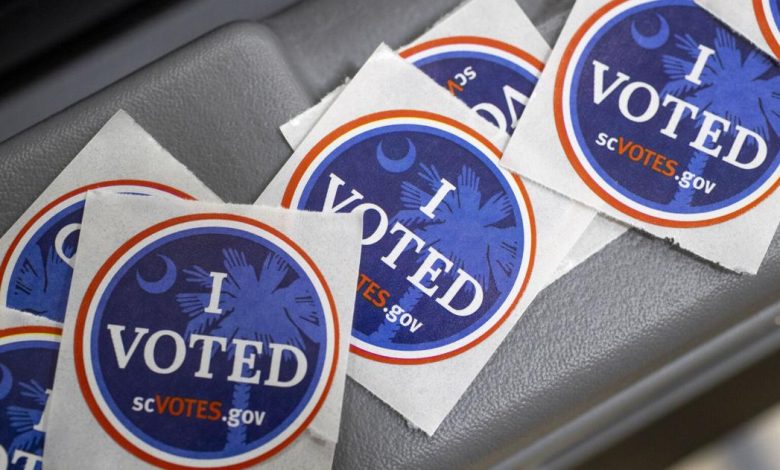
South Carolina’s Republican voters aren’t just picking candidates in the June 9 primary. They’re also being asked to play a little focus group.
For more news and analysis from the Palmetto Politics team, sign up for our newsletter here.
The play
At the bottom of South Carolina’s Republican primary ballot after the listed races for governor, Congress and some state legislative seats, GOP voters will encounter two questions that have nothing to do with choosing a candidate.
The party has long used its primary ballots to gauge where Republican voters stand on issues beyond the candidates themselves.
This year, that means asking primary voters whether South Carolina should require party registration and whether school board candidates should be allowed to run with party labels.
The questions (and the underlying questions)
-
Should people have the right to register with the political party of their choice when they register to vote?
-
Should candidates for local school boards be able to run as a candidate of the political party of their choice, just like candidates for other elected offices?
Why it matters
Let’s clear something up: These aren’t ballot measures. Nothing becomes law based on the outcome. This is not a referendum.
Think of them instead as a political temperature check.
The results won’t settle the debate, but they may give Republican leaders additional ammunition when making the case for changes they’d like to see in South Carolina’s election system.
On primaries
In the past, Republicans in the Palmetto State have argued that open primaries allow Democrats and other non-Republicans to influence their candidate selection process.
But in 2020, a group of Republican activists encouraged the same tactic in reverse, urging GOP voters to participate in the Democratic presidential primary and support Bernie Sanders.
They called it “Operation Chaos.” The goal was twofold:
Trump winked at the idea at a February 2020 rally in North Charleston, when he asked a roaring crowd which candidate they thought would be the best person for him to beat.
Currently, there is no party registration in the state, meaning voters are free to participate in either major party’s nominating vote in a given year — but not both.
Which brings us back to the advisory question now before Republican voters.
On partisan school board races
The second question touches on another debate that has been simmering in South Carolina politics for years: whether school board races should remain officially nonpartisan.
Supporters argue that party labels would give voters more information about candidates and bring school board elections in line with most other elected offices.
Some local Republican parties have already tried to help voters on that front, by endorsing candidates.
Critics counter that school boards are already political enough, and that formally attaching party labels could further nationalize local education issues.
In other words, the question isn’t really about whether candidates have political beliefs. It’s about whether those affiliations should appear on the ballot.
The next move
The results from the advisory questions will give a pulse check on where GOP primary voters land on the pair of questions.
The S.C. Republican Party has already threatened legal action over the state’s open-primary system after lawmakers once again declined to advance legislation creating party registration and closed primaries.
As for school board races, any move to add party labels would still require action from lawmakers.
Quote of the week
“Service knows no species.”— Cherokee County Sheriff Steve Mueller, after Gov. Henry McMaster signed Fargo’s Law, increasing penalties for harming or killing police animals.
Credit: Source link