SUPERINVESTOR ERIC SPROTT TAKES A STAKE IN POWER METALLIC MINES! BAE SYSTEMS AND BMW CAN BREATHE EASIER

BAE SYSTEMS: WHEN PRODUCTION MUST NEVER COME TO A STANDSTILL
Europe is rearming—and it needs metals it does not have. But when British defence giant BAE Systems develops advanced weapons systems such as the future Tempest fighter aircraft or nuclear-powered submarines, the issue is no longer just about technology. It is about geopolitics at the very beginning of the supply chain. For highly heat-resistant engine superalloys, miles of shielded electronic circuits, and precision radar systems, the defence industry requires strategic metals such as nickel, copper, platinum, and palladium—in uncompromising quality and with absolute supply reliability. BAE Systems is divided into segments: aviation (Eurofighter, F-35 components), maritime (submarines and warships), land systems (tanks and artillery), and cybersecurity and electronics. The most important customer is always the government: the British Ministry of Defence, the US Pentagon, and NATO and AUKUS partners such as Australia guarantee the company well-filled order books with large-scale defence projects, thus providing crisis-proof, predictable revenue. BAE Systems profits not only from the sale of jets or ships, but above all from their decades-long operation thereafter: maintenance, upgrades, and spare parts account for a massive and highly profitable share of revenue.
Since BAE Systems is often contractually obligated to guarantee the operational readiness of government armed forces, production must never come to a standstill. If a supplier fails to deliver due to a shortage of nickel or copper, immense contractual penalties and a national security risk loom. This is precisely why seamless, Western raw material security is at the core of the operational strategy. Yet the market has narrowed dramatically. The days when one could rely on raw material flows from Russia or processing capacities in China are finally over in the new world order. In 2024, BAE CEO Charles Woodburn was even placed on the Chinese government’s sanctions list as one of six executives, as the company also supplies weapons to Taiwan. Like all Western defence contractors, the British industry leader is therefore under massive pressure to shift its supply chain entirely to politically stable regions—a practice known in modern parlance as “friendly sourcing.” This acute security need of the military is colliding with a civilian industry that requires exactly the same resources for the global energy transition. The battle for access to secure mining projects in the West has begun.
QUÉBEC’S POLYMETALLIC TREASURE: IN THE RIGHT PLACE AT THE RIGHT TIME
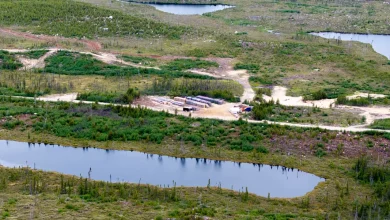
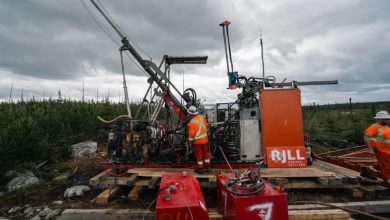
Canadian mining explorer Power Metallic Mines is stepping into this very geopolitical supply gap with its flagship project, Nisk, in the James Bay region of Québec. The company is wasting no time, as underscored by the recent announcement of a massive exploration program. Over 30,000 m of drilling will be completed in the coming months. To maximize accuracy at depth, management is employing modern geophysical methods—including superconducting quantum magnetometers to measure the slightest changes in the rock’s magnetic field, as well as seismic tomography, which uses the Earth’s natural background noise to image deep-seated structures. The goal is to drastically expand the historic deposit in the so-called Lion Zone.
None other than mining legend Eric Sprott is convinced of the project’s success. The 82-year-old Canadian is regarded as a sort of Warren Buffett of the commodities industry: for decades, he has been finding gems before the market discovers them—his name alone moves share prices. Last week, Sprott acquired 1.6 million shares at CAD 1.25 each through his investment vehicle 2176423 Ontario as part of a private placement, thereby investing CAD 2.0 million in Power Metallic Mines. In total, the company successfully closed the financing round with a total volume of CAD 28.2 million. The proceeds will be used for further development of the Nisk project in Québec as well as an exploration area in Saudi Arabia. The billionaire’s investment is the ultimate vote of confidence in the work of the management team led by CEO Terry Lynch—and a clear signal to the market that there is more lying dormant in the ground here than the current valuation suggests.
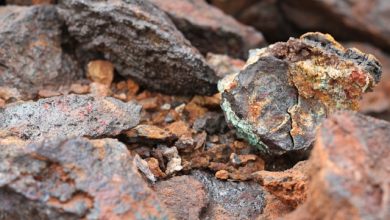
What fundamentally sets Power Metallic Mines apart from the mass of global explorers is the geological nature of the deposit. Nisk is an exceptionally high-grade deposit that delivers a broad spectrum of critical metals. In addition to nickel and copper, the system contains significant concentrations of gold, silver, cobalt, palladium, and platinum. ** Recent drilling at the Lion Zone returned intercepts such as 22 m grading 11.46% copper equivalent (CuEq) and 39 m grading 5.66% CuEq—results that rank well above the global average for comparable projects.
HYDROPOWER INSTEAD OF COAL: AN ENVIRONMENTAL ADVANTAGE THAT COUNTS
Added to this is a decisive processing advantage. Unlike the Indonesian competition, which extracts nickel from so-called laterite ores using massive amounts of coal-based energy and sulphur, the metals in Québec are present as sulphide ores. Since the required sulphur is already present in the rock, processing is far less energy-intensive. Furthermore, the project is located in close proximity to a Hydro-Québec substation, allowing the future mine to be powered by affordable, CO₂-free hydroelectricity. This reduces the carbon footprint to about one-fifth of conventional levels. Another environmental benefit: Instead of disposing of acidic sludge into the sea, Power Metallic uses controlled onshore retention basins that even contribute to carbon sequestration in the rock. The sulphur produced during smelting can be recycled and sold as a valuable byproduct.
The fact that the stock does not yet fully reflect the full potential of this geological jackpot is only natural, as the company is still in the exploration phase and is not yet producing commercially. However, with the ongoing large-scale drilling programs and the baseline environmental studies already underway, management is setting the stage for future mine development. For government-monitored military supply chains, this combination of a politically stable jurisdiction, extremely high value per ton of rock, and an impeccable environmental track record offers exactly what corporations like BAE Systems are looking for.
THE CIVILIAN COUNTERPART: HOW BMW IS DIVERSIFYING THE CONCENTRATED RISK OF DEFENCE CONTRACTS
A look at the civilian mass-market industries—particularly automotive manufacturers such as BMW—shows that Power Metallic Mines’ high-grade deposits are by no means a niche business serving only military applications. Under Milan Nedeljković, who has been CEO for only a few weeks, the Munich-based company is in the midst of the largest transformation in its corporate history. With the global rise of the so-called New Class and the consistent shift toward electric mobility, demand is exploding for precisely those raw materials found in the ground in Québec. BMW has officially classified nickel as a key raw material. For the energy density of the Bavarian electric fleet, nickel-manganese-cobalt-based batteries will be indispensable for the foreseeable future. Purchasing managers in Munich are increasingly refusing to source nickel from Indonesian laterite mines, where it is extracted using coal-fired power. A Canadian project that boasts a minimal carbon footprint thanks to hydropower aligns perfectly with the group’s strict climate targets.
With copper, the contrast is even more striking. While a conventional combustion engine requires about 20 kg of copper, a purely battery-electric BMW model consumes up to 80 kg of the red metal—used in electric motors, high-voltage cables, and busbars. Since the global energy transition is literally soaking up the world’s copper reserves, BMW is securing access to reliable primary sources in stable regions through long-term contracts. Then there is the platinum issue. BMW is one of the few premium manufacturers consistently continuing to rely on hydrogen fuel cells—for example, with the iX5 Hydrogen model. Significant quantities of platinum are required as a catalyst for the chemical reaction in these cells. Since South Africa and Russia have historically dominated the global platinum market, the geopolitical risk is considerable. A North American deposit that also produces platinum and palladium as valuable byproducts is therefore a strategic goldmine for the Bavarian automaker’s future strategy.
THREE STOCKS, THREE COMPLETELY DIFFERENT RISK PROFILES
To reflect the described commodity-balancing act within one’s portfolio, three fundamentally different investment approaches emerge along this geopolitical supply chain. BAE Systems represents the defensive moat. With a market capitalization of around GBP 57 billion and an estimated P/E ratio of 20.5 for 2027, the company is moderately valued in a global industry comparison of defence heavyweights. The average target price among experts is around GBP 23.50. Currently, the share is trading at around GBP 19.00 on the London Stock Exchange and at around EUR 22.00 on German exchanges. This implies an upside potential of approximately 25%. Thanks to government-guaranteed order books, the share offers high visibility for future cash flows and serves as a defensive anchor with a geopolitical shield.
BMW represents an undervalued value stock with long-term growth potential driven by future technologies. The market capitalization of around EUR 41 billion, the estimated 2027 P/E ratio of 5 to 6, and the dividend yield of nearly 6% reflect the market’s current skepticism toward the automotive industry. Among German manufacturers, however, BMW is a special case. With the technologically flexible New Class and the hydrogen option kept open, the Munich-based company is best positioned for the future, both operationally and strategically. The average analyst price target for the common shares is above EUR 90.00, implying upside potential of around 35% at the current price of EUR 67.50. A classic opportunity for patient investors who want to be rewarded for their wait through dividends.
Power Metallic Mines is the potential problem-solver with future leverage. At a current share price of around CAD 1.23 (~EUR 0.76 on German exchanges), the research firm GBC Research assigns a “Buy” rating with a price target of CAD 3.00, which corresponds to upside potential of more than 100%. As an explorer, the company is naturally still operating at a loss during this intensive drilling phase and is therefore highly speculative. The GBC model estimates the gross asset value of the project portfolio at CAD 737 million. This contrasts with a current market capitalization of less than CAD 300 million. The first official mineral resource estimate for the Lion Zone is scheduled for this summer. If management’s expectations are confirmed—10 to 12 million tonnes with grades exceeding 5% CuEq—this could trigger a fundamental revaluation. Commodities super-investor Sprott is betting precisely on this scenario.
Pursuant to §85 of the German Securities Trading Act (WpHG), we point out that Apaton Finance GmbH as well as partners, authors or employees of Apaton Finance GmbH (hereinafter referred to as “Relevant Persons”) may hold shares or other financial instruments of the aforementioned companies in the future or may bet on rising or falling prices and thus a conflict of interest may arise in the future. The Relevant Persons reserve the right to buy or sell shares or other financial instruments of the Company at any time (hereinafter each a “Transaction”). Transactions may, under certain circumstances, influence the respective price of the shares or other financial instruments of the Company.
In addition, Apaton Finance GmbH is active in the context of the preparation and publication of the reporting in paid contractual relationships.
For this reason, there is a concrete conflict of interest.
The above information on existing conflicts of interest applies to all types and forms of publication used by Apaton Finance GmbH for publications on companies.
Apaton Finance GmbH offers editors, agencies and companies the opportunity to publish commentaries, interviews, summaries, news and the like on news.financial. These contents are exclusively for the information of the readers and do not represent any call to action or recommendations, neither explicitly nor implicitly they are to be understood as an assurance of possible price developments. The contents do not replace individual expert investment advice and do not constitute an offer to sell the discussed share(s) or other financial instruments, nor an invitation to buy or sell such.
The content is expressly not a financial analysis, but a journalistic or advertising text. Readers or users who make investment decisions or carry out transactions on the basis of the information provided here do so entirely at their own risk. No contractual relationship is established between Apaton Finance GmbH and its readers or the users of its offers, as our information only refers to the company and not to the investment decision of the reader or user.
The acquisition of financial instruments involves high risks, which can lead to the total loss of the invested capital. The information published by Apaton Finance GmbH and its authors is based on careful research. Nevertheless, no liability is assumed for financial losses or a content-related guarantee for the topicality, correctness, appropriateness and completeness of the content provided here. Please also note our Terms of use.