Why Trump’s secret and vague MOU is stirring a political storm
The text of President Donald Trump’s memorandum of understanding with Iran — when it is finally published — may not dispel his critics’ fears of a bad deal.
There are increasing signs that it will confirm them.
The failure to make public the terms of the memo to end the war — greeted as an epochal breakthrough by Trump on Sunday — seeded a vacuum quickly filled by confusion, anxiety among Republican hawks and growing attacks by Democrats.
Leaks of the purported terms of the agreement in Middle East media outlets that suggest the MOU will lack firm commitments, benchmarks and concrete sequencing meanwhile made the White House’s stance increasingly dicey.
Controversy broke out over a reported $300 billion reconstruction fund for Iran to be financed by regional powers and guaranteed by the US government, forcing officials to insist that no US cash was involved and that any such benefits depended on Iran submitting to Washington’s demands. But the issue opened the administration to claims of hypocrisy given Trump’s frequent, inflated claims about Iranian assets released to Tehran after the Obama administration’s 2015 nuclear deal.
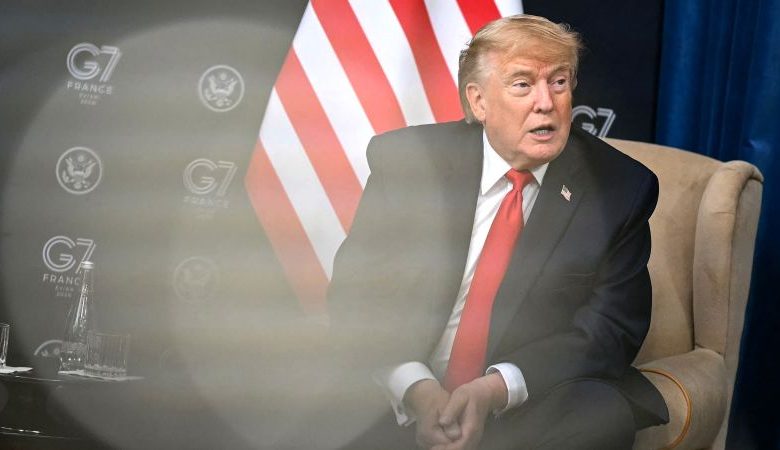
Trump defended his agreement at the G7 summit on Tuesday in France and said he’d be willing to read it out loud. Vice President JD Vance, tasked with selling the MOU at home, attributed the delay to diplomatic technicalities in the Muslim and Arab world. He also insisted that any economic payoff for Iran would depend on living up to a promise in the document to never seek a nuclear bomb.
Vance’s comments hinted that an administration founded on the art of the deal envisages a tantalizing grand bargain for Iran that could end its status as a pariah state.
“We fundamentally have transformed the Middle East, whether they comply or not. This is just icing on the cake, assuming they do all the right things,” Vance said on Fox News.
But the sense of drift two full days after Trump claimed a huge win on his 80th birthday raised the possibility that an administration that botched its messaging on why it started the war risked doing the same while ending it.
Senior officials initially said that the agreement was signed digitally on Sunday but will be formally inked in a ceremony attended by Vance in Switzerland on Friday, at which point the full text and terms will be released.
As the political heat rose, US officials told CNN’s Alayna Treene and Kevin Liptak on Tuesday evening they hoped to publish the text as soon as possible. They described the language as extremely vague and said it didn’t reflect critical back-channel commitments Iran had made to the United States.

Diplomacy is an intricate art. With Iran, it is notoriously excruciating — one reason Trump’s remark Tuesday that the next stage of consultations, on Iran’s nuclear program, will be “easier” seemed unwise. The talks leading to the nuclear deal with Iran signed under the Obama administration took at least 18 months.
The US officials told Liptak and Treene that some of the text in the MOU is purposely vague to allow the Iranian side to sell their work in a treacherous domestic political environment. Generally, this is a plausible approach. Successful diplomatic talks involve sensitivity to the constraints faced by those on the other side of the table — particularly when those talks include representatives of a repressive government whose own safety may be at issue. And effective peacemaking often involves presidents creating an illusion of progress to stir momentum and buy time for hard negotiations to slog ahead.
So it would be premature to write off hopes that the memorandum of understanding can forge real progress and eventually yield a deal — especially since both Iran and the United States have strong incentives to stop the war.
Canadian Prime Minister Mark Carney, a frequent Trump administration critic, told CNN ’s Kaitlan Collins in France at the G7 summit that he’d seen the text and thought it was a “game changer.” But Carney also framed the memorandum as more of an understanding on extending a ceasefire than a fully fleshed-out deal.

Yet the president is under pressure to justify the huge economic and international political disruption caused by the war; the deaths of 13 US service members and an unknown number of Iranian civilians; and tens of billions of dollars spilled on US operations and ordnance.
Trump’s critics accuse him of solving nothing but the problem he caused — Iran’s closure of the Strait of Hormuz, a key oil trafficking route — and of securing no concrete, verifiable commitments for Iran to foreswear nuclear development.
The administration’s best argument is that it severely damaged Iran’s nuclear program in air raids last year and buried its stocks of highly enriched uranium, making it impossible to build a nuclear device. But that point is of limited political utility, since it underscores the question of why Trump started this year’s war.
And a vague MOU would only lend credence to Trump skeptics who contend that he prioritizes branding and short-term wins over the details required to effect meaningful change.
The president also faces an unforgiving political audience — a circumstance not helped by his claims on social media that “the deal with the Islamic Republic is complete,” which may have sparked expectations that an anodyne diplomatic text cannot meet.
There’s particular concern among Senate Republicans — such as Trump’s friend South Carolina Sen. Lindsey Graham — who may be required to lift sanctions under any final deal with Iran.
Senate GOP leader John Thune on Tuesday said he was “hoping to get more information, more detail.”

It’s quite surprising that a top Republican in the president’s party should still be in the dark. It’s extraordinary that Israel, Trump’s partner in starting the war, appears to be in a similar position. This points toward a growing fracture between the allies.
Bipartisan politicians in Israel worry Trump agreed to an end to all fighting in the region — a condition they would regard as detrimental to their nation’s security, if it covers the Iran-backed Hezbollah militia in Lebanon. An Israeli source told CNN’s Tal Shalev that Prime Minister Benjamin Netanyahu’s government asked to see the agreement but was rebuffed.
Israelis also hope Trump’s MOU focuses on Iran’s missile programs and proxy allies including Hamas in Gaza and the Houthis in Yemen. No one in the White House is saying.
Democrats are seizing on the stasis to drive home their criticism of a president who returned to office vowing no more foreign wars.
Senate Minority Leader Chuck Schumer said Tuesday that “the American people deserve details and full transparency.” The New York Democrat added: “And what have we actually gained here from Trump’s war?
Wendy Sherman, a former deputy secretary of state who helped negotiate the Obama administration’s Iran nuclear deal, told CNN’s Kasie Hunt that the administration’s reluctance to release the MOU told its own story.
“I think it tells us that they’re very nervous about what’s in it and how it will be seen,” Sherman said. “My own sense is the president wants this victory lap on Friday when they have an in-person signing with the vice president ostensibly.”

If the text, when it is finally released, reflects the depictions of the US officials who spoke to CNN, the administration is sure to be accused of a gullible approach to a repressive regime that survived the war, in a modified and perhaps even more extreme form.
The idea that Washington would make any concessions before nuclear talks with such a bitter adversary hints at naiveté. Any notion that Iran would welcome a financial windfall to exit international isolation also seems fanciful, nearly 50 years into an Islamic revolution that defines itself against Western values and subjugates its people with an austere clerical regime.
One of the officials who spoke to CNN said that “people shouldn’t read too much into the language of the MOU,” describing it as a “political document.”
That’s sure to be a vain hope given the over-torqued political atmosphere of Trump’s second term.
The most significant takeaway from the emerging details of Trump’s agreement is that while the fighting might mercifully be over — at least for now — the current crisis with Iran is nowhere close to a resolution.
Credit: Source link