IPOs
Letters | SpaceX’s historic IPO ignites investor appetite for space AI
Feel strongly about these letters, or any other aspects of the news? Share your views by emailing us your Letter to the Editor at [email protected] or filling in this Google form. Submissions should not exceed 400 words.
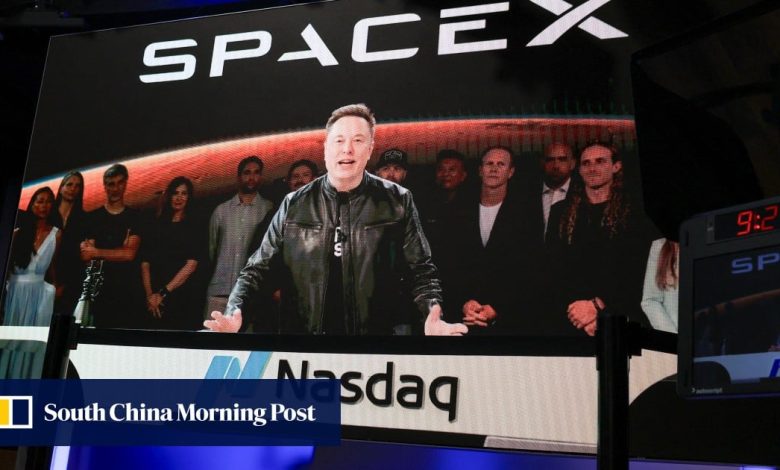
Elon Musk’s SpaceX made history on June 12 with the largest initial public offering ever recorded. Priced at US$135 per share and closing its first day at roughly US$161, the company raised US$75 billion and achieved a market capitalisation exceeding US$2.1 trillion – surpassing the gross domestic product of South Korea in a single trading session. While headlines celebrated the world’s biggest IPO, the listing’s true significance lies not in rockets, but in AI infrastructure.
The critical development came in February, when SpaceX formally merged with Musk’s xAI: Musk’s objective is not merely space travel, but space AI.
AI is the dominant capital theme of the decade, yet it faces a fundamental global constraint: power. America’s power grids cannot support the exponential growth of AI data centres. Musk’s proposed solution is to deploy massive computing infrastructure into low-Earth orbit. Orbital data centres would harness continuous solar energy, exploit the natural vacuum of space for thermal cooling, and utilise the existing Starlink constellation for communication.
SpaceX has become a vertically integrated monopoly spanning space transport, global broadband and AI compute infrastructure. If Musk’s orbital AI network reaches scale, global AI companies could face an insurmountable cost disadvantage.
China is not standing still. However, without reusable rockets comparable to SpaceX’s Falcon 9, the cost to orbit remains much higher, and state-owned launch schedules are saturated with national priorities. Consequently, China’s path to orbital AI depends on the maturation of its private commercial space sector.