Who gets the final say in Britain? Voters or the bond market?
London
Democratic leaders must answer to voters, lawmakers and other world leaders. But Britain’s likely next prime minister will need to win over another powerful audience: the bond market.
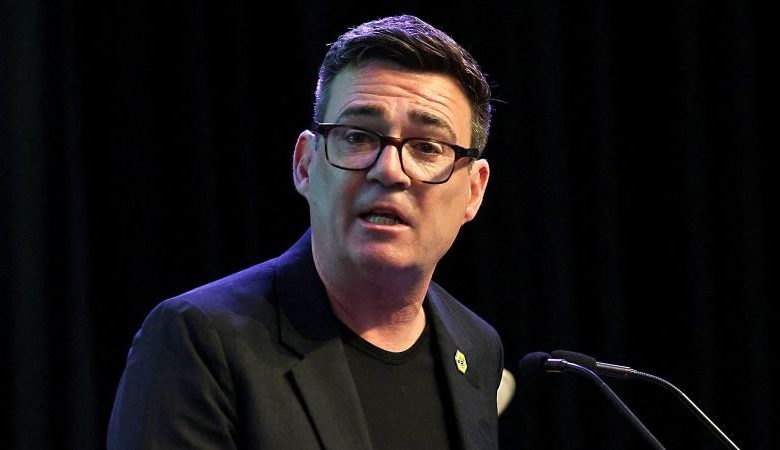
Andy Burnham, the charismatic former mayor of Greater Manchester, once rebuffed the idea that government decisions should be swayed by investors in its ballooning pile of debt. In September, he told the UK’s New Statesman magazine that he wanted Britain to go “beyond this thing of being in hock to the bond markets.”
His comments reflect a growing perception that bond investors, not elected officials, have become the de facto authority on how Downing Street decides to tax and spend. When investors view policies as too expensive, they effectively punish the government by dumping bonds because holding the debt is seen as too risky. And when a bond is dumped, its yield — or the interest the government must pay new investors in those same bonds — rises. That increases borrowing costs across the wider economy, including people’s mortgage rates.
Burnham, now with the inconvenient realities of leadership in sight, has since softened his stance, telling ITV News last month that he supported the ruling Labour government’s fiscal rules and wanted to reduce the public debt.
“I have never said that you can just ignore the bond markets,” he told the outlet.
The idea that governments should be unmoved by bond investors is likely to win public support but, according to analysts, it’s also unrealistic.
“If you owe £3 trillion, you are in hock to the lenders to some degree,” Jonas Goltermann, chief markets economist at Capital Economics, said on an analyst briefing call on Monday.
Burnham’s initial comments are “all very well when you’re the Mayor of Manchester gunning for a leadership position, but when you’re going to be prime minister then your words matter a bit more,” Goltermann told CNN.
How Keir Starmer’s leadership came to an end

“I think he’s realized that, and the people around him have realized that and that’s why they’ve changed their tune,” he added. “It’s just a matter of fact that the bond market, more than the fiscal rules, is the constraint on what (the government) can do in terms of spending.”
Britain remembers well the fiasco of 2022, when then-Prime Minister Liz Truss triggered a mass sell-off of bonds after presenting plans for huge unfunded tax cuts. The fallout in financial markets forced the government into a humiliating U-turn and ultimately led to Truss’ resignation after just 49 days in the job.
Then, in 2024, Keir Starmer’s newly elected Labour government signaled that it would abide by strict, self-imposed limits on spending and borrowing. Together with piecemeal tax increases, the framework left little room for big policy initiatives requiring meaningful spending.
“Bond investors are much more powerful than you think,” said Dan Coatsworth, head of markets at investment platform AJ Bell.
“When you suddenly get sharp movements in bond yields (upwards), evidence would suggest that governments, if they’re at the center of this storm… have to suddenly do something different (policy-wise) – they have to take a step back or they have to pause what they’re doing and let the market settle down,” he told CNN.
The UK, like many of its major economy peers, is sitting on an enormous mound of debt — £2.98 trillion ($4 trillion) to be exact — built up over a series of crises including the 2008 global financial crash, the Covid-19 pandemic and the energy shock following Russia’s full-scale invasion of Ukraine.
The UK’s debt load equals 95% of its economy, a smaller share than that of the France and the United States, at 116% and 100% respectively, but the rate of interest it pays on its 10-year bond is higher than its French and American equivalents.
Britain’s debt interest payments totaled £110 billion ($145 billion) in the last financial year — more than the government estimated it spent on the UK’s defense over the same period.
And borrowing costs have surged this year. In March, the yield on the 10-year bond rose above 4.9% to hit its highest level since 2008. But so have yields for other countries’ bonds as the world grapples with what the US-Israeli war with Iran means for inflation.
(Higher inflation raises the odds that central banks will hike their interest rates, which feed through to higher bond yields. Investors, anticipating better returns, will often dump their bonds and wait to buy new ones at higher yields).
Rising UK debt costs are “mainly an Iran war story” rather than a reflection of its current political upheaval, according to Andrew Goodwin, chief UK economist at Oxford Economics. Britain is more exposed to global energy shocks than some of its peers, he explained, given its status as a big importer of natural gas and the significance the fuel plays in setting electricity prices.
Still, British politics could become a more pressing concern for the bond market with Burnham at the helm.
He has said he wants to bring some essential services like water, housing and energy under greater public control. The cost of nationalizing the water industry alone would cost £100 billion ($132 billion), according to an estimate by the UK’s Department for Environment, Food and Rural Affairs.
How such grand plans would square with Burnham’s promise of fiscal discipline remains to be seen. Investors will be watching closely to see whom Burnham appoints to replace Rachel Reeves as the country’s finance minister, a move that is widely expected, analysts told CNN.
Burnham would enter Downing Street at a time when there is a stronger “feedback loop” between politics and the bond market compared with the previous decade when UK bond yields were lower, said Goltermann at Capital Economics.
“It certainly feels like since the Truss debacle in 2022 the (UK bond) market has become much more prone to (these) sorts of politically induced sell-offs,” he said.