Market volatility and its impact on bond yields
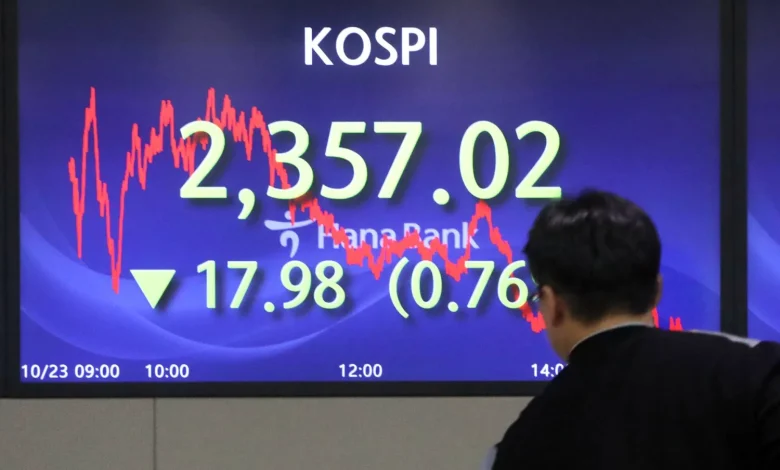
Seoul is witnessing significant activity in government bond markets, with bond yields falling across various maturities.
A general decline in bond yields
The yield on 3-year government bonds closed at 3.703% annually, down 3.0 basis points from the previous trading session. This decline extended to longer-term bonds, with the 10-year yield falling 5.3 basis points to 4.091%. 5-year and 2-year bonds also saw declines of 4.0 and 2.7 basis points, respectively. Longer maturities (20, 30, and 50 years) experienced varying degrees of decline, with yields reaching 4.270%, 4.351%, and 4.213%, respectively.
Foreign investors: the main driver
Despite the tense global economic climate, foreign investors were the primary driver of the market. They executed net purchases of 4,083 three-year futures contracts and 4,229 ten-year contracts.
This strong foreign inflow contributed to a rise in bond prices. Consequently, it led to a decline in bond yields, moving in the opposite direction to other indicators such as oil prices. Oil prices rose, influenced by escalating tensions in the Strait of Hormuz. The won’s exchange rate also reached 1,550 won against the dollar.
Auction success and WGBI impact
One of the key factors in reinforcing this downward trend in interest rates was the remarkable success of the 30-year government bond auction. The Ministry of Economy and Finance offered 3.1 trillion won worth of bonds at an interest rate of 4.370%. Analysts confirmed that demand was much stronger than expected. This fostered a relaxed buying atmosphere in the afternoon, according to Yonhap News Agency.
Furthermore, the inclusion of Korean government bonds in the World Government Bond Index (WGBI) continues to play a strategic role; data from the Ministry of Finance reveals that net foreign purchases since the inclusion have reached 30.7 trillion won. This reflects the confidence of international institutions in Korean securities.
Additional economic incentives
A combination of domestic and international factors contributed to this trend, most notably South Korean industrial production data for May, which showed a contraction for the second consecutive month. Additionally, the Reserve Bank of Australia’s meeting minutes were more dovish than expected. This coincided with a similar downward trend in US Treasury yields.
In this context, Kang Seung-won, a researcher at NH Investment and Securities, explained that “the success of the 30-year bond auction created a sense of relief, with investors rushing to buy at attractive prices, while the decline in US Treasury yields played an additional role in easing pressure on long-term bonds in Seoul.”
Thus, the government bond market proved its resilience to currency and energy volatility. It also maintained its appeal as a preferred investment haven under these circumstances.