How the Crypto Fear and Greed Index is Calculated
Volatility 25% – Compares Bitcoin’s current price swings and maximum drawdowns against its 30-day and 90-day averages. An unusual spike in volatility is typically a sign of a fearful market.
Market Momentum & Volume 25% – Combines current trading volume and buying momentum, comparing them to 30-day and 90-day averages. High volume in an upward trend points to an overly bullish, greedy market.
Social Media 15% – Gathers and counts Bitcoin-related hashtags, mentions, and engagement rates on platforms like X (formerly Twitter). Unusually fast accumulation of interactions indicates FOMO (Fear Of Missing Out) and greed.
Google Search Trends 10% – Tracks shifting search volumes for Bitcoin-related terms via Google Trends. A rise in general search volume usually signals greed, but specific spikes in phrases like “Bitcoin scam” flag fear.
Bitcoin Dominance 10% – Measures Bitcoin’s market cap as a percentage of the total crypto market cap. When BTC dominance rises, it means investors are fleeing speculative altcoins for the safety of Bitcoin (fear). When it falls, people are chasing risk (greed).
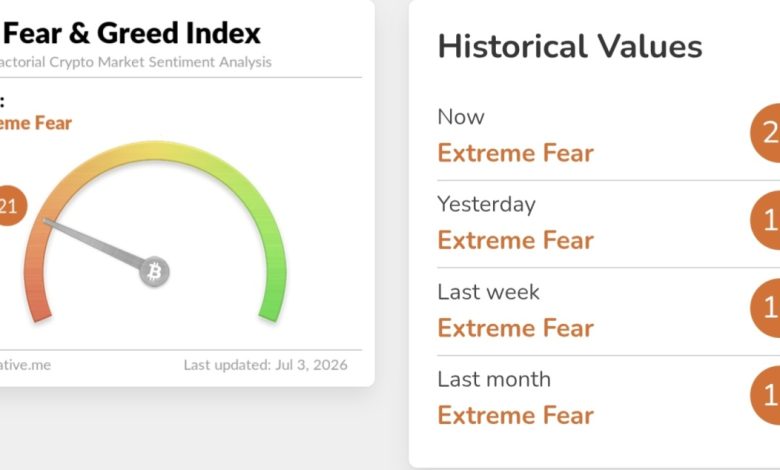
💡 The Core Philosophy: The index runs on a contrarian investing premise popularized by Warren Buffett: “Be fearful when others are greedy, and greedy when others are fearful.” Extreme fear (0–24) can indicate a buying opportunity where assets are oversold, while extreme greed (75–100) often signals that the market is due for a correction.