AI stocks face mounting pressure as bond markets send a warning – London Business News
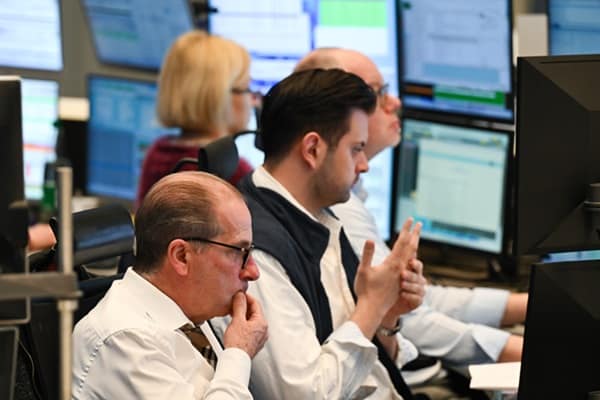
The Nasdaq 100 has experienced one of the strongest rallies in its history over the past few months, fueled by the explosive momentum of artificial intelligence companies and increasingly optimistic expectations for future growth.
Valuations across many technology firms have surged well beyond their historical norms.
In my view, however, the issue is not the strength of the AI industry itself, but rather the way the market has begun pricing the future as though success were already guaranteed. Financial markets do not punish successful companies—they punish excessive expectations.
That is precisely what makes the current environment fundamentally different from previous Nasdaq bull markets.
This is why I believe SpaceX’s public listing offers a compelling example of the widening gap between the equity and bond markets.
While equity investors assigned the company an enormous valuation, reflecting near-unlimited confidence in its future, the bond market delivered a far more cautious message by demanding relatively high yields to finance the company over the long term.
This divergence is more than a difference of opinion—it reflects two fundamentally different approaches to assessing risk. Equity investors buy future growth and potential, whereas bond investors focus on cash flows and a company’s ability to meet its financial obligations. Whenever these two markets begin sending conflicting signals, I consider it an important warning that often precedes broader market repricing.
From my perspective, SpaceX’s decision to raise debt despite holding an exceptionally large cash reserve carries significant economic implications. The company is not borrowing simply because it needs immediate liquidity; it is borrowing because management anticipates massive capital expenditures over the coming years. That suggests investment cycles in artificial intelligence, aerospace infrastructure, and advanced computing will be longer, more expensive, and more capital-intensive than many investors currently assume. As a result, valuing companies primarily on future revenue projections while overlooking financing costs and persistent negative free cash flow could lead to significant overvaluation.
At the same time, the AI infrastructure sector has begun facing its first meaningful stress test following an extraordinary rally. We have already seen notable selling pressure across semiconductor manufacturers, memory producers, server suppliers, and data center operators—the very companies that have driven much of the Nasdaq 100’s recent performance. In my opinion, this does not signal the end of the AI investment story. Rather, it marks a transition from indiscriminate buying of anything associated with artificial intelligence toward a more selective investment environment focused on earnings quality, profitability, and returns on capital. Such a shift is both healthy and necessary, although it typically brings higher volatility and far less tolerance for inflated valuations.
I also believe investors may be placing excessive emphasis on passive investment flows, particularly following the inclusion of new companies such as SpaceX in the Nasdaq 100. While index-related buying can undoubtedly provide temporary price support, it should not be mistaken for a sustainable driver of long-term appreciation. Passive fund inflows occur once, whereas market valuations continue to evolve based on financial performance and earnings delivery. Consequently, I expect the long-term impact of index inclusion to prove considerably smaller than many market participants anticipate, especially after recent adjustments to index-weighting methodologies.
That said, I do not subscribe to the increasingly popular narrative that an imminent collapse in the Nasdaq 100 is unavoidable. The U.S. economy continues to demonstrate remarkable resilience, while expectations for future Federal Reserve rate cuts could provide meaningful support for growth-oriented technology stocks. However, I believe the next phase of the market will differ substantially from the broad-based rally witnessed in recent months. Future gains are likely to become increasingly selective, with capital flowing toward companies capable of converting AI investment into sustainable earnings rather than simply promising future breakthroughs.
Another factor I consider crucial is the interaction between the U.S. labor market and monetary policy. If employment data continue to soften while inflation remains broadly stable, the Federal Reserve will have greater flexibility to ease monetary policy, creating a supportive backdrop for technology shares over the medium term. On the other hand, any resurgence in inflationary pressures or unexpected strength in labor market data could delay interest rate cuts and quickly revive pressure on Nasdaq valuations, particularly given the elevated earnings multiples currently prevailing across much of the technology sector.
From a market perspective, I believe the Nasdaq 100 has entered a genuine test of its record highs. Extended advances without healthy corrective phases inevitably weaken the durability of an uptrend, leaving markets increasingly vulnerable to sharp profit-taking triggered by even modest negative news. For that reason, I would not be surprised to see corrective pullbacks over the coming weeks. Nevertheless, I do not expect those corrections to evolve into a prolonged bear market unless economic fundamentals deteriorate materially or major technology companies begin reporting meaningful earnings disappointments.
In my opinion, sophisticated investors should monitor the bond market just as closely as they follow equities. Bonds often provide a calmer and more disciplined assessment of financial risk, whereas stock markets are prone to periods of excessive optimism and excessive pessimism. When bond yields rise despite continued enthusiasm in equities, the message is usually straightforward: the cost of capital is increasing, and investors are demanding greater compensation for taking on risk. That signal deserves careful attention, particularly for companies whose long-term growth depends heavily on external financing.
Ultimately, I believe the next chapter for the Nasdaq 100 will not be defined by a simple battle between bulls and bears, but by a confrontation between valuation and financial reality. Artificial intelligence will almost certainly remain one of the world’s most powerful economic growth drivers for at least the next decade. However, that does not mean every company associated with AI deserves its current market valuation. My expectation is that the Nasdaq 100 will continue its medium-term upward trend, albeit at a slower pace and with significantly greater volatility.
The gap between fundamentally strong companies and those still trading primarily on future promises is likely to widen considerably. In the end, I believe the market is delivering an important message: the era of buying every stock labeled “AI” is coming to an end, giving way to a more mature investment landscape where earnings, cash flow generation, and disciplined valuations—not compelling narratives alone—will determine the true winners within the Nasdaq 100.