Most NC voters expect political violence. Some prefer candidates who embrace it, poll finds :: WRAL.com
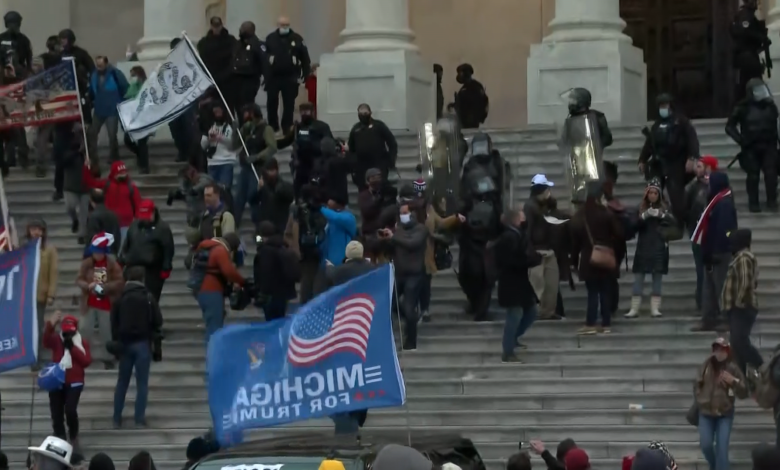
Most North Carolinians expect political violence to mar the 2026 midterm elections — and some say they’d want their side’s candidates to refuse to condemn such violence against the opposition, according to a new statewide poll.
The poll from Catawba College and YouGov found that regardless of their political affiliation, roughly two-thirds of Republicans, Democrats and unaffiliated voters alike believe there will be politically motivated violence on the campaign trail this year. Election Day is Nov. 3, and campaigns typically pick up steam in August or September.
“Campaign rallies, public appearances, and other political events have increasingly become places where citizens worry violence could occur,” Catawba College political scientist Michael Bitzer said in a statement. “Recent attacks and threats involving high-profile political figures have reinforced those concerns while raising difficult questions about balancing public accessibility with candidate safety.”
Bitzer runs the Center for North Carolina Politics & Public Service, which commissioned the new survey of 1,000 North Carolinians from June 1 to June 10. The survey has an overall margin of error of 3.83 percentage points.
The poll asked people whether they’d continue to support their favored candidates if they refused to condemn political violence, if they lied to the other side’s voters about being ineligible to vote, or if they’d support eliminating polling places or gerrymandering political maps in targeted ways to help their side and harm the other side.
As the nation celebrates the 250th anniversary of the Declaration of Independence, Bitzer said it’s important to note that the poll found a sizeable minority of voters would support their side engaging in those sorts of anti-democratic tactics to win power, even while many do still say they favor more fair and peaceful elections.
“America’s democratic republic ultimately depends on more than institutions—it depends on the choices voters are willing to reward,” Bitzer wrote. “While most North Carolinians reject these hypothetical behaviors, the willingness of a distinct minority to tolerate them suggests that partisan loyalty can sometimes compete against American democratic principles.”
When asked if it would matter to them if their preferred candidate refused to condemn a violent assault on a political opponent, less than half of Republicans and Democrats alike said that refusal would make them less likely to continue supporting that person. And some voters said that sort of refusal to condemn violence would be a plus, and would make them more supportive of the candidate in question: 24% of Democrats and 19% of Republicans.
The poll found similar percentages would be more likely to support candidates who lied to the other party’s voters about being ineligible to vote, who supported cutting voting sites in places that would help the opposing side, or who supported gerrymandering political maps to harm the other side’s chances of being able to fairly compete for seats.
Bitzer said the findings were troubling.
“While most voters reject candidates who violate democratic norms, the willingness of a committed minority of partisans to overlook those behaviors serves as an important cautionary signal,” he wrote in announcing the poll’s findings.
There are 2.32 million registered Democrats in North Carolina and 2.33 million registered Republicans, so extrapolating those findings could mean around 1 million total voters in the state harboring such views.
The biggest group of voters in the state are unaffiliated voters, with 3.1 million North Carolinians. The poll found they’re less likely than registered Democrats or registered Republicans to favor candidates who violate democratic and institutional norms for partisan gain.
“The encouraging finding is that, across the political spectrum, more voters say they would punish rather than reward candidates who undermine democratic values,” Bitzer said. “The more sobering discovery is that a meaningful minority of committed partisans remain willing to overlook those behaviors when their own side benefits.”
Concerns over attacks on politicians of all kinds have increased in recent years. Candidates for an open North Carolina Supreme Court seat were the subject of threats last year.
In 2024, an Ohio man was charged with threatening to kill North Carolina Sen. Todd Johnson, R-Union, and his family. And then there were the assassination attempts on President Donald Trump on the campaign trail later that year.
U.S. Sen. Thom Tillis, R-NC, has also been vocal about receiving death threats in the leadup to this year’s midterm elections. The magazine Vanity Fair reported that Tillis was told by the Federal Bureau of Investigation that he was the subject of death threats due to having publicly voiced concerns about Trump’s nominee for secretary of defense, Pete Hegseth.
Tillis’ office said last year that people were arrested in 2022 and 2023 for threatening to kill Tillis, including one man who also allegedly threatened to cut off the hands of his staffers.
Credit: Source link