Lyft (LYFT) Stock Looks Cheap On Earnings But Weak On Returns

Make better investment decisions with Simply Wall St’s easy, visual tools that give you a competitive edge.
Lyft’s share price is still well below where it was five years ago, yet the stock now screens as undervalued on several checks. This puts recent leadership changes and product moves under a valuation microscope for investors trying to judge whether the current price reflects the company’s progress.
-
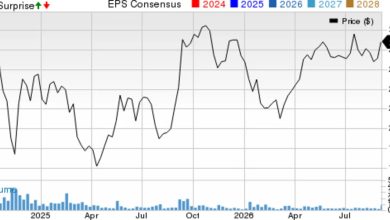
Over the past five years, Lyft stock has declined 70.8%, which means even recent gains come against a long period of value erosion for long term holders.
-
The shift to consistent profitability under CEO David Risher and a push into autonomous vehicles and AI driven services can support higher earnings expectations, while regulatory pressures around driver treatment may weigh on margins and perceived risk.
-
On Simply Wall St’s broader valuation checks, Lyft scores 5 out of 6, and that high score suggests the stock leans cheap relative to key fundamentals and market multiples.
The key question for investors is whether Lyft’s current valuation offers enough compensation for the business risks and execution hurdles that still lie ahead.
Find out why Lyft’s 4.7% return over the last year is lagging behind its peers.
Is Lyft Still Cheap on Earnings?
The P/E ratio fits Lyft well because the company is now reporting positive earnings rather than losses. On current numbers, Lyft trades on a P/E of about 2.1x, compared with a Transportation industry average of 42.3x and a peer group average of 34.9x. Even against a more tailored fair P/E of 3.2x, which reflects Lyft’s specific mix of growth prospects, margins, size and risk, the stock changes hands at a sizeable discount.
Recent headlines around autonomous vehicle partnerships and AI hiring give Lyft a clearer earnings story. However, the market multiple still prices the stock below both sector norms and the modelled fair ratio. The gap suggests investors are building in a meaningful cushion for execution and regulatory risk, while the current profitability profile is not fully reflected in the P/E being paid.
On the P/E multiple alone, Lyft stock appears undervalued compared with both its industry and the level implied by its own fundamentals.
See what the numbers say about this price — find out in our valuation breakdown.
The Lyft Narrative: What Would Justify Today’s Price?
Simply Wall St Narratives pick up where Lyft’s valuation puzzle leaves off by spelling out what growth, margin and earnings paths would need to play out for the stock to be worth materially more or less than today’s price. Each Narrative ties a fair value estimate to a specific Lyft storyline, linking potential catalysts and risks so you can track over time which version of the company’s future is actually unfolding on the Community page.