From the Trading Pit to America’s Farm Country: Mark Gold Reflects on 53 Years in Agricultural Markets (Audio Interview)
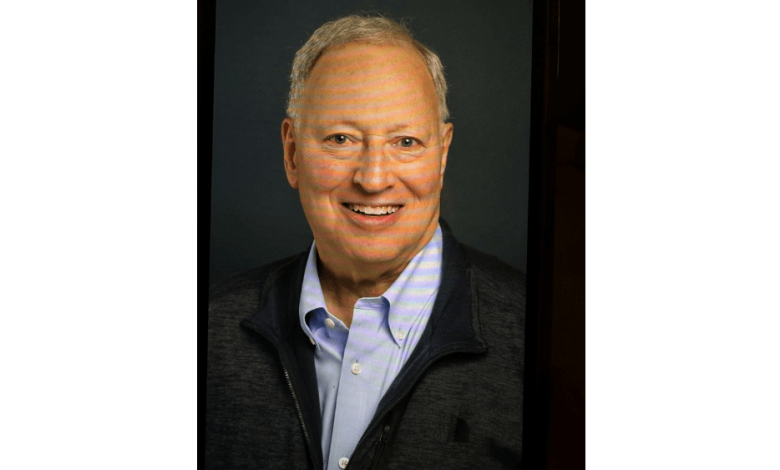
For more than five decades, Mark Gold has been a trusted voice in agricultural marketing. Whether it was standing shoulder-to-shoulder with hundreds of traders in the soybean pit at the Chicago Board of Trade or helping farmers across the country develop marketing strategies, Gold has witnessed nearly every major transformation the commodity markets have experienced.
Now, after 53 years in the business, Gold is stepping away from his career, leaving behind a legacy built on market knowledge, integrity, and education.
In this special conversation with the American Ag Network, Gold looks back on the unexpected path that led him into agriculture, the evolution of commodity trading, and the relationships that ultimately became the most rewarding part of his career.
An Unexpected Beginning
Ironically, Gold’s career in agriculture almost never happened.
Growing up in Chicago, he wasn’t raised on a farm. In fact, he describes himself as “a city slicker” with very little agricultural background. His original career plan wasn’t commodity markets—it was medicine.
After enrolling at Tulane University in 1972 with the goal of becoming a doctor, Gold quickly realized medicine wasn’t going to be his future.
“I think my medical career ended about five minutes into my first class,” Gold recalled with a laugh.
Returning home to Chicago, he worked at a sporting goods store while attending Loyola University. Then came the opportunity that changed his life forever.
A cousin who owned a clearing firm at the Chicago Mercantile Exchange invited him to spend the summer of 1973 working as a runner on the trading floor.
The moment Gold walked onto the exchange floor, he knew he had found his calling.
Surrounded by traders shouting orders, colorful jackets, and organized chaos, he was captivated by the energy.
“I asked him what the hours were,” Gold joked. “He said nine to one. I said, ‘This is right up my alley.’”
That experience eventually led him to transfer to the University of Illinois, where he earned a degree in Agricultural Economics—an uncommon choice for someone from the city during the early 1970s.
“I wanted to understand how soybeans were raised, how cattle and hogs were produced, and how agriculture really worked.”
Learning in the Soybean Pit
After graduating, Gold found himself trading in one of the most competitive environments in the world—the soybean pit at the Chicago Board of Trade.
Starting with just $3,000 in his trading account, he was competing against hundreds of seasoned traders.
“It was organized chaos,” he said.
The physical trading pits demanded quick decisions, confidence, and the ability to process enormous amounts of information in seconds. Traders were constantly yelling bids and offers while navigating crowded trading rings filled with pushing, shoving, and nonstop activity.
For Gold, however, the soybean pit became home.
While he initially started in the corn pit because of its lower volatility, he quickly realized greater opportunity existed in soybeans.
His success during the major bull markets of the late 1970s and 1980s helped establish his career and provided the financial foundation that carried him forward.
The Markets Have Changed
Having witnessed both open outcry trading and today’s electronic marketplace, Gold believes one of the biggest turning points came when the exchanges became publicly traded companies.
He believes that shift accelerated the rise of electronic and high-frequency trading, forever changing the competitive landscape.
Today, sophisticated algorithms react to USDA reports and economic data in fractions of a second—often moving markets before individual traders or producers have time to read the reports themselves.
Gold admits he has never been a fan of that evolution.
Instead, he believes markets would be fairer if participants had a brief opportunity to digest major reports before trading resumes.
While electronic markets dramatically increased trading volume and liquidity, Gold says they also introduced greater volatility and made it more difficult for individual participants to compete with computerized trading systems.
Finding His True Passion
Although Gold built a successful career as a trader, he says his greatest satisfaction came after leaving the trading floor.
Following personal changes in his life, he transitioned to becoming a broker in Wisconsin, where he began working directly with farmers.
It was there that another chapter of his career began.
Working alongside veteran broker Carl Babler, Gold helped develop marketing strategies that moved beyond simply purchasing options and waiting for the market to decide the outcome.
Instead, they focused on actively managing positions, adjusting strategies as markets changed, and helping producers better manage risk.
That practical, educational approach eventually expanded beyond individual producers to include grain elevators, lenders, and farm organizations across the country.
“I never thought I’d be out in the country working with farmers,” Gold said. “But it turned out I loved it.”
Education Became the Mission
While markets may have launched Gold’s career, teaching ultimately became his passion.
Long before webinars and social media, Gold spent decades speaking at producer meetings, marketing seminars, university events, and farm conferences.
His straightforward communication style earned him a loyal following.
His philosophy has always been remarkably simple.
“You can’t buy integrity,” Gold said.
Rather than telling producers what they wanted to hear, he focused on presenting the facts as he saw them, allowing farmers to make informed marketing decisions.
That honesty helped build credibility over decades of radio interviews, television appearances, and in-person presentations throughout the Midwest and Plains states.
Gold says those experiences made him realize he had, in many ways, fulfilled an earlier dream of becoming a teacher.
Instead of standing in front of a classroom, he spent his career educating producers about markets that directly affected their livelihoods.
A Career Built on Relationships
Looking back, Gold says he never envisioned where that first summer job in 1973 would lead.
What started as an opportunity to spend a summer on the trading floor evolved into more than five decades serving agriculture.
Along the way, he watched the markets transition from hand signals and trading pits to electronic screens and algorithm-driven trading.
He advised producers through historic bull markets, devastating droughts, financial crises, and dramatic changes in global agriculture.
But perhaps more importantly, he built lasting relationships with the farmers, ranchers, lenders, and agribusiness professionals who trusted him to help navigate uncertain markets.
As he reflects on his career, Gold’s story serves as a reminder that some of agriculture’s greatest advocates don’t always come from the farm.
Sometimes, they simply discover agriculture, embrace its people, and spend a lifetime giving back.
Be sure to listen to our full conversation with Mark Gold as he shares more stories from the trading floor, discusses the evolution of today’s markets, and reflects on the lessons learned from more than 53 remarkable years in agricultural marketing.