What Trump’s Election Address Means for Local Officials
- President Trump delivered a prime-time address to announce the declassification and release of intelligence documents related to election security.
- He suggested they provide new evidence that election results are highly vulnerable to foreign influence but did not mention a specific instance of confirmed foreign interference that affected an outcome.
- MIT’s Charles Stewart III has analyzed election systems and assessed their performance for decades. He spoke to Governing about the speech and its implications for those who administer elections.
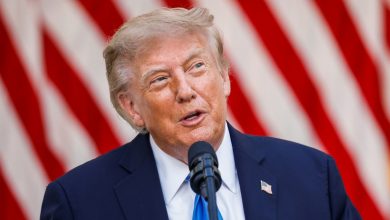
On Thursday night, President Donald Trump addressed the nation to announce the declassification of documents that, he said, reveal “shocking vulnerabilities” in the country’s election infrastructure.
In the days leading up to this presentation, the general expectation was that the speech would revolve around previous unsupported claims of widespread election fraud in 2020. But the door was open for something unexpected to be put forward.
Before a word was uttered, the address sparked controversy. Broadcast networks weighed concerns about airing it due to the likelihood it would include partisan and demonstrably false statements. In the end, only CBS pre-empted programming to make room for the president. ABC, NBC and CNN offered the speech live on their streaming channels.
The president opened his remarks about election security by stating the nation’s election systems “fall catastrophically short” of what would be necessary to prevent interference and cheating.
He referenced an assessment that “Russia, China, Iran, North Korea, as well as non-state groups have the capability to compromise U.S. election infrastructure.” The remarks that followed did not include any specific mention of a time a foreign actor caused disruption of processes or influenced an outcome.
He also claimed that a Department of Homeland Security investigation found hundreds of thousands of non-citizens were found to be registered to vote in just four states. (The conservative Heritage Foundation’s database shows 99 suspected instances of a noncitizen actually voting since 2000.)
To help make sense of the president’s remarks and the newly declassified documents, Governing spoke with Charles Stewart III, founding director of the Massachusetts Institute of Technology (MIT) Election Data and Science Lab. He also co-directs the California Institute of Technology/MIT Voting Technology Project, established in 2000 when millions of votes went uncounted due to problems with punch-card voting machines. Over more than two decades, it has conducted interdisciplinary research regarding election technology and election administration.
The interview has been edited for length and clarity.
What are your main takeaways from what was said last night?
A big sigh of relief, thing No. 1. Thing No. 2, a nothingburger with respect to any deep knowledge or understanding about election administration, either in general or in recent years.
Three, there was a little bit of new information, but again, it was within the realm of the expected, so nothing deeply learned.
Finally, it confirms to me that what’s happening in the administration right now with respect to election integrity is not the type of serious work that needs to be done to ensure the integrity of our elections but rather setting the predicate for challenging the results of the 2026 election.
Was there anything that stood out as an especially notable mischaracterization of the state of election security?
Two big things, big numbers the president kept coming back to. The first was China having voter files [i.e., names, addresses and political affiliation] for over 220 million voters. You and I can go out and buy that voter file. A lot of people have that file. It’s not to say that China was going to use it for good, but that’s not news.
(Gretchen Ertl)
The second thing, similarly, was the claim that a review of four states’ voter rolls revealed a quarter of a million illegally registered non-citizens on the rolls. That’s not what those matches reveal. What they reveal is that if you do a poor-quality match without good identifiers [data points that distinguish a person from all others in a data set], you’re going to come up with a large number of people who share names with non-citizens or are current citizens who are naturalized. The experience in all the other states, in which high-quality matches have been done, is that that sort of match would reveal orders of magnitude fewer people to investigate, and once those investigations were done, you would be down to a handful of non-citizens who were inadvertently on the voter rolls.
A key finding in a National Intelligence Council document previously declassified is “We have no indications that any foreign actor attempted to alter any technical aspect of the voting process in the 2020 elections, including voter registration, casting ballots, vote tabulation, or reporting results.” Is there reason to think the documents now being released will say anything different?
No. My quick run through the documents, and that from my team, is consistent with that. The reporting and the commentary this morning is consistent with that.
I heard an interview with a member of the president’s election integrity task force who said that there’s no new evidence to suggest that votes were flipped, et cetera, in 2020.
There’s nothing deeply new about this.
Looking back over the transcript, there’s not much said about things actually happening. Would you agree?
Exactly. Maybe there were some intentions. The intentions of the Chinese were highlighted. The intentions of the Russians [to interfere in the election] were not highlighted, but that’s in the materials.
It was an effort to selectively use data and evidence to make a point, which is what politicians oftentimes do. This is just another in a long series of claims. I don’t think it will be the last.
The best political science research out there suggests that those types of [foreign influence] campaigns were a drop in the bucket in any of the elections that we’re talking about. You didn’t need Russian or Iranian or Chinese influence to get messages about candidates out to Americans — and it’s the political extremists in a real information bubble who consume that foreign influence. They consume it with each other. They spread it with each other, and it doesn’t spread very far into the mainstream political discourse of normal Americans.
Your work brings you in regular contact with election administrators. You have studied the things they do to ensure the integrity of vote counts. How do you think it strikes them for the president to say their systems fall “catastrophically short” of being secure enough to prevent cheating and interference?
They work very hard. If it were the first time, it would be a gut punch. Since it isn’t the first time, it’s just a disappointment to recognize the president doesn’t have your back when the president should have your back.
What that hardworking election official is going to say this morning is that people should come down to the office and observe what they do if the president’s speech made them at all concerned. Come down and observe the logic and accuracy testing, come be a poll worker. Observe what they do up close and draw your own conclusions.
Our readers work in state and local government, where elections are administered. What’s your advice to them in the aftermath of this address?
Before speech, chop wood, carry water. After speech, chop wood, carry water.
The best thing that local officials can do in this environment is do what they do best, which is run high-quality elections.
Credit: Source link