Contributor: Keep antivax politics out of foster parent licensing
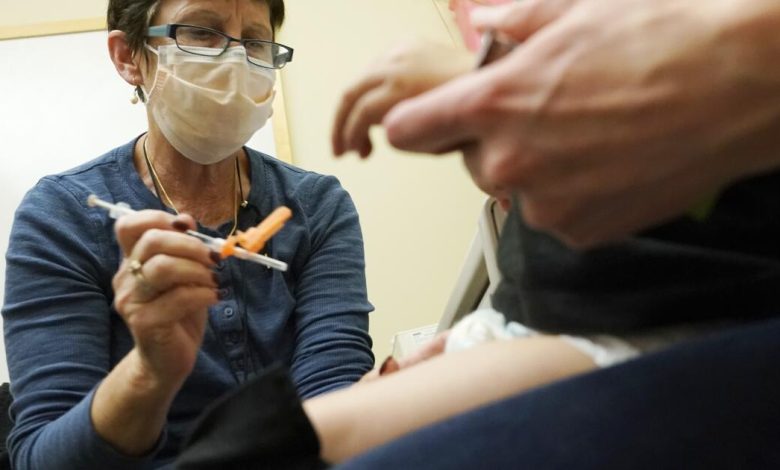
What do we owe children in the foster care system? At a minimum, safety. Which is why it’s so concerning that the Trump administration recently omitted guidance on vaccine requirements for foster homes. Given that the secretary of the Department of Health and Human Services has well-known reservations about the efficacy of vaccines, maybe this development isn’t surprising. But that doesn’t make it any less dangerous.
The federal government doesn’t license foster homes — that is the job of states. But the federal Administration for Children and Families does provide guidance about that licensing, and given that the feds provide about half the money that states spend on child welfare, it’s a safe bet that many states align their priorities with federal expectations.
In 2019, during the first Trump administration, the federal guidance for foster homes required that all children living in the household must “be up to date on immunizations” and that all household members “who will be caregivers of infants must have an up to date pertussis (whooping cough) vaccine” and, if caring for an infant or child with special needs to have a current (annual) flu vaccination. The 2026 standards specify none of these.
A disproportionate number of children in foster care are medically fragile, meaning they may be particularly vulnerable to these diseases. The idea that the unscientific views on vaccines by parents should trump the safety of children is a gray area legally, but there is no world in which foster parents should be following woo-woo ideas about medicine when it comes to children who are in their custody only temporarily.
People are free to embrace fringe medical beliefs. But many are trying to exert pressure on government and nongovernmental agencies to abandon vaccine guidance for other people’s children. Children’s Health Defense, the anti-vaccine group Robert F. Kennedy Jr. led before joining HHS, is suing the American Academy of Pediatrics for its recommendations. Its lead plaintiff is a mother just charged with murdering her twins. She claims vaccines killed them.
To be clear, medical consent for a child in state custody is not automatically handed to a foster parent. Still, routine medical decisions — what most vaccinations are considered — are going to be made by the person who takes the child to the doctor. That is going to be the foster parent, which is why Arizona has issued guidance that: “licensed foster parents cannot impose their vaccine hesitancy beliefs on foster children” and makes explicit that they are “not authorized to request a school or child care vaccine exemption for a foster child.”
Of course, this is not the first attempt to politicize foster care licensing. As part of the licensing procedure, a number of states including Massachusetts and Oregon have demanded that any potential foster parent — even someone being licensed to care for an infant, even someone licensed to care for their own relative who has no interest in gender transitions — promise to respect gender-affirming care sought by any foster child. The Biden administration also tried to issue guidance along these lines, restricting the ability of states to contract with faith-based agencies that didn’t support LGBTQ+ youth in the way the government deemed acceptable.
The Trump administration’s change of views on vaccines seems to be part of a larger push to loosen the requirements for foster parents, without prioritizing children’s safety. The 2019 standards provide that an applicant must have had a physical within the last 12 months, with a licensed healthcare professional indicating the applicant could care for an additional child. That year’s guidance adds that all household members must disclose current mental health or substance use issues, as well as any history of drug or alcohol abuse or treatment.
The 2026 standards dispense with any professional medical evaluation and replace this standard with self-disclosure: The applicant, and any other adults living in the home, are asked to report current physical limitations and mental health and substance use issues that might limit the ability to care for children. The new standards also drop all references to physical and mental health history. As long as the applicant does not self-define the problem as “current,” there is nothing to disclose or consider.
Do we really think that an active drug user is going to volunteer this information? Is it not worth checking their claims when we are considering whether to license and pay them to care for a vulnerable child who has already been abused or neglected? And should a decades-long history of drug addiction not count, simply because the applicant has been clean for a few months?
It seems that the Administration for Children and Families has lost the plot. The agency also recently recommended that states loosen requirements for criminal background checks on foster parents — as long as they were considered kin. Not only should states not automatically disqualify potential caregivers with criminal and even violent criminal histories, according to the latest guidance, they should also take into consideration character references and whether criminals had completed court-mandated rehabilitation when determining whether to license people as foster parents. The loopholes are big enough to drive a truck through.
What all of these changes have in common is that they are not being made with the health and safety of children in mind. They are being driven by political agendas. Politicians and the growing ranks of advocates who have deep pockets and unfettered access see foster parent licensing as an opportunity to impose their social agendas — whether to argue that gender is fluid, vaccine mandates are too intrusive, drug use is just another lifestyle choice, it’s unfair to hold someone’s criminal record against them. But these changes lose sight of the reason we have foster parents in the first place. Children were in danger and they are in need of protection. Our political leaders should save their ideological crusades for another day.
Emily Putnam-Hornstein is a professor at UNC Chapel Hill’s School of Social Work. Naomi Schaefer Riley is a senior fellow at the American Enterprise Institute. They lead Lives Cut Short, a project to document child maltreatment fatalities.
Insights
L.A. Times Insights delivers AI-generated analysis on Voices content to offer all points of view. Insights does not appear on any news articles.
Viewpoint
Perspectives
The following AI-generated content is powered by Perplexity. The Los Angeles Times editorial staff does not create or edit the content.
Ideas expressed in the piece
- The article argues that children in foster care, many of whom are medically fragile, are owed the highest possible standard of safety, and that dropping explicit federal expectations that foster households be up to date on routine immunizations exposes them to preventable infectious diseases.[3][8]
- It notes that earlier federal model licensing standards for foster homes explicitly required that all children in the household be current on vaccines and that caregivers of infants and medically fragile children receive up‑to‑date pertussis and influenza shots, and contends that the absence of such language in the new standards reflects political skepticism of vaccines rather than any evidence-based reassessment of risk.[3]
- The piece suggests that while licensing decisions are made by states, federal guidance strongly shapes state policy because federal funds cover a large share of child welfare spending, so the removal of vaccine expectations at the federal level is likely to weaken protections for children in care nationwide.[3]
- It holds that foster parents, who are caring for children only temporarily and under state authority, should not be allowed to impose “fringe” or anti-vaccine beliefs on those children, pointing to state-level guidance such as Arizona’s policy that licensed foster parents may not use vaccine hesitancy to seek school or childcare exemptions for foster children as a more appropriate model.[9]
- The article criticizes advocacy efforts that seek to roll back vaccine recommendations for children generally, arguing that such campaigns, including litigation against professional medical bodies, risk influencing policy for foster youth in ways that prioritize adult ideology over children’s health.[3][6]
- It further contends that the new federal foster home standards weaken medical safeguards by eliminating the prior requirement for a recent physical examination by a licensed healthcare professional and instead relying on applicants’ self-disclosure of current physical, mental health, and substance-use issues, a shift the article characterizes as naïve about underreporting by people with active problems.[3]
- The article argues that dropping references to any past history of substance use or mental health conditions ignores the cumulative risk posed by longstanding addiction or serious illness, especially when caring for children who have already experienced abuse or neglect.
- It also criticizes new federal guidance that encourages states to take a more permissive approach to criminal background checks for kinship caregivers, including people with violent criminal histories, suggesting that the emphasis on rehabilitation and character references creates “loopholes” that could allow unsafe adults to be licensed as foster parents.[1][2][7]
- The piece links these changes to broader ideological battles, arguing that both conservative and progressive agendas have used foster care licensing as a vehicle — from anti-vaccine politics and efforts to normalize drug use and criminal records to earlier attempts in states such as Massachusetts and Oregon to require foster parents to commit in advance to gender-affirming approaches for any youth in their care.[4][5]
- Ultimately, the article urges that foster parent licensing standards be insulated from culture-war politics of any kind, insisting that the sole guiding principle should be protecting children from further harm rather than accommodating adult preferences or ideological campaigns.[3][7]
Different views on the topic
- Some child welfare and kinship-care advocates support recent federal kin-specific foster home approval standards precisely because they relax certain blanket disqualifications, arguing that overly rigid rules on health, housing, and criminal history have historically kept children out of safe, loving homes with relatives and contributed to foster home shortages.[7]
- Within that framework, the kin-specific standards emphasize that sex offender registry checks are already routine in states, and that federal rules should avoid duplicative or unnecessarily burdensome requirements for relatives; supporters argue this shows that safety can be preserved while still easing procedural barriers for kin, contrary to claims that the new approach invites dangerous gaps.[1][2][7]
- Some policymakers and practitioners argue that strict, across-the-board immunization requirements for everyone in a foster household can unintentionally exclude otherwise suitable families, including relatives, and that allowing case-by-case exceptions is necessary to honor placement preferences and keep children connected to kin when the child’s own vaccination status and health profile do not indicate elevated risk.[8][9]
- Arizona’s policy, which permits “unimmunized homes” to be licensed under defined conditions and to receive young foster children when a health professional confirms there is no heightened health risk, is often cited by supporters as a balanced approach that respects parental autonomy while still screening for vulnerabilities, rather than a capitulation to anti-vaccine sentiment.[9]
- Other states’ detailed foster home immunization schedules, such as Montana’s age-based requirements for children in licensed homes, are sometimes taken as evidence that state-level regulation, not federal model language, is the proper venue for setting vaccine policy, with local authorities best positioned to weigh epidemiological conditions and community standards.[8]
- Advocates for LGBTQ youth in foster care have defended requirements that foster parents support or affirm a child’s sexual orientation and gender identity, arguing that such expectations are grounded in evidence that rejection and hostility in the home are linked to elevated risks of depression, self-harm, and homelessness among LGBTQ youth.[4][5]
- Even as Massachusetts moves to replace explicit “affirm a child’s sexual orientation or gender identity” language with a broader requirement to affirm a child’s “individual identity and needs,” supporters of the original rule maintain that clear protections are still needed to ensure that LGBTQ youth are not placed with caregivers who fundamentally oppose their identities.[4][5]
- Some legal and policy analysts contend that background checks and health screenings should distinguish between recent, relevant risks and older, resolved problems, noting that several states already use time-limited disqualifications for certain offenses and allow individualized assessment when there is evidence of rehabilitation, successful treatment, or long periods without reoffending.[1][2][7]
- From this viewpoint, categorical skepticism of applicants with any significant criminal or substance-use history is seen as counterproductive, potentially undermining efforts to recruit kin and community-based caregivers who may share children’s cultural backgrounds and be uniquely positioned to provide stability and connection.[1][2][7]
Credit: Source link