Is Latin America shifting toward the right?
The leaders range from El Salvador’s President Nayib Bukele, who has ruled that country with an iron fist, especially in his crackdown on gang violence, to Javier Milei, Argentina’s anti-establishment president, who has promised to dismantle the elite class and improve the country’s economy.
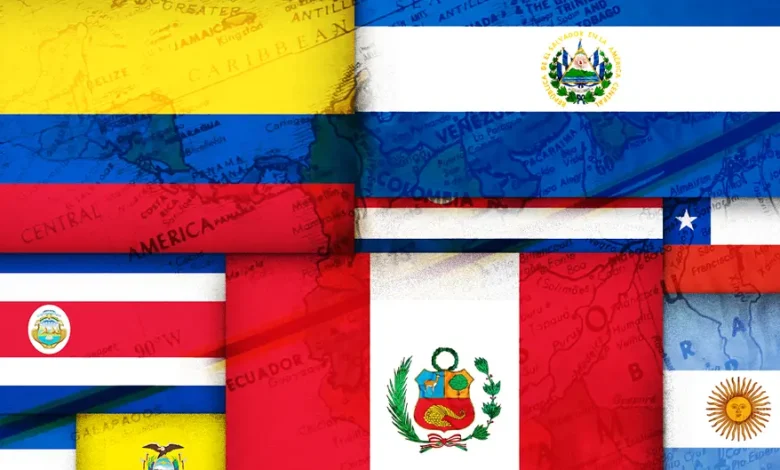
Both right-wing presidents are part of a trend in Central and Latin America: the region has undergone an apparent swing to the right in recent years. As of today, 12 countries in the region have turned to the right, including Colombia, Chile, Costa Rica, Ecuador, and Peru.
What has caused this shift?
John Twichell, program director of Latin American Studies and senior lecturer in the University of Miami College of Arts and Sciences, shares his thoughts about this change. Twichell regularly offers undergraduate courses in analysis of Latin American, Caribbean, and inter-American politics in the Department of Political Science and the interdisciplinary program in Latin American Studies.
What kind of signal does the recent win of right-wing candidate Abelardo de la Espriella in Colombia send to the world?
President-elect Abelardo de la Espriella’s razor-thin victory in last month’s runoff election in Colombia represents not only Latin America’s but the world’s latest example of the emergence of a populist outsider candidate who went on to win on a campaign platform that tapped into voter discontent with establishment politicians and parties while offering quick, in some cases militarized, solutions to festering problems like crime, violence, inflation, joblessness, and economic inequality. Those who win these close contests effectively leverage simplistic messaging and tropes like “communism” that they instantly communicate through artificial intelligence, digital media, and telecommunications to influence public opinion and voting.
This signals to incumbent parties increasing pressures to more effectively defend and communicate their record of performance to voters who otherwise seek quick fixes to these hard-to-solve societal problems, for example, resurgent violence tied to a languishing peace process in the case of Colombia. In general, narrow electoral victories by outsider populist candidates with autocratic tendencies are a reminder of the importance of voter turnout in a democratic election and how it is that an entire country’s political future is often determined by just a few thousand votes in a polarized environment, as we’ve just seen not only in Colombia but also in Peru.
It is evident that there is a growing shift to the right in most of Latin America. What is driving this?
While it may appear that way, the region is not moving in a rightward direction in lockstep, with Mexico and Uruguay representative cases of the left’s continued hold on power. The upcoming election in Brazil will be an important indicator of whether we are in fact witnessing a growing shift to the right. What we are witnessing is less of an overall rightward ideological shift among Latin American voters than the effects of years of persistence in political party fragmentation, dealignment, and political polarization. In cases like Peru and President-elect Keiko Fujimori, who, admittedly, is not a political outsider (far from it), crowded first-round elections yield second-round candidates with a weak plurality and, as in Colombia, another narrow right-wing victory over the left influenced by political polarization. Whether or not such cases, in contrast to Chile’s President José Antonio Kast’s decisive second-round victory against the left last November, spell an overall rightward shift in Latin American politics remains an open question.
Is the current rightward turn a rejection of specific left-wing leaders and policies, or does it reflect a deeper ideological change among Latin American voters?
The consensus among political analysts is that post-pandemic Latin American voters have set aside ideology in favor of pragmatism. Faced with everyday human security challenges, which have become dire and immediate, among them extortion, femicide, food insecurity, and human trafficking, voters are desperate to see their governments address these types of public security threats. When outsider populist presidential candidates who happen to be right-wing campaign to end such cycles of public insecurity, promising to emulate Nayib Bukele’s militarized policies in El Salvador, frustrated voters are lured in by such siren calls. Yet it is an unsettling trend because it suggests a greater willingness among Latin American voters to transactionally trade generations of hard-fought gains in civil, human, political, and social rights for economic and public security.
How does the recent shift compare with previous political cycles in Latin America, and what does it suggest about the future direction of democracy and governance in the region? What kind of platforms do these candidates provide to the populace—crime prevention, a better economy?
The new right wing in Latin America is symptomatic of an autocratic trend in world politics, which has been ascendant as the 21st century has been unfolding, as the United States and China—the two great powers in international relations—negotiate the terms of their relationship and, by extension, redefine international order. Whereas the 1990s in Latin America were defined by the influence of uncontested U.S. interests and ideals in what is known as the post-Cold War “peace dividend” period, when the left was finally able to begin to compete in and win democratic elections, and the subsequent post-neoliberal, commodities-boom-driven “Pink Tide” of the 2000s propelled the left to gain forms of dominance regionwide, Latin American politics today is much different. While in nearly all cases elections are regularly held, the regional diffusion effects of growing autocratic tendencies among political leaders ever more willing to disregard the values of liberal democracy still espoused, although not as capably, by the international community—case in point, Venezuela—make forced migration and refugees a major domestic policy challenge in neighboring countries that the right wing has seized upon as an electoral platform strategy. Organized crime and the continuing drug trade, and the associated violence, which left-leaning governments, including the outgoing Gustavo Petro government in Colombia, have failed to address despite promises to do so, means that the left is ceding power to the right by way of the ballot box more and more often in today’s Latin America.
Credit: Source link