Russia’s Threat to Britain Is Already Here
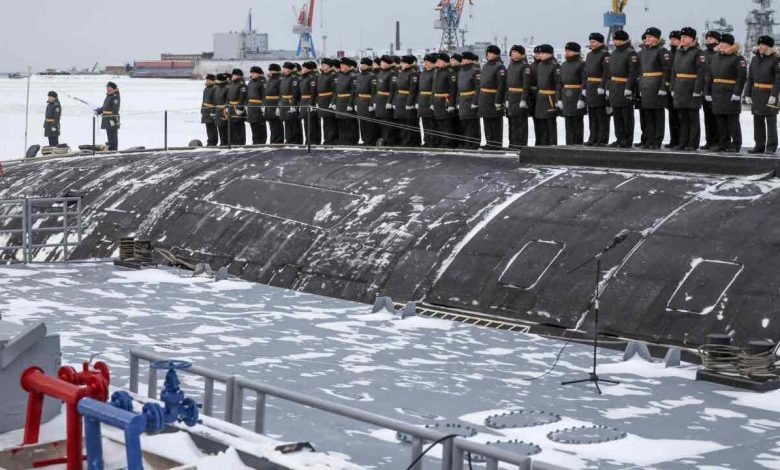
Recent Russian naval activity in waters close to Britain has intensified concerns over the growing threat to Britain from the Kremlin’s increasingly aggressive military posture. From live-fire exercises just 40 nautical miles off the coast of Plymouth to repeated deployments of warships and submarines near critical sea lanes and undersea infrastructure, Moscow appears intent on testing Britain’s resolve, gathering intelligence, and demonstrating its ability to project force close to NATO territory. While these actions remain within international waters, defence officials and security experts warn they form part of a broader pattern of increasingly assertive Russian behaviour that poses a significant and evolving threat to Britain’s national security.
Britain’s intelligence agencies increasingly believe that the people most vulnerable to Russian intelligence operations are not limited to senior government officials or military personnel. The Kremlin’s modern espionage strategy seeks to exploit anyone who can provide access to sensitive information, critical infrastructure or public influence.
Government ministers, civil servants and advisers working on defence, foreign policy, sanctions, energy security and intelligence remain among the highest-priority targets. Defence manufacturers and aerospace companies involved in Britain’s military programmes—including projects linked to NATO and the AUKUS security partnership—are also considered attractive objectives for Russian intelligence services seeking technological and strategic advantages.
When British Forces Fought Russia: Key Historical Facts
Critical national infrastructure has become another major focus. Operators of electricity grids, telecommunications networks, water utilities, ports, airports and transportation systems are viewed as potential entry points for cyber intrusions that could disrupt essential services during a geopolitical crisis. Financial institutions, particularly those involved in sanctions enforcement, international banking and cryptocurrency investigations, are also regarded as high-value targets.
Universities and research institutions conducting work in artificial intelligence, quantum computing, semiconductors and advanced engineering face growing espionage risks. Technology companies that develop cloud computing platforms, cybersecurity products or satellite communications systems likewise occupy an increasingly important place on Russia’s target list because of their close relationships with government and defence organisations.
Beyond institutions, Russian intelligence has shown sustained interest in members of the Russian diaspora, political dissidents, investigative journalists, academics and policy experts whose work challenges or scrutinizes the Kremlin. Parliamentarians, political parties and think tanks are also vulnerable to cyber intrusions, phishing campaigns and influence operations intended to obtain confidential information or shape political debate. British officials have further cautioned that smaller companies supplying larger defence contractors may present easier avenues for cyber penetration because they often possess weaker cybersecurity protections.
These concerns reflect a broader assessment by MI5 and Britain’s National Security Strategy that Russia has shifted from relying primarily on intelligence officers operating under diplomatic cover to using criminal organisations, hired intermediaries and individuals recruited online to conduct surveillance, sabotage and espionage.
Should tensions between Russia and the West continue to escalate, British defence planners believe the most likely confrontation would unfold not through a conventional military invasion but through an expanding campaign of hybrid warfare. The government’s Strategic Defence Review 2025 concludes that Moscow would be more likely to exploit Britain’s dependence on digital infrastructure than attempt a direct assault on its territory.
One plausible scenario involves a coordinated wave of cyberattacks against electricity networks, telecommunications providers, NHS digital services, banking systems and transport infrastructure. Rather than causing permanent destruction, such attacks would aim to generate widespread disruption, erode public confidence and complicate the government’s ability to respond during a broader international crisis.
When British Forces Fought Russia: Key Historical Facts
Another growing concern is the security of Britain’s undersea communications and energy infrastructure. The United Kingdom relies heavily on fibre-optic cables beneath the Atlantic and North Sea for internet traffic, financial transactions and government communications. British defence officials have repeatedly warned that sabotage of these cables—or of offshore energy facilities and electricity interconnectors—could produce severe economic disruption while making attribution difficult enough to avoid triggering an immediate military response.
Military pressure at sea is also expected to remain an important component of Russia’s strategy. In recent years the Royal Navy has repeatedly monitored Russian warships, submarines and intelligence-gathering vessels operating near British waters and critical maritime infrastructure. Such deployments are widely interpreted as efforts to collect intelligence, test NATO responses and signal Russia’s ability to threaten Western interests without crossing the threshold into open conflict.
British planners also anticipate greater use of electronic warfare. Russia has repeatedly demonstrated its ability to jam and spoof GPS signals during operations in Eastern Europe, capabilities that could potentially interfere with civil aviation, commercial shipping, emergency services and military navigation around the United Kingdom.
Information warfare is expected to remain another central element of Moscow’s strategy. Intelligence agencies warn that Russian state-backed networks are likely to continue exploiting social media and online platforms to amplify political divisions, undermine confidence in democratic institutions, spread disinformation during national emergencies and influence public opinion through coordinated influence campaigns.
Physical sabotage conducted through proxy actors represents another evolving threat. Rather than deploying intelligence officers directly, Russia is increasingly believed to rely on recruited intermediaries and criminal groups to carry out surveillance, arson or attacks against logistics facilities and military supply chains. MI5 has publicly identified this outsourcing of covert operations as one of the most significant changes in Russian intelligence activity since hundreds of Russian diplomats and intelligence officers were expelled from Europe following the invasion of Ukraine.
Despite these mounting concerns, British officials emphasize that there is no publicly available evidence of a Russian military plan to invade the United Kingdom. Neither the UK government nor NATO has reported intelligence indicating preparations for a conventional assault on British territory.
Russia’s official commentary sometimes draws on a long history of geopolitical competition with Britain. During the nineteenth century, Britain opposed Russian expansion in Europe and the Near East, most notably in the Crimean War (1853–1856). Britain also competed with Russia in Central Asia during the period often called the “Great Game.”
Londongrad: The Rise and Decline of Russian Wealth in Britain
For more than two decades, London was one of the world’s leading destinations for Russian private wealth. After the collapse of the Soviet Union and the rapid privatisation of state assets in the 1990s, a new class of Russian billionaires built fortunes in oil, metals, banking and industry. Many moved their families, investments and businesses to Britain, attracted by London’s financial system, luxury property market and global business environment.
When British Forces Fought Russia: Key Historical Facts
The concentration of Russian wealth became so significant that the city gained the unofficial nickname “Londongrad”— a reference to the network of Russian billionaires, investors, lawyers and financial advisers operating in the British capital.
That relationship changed dramatically after Russia’s full-scale invasion of Ukraine in 2022. The UK introduced sweeping sanctions against hundreds of Russian individuals and companies, freezing billions of pounds in assets and increasing scrutiny of foreign wealth entering Britain.
According to UK Parliament research, Russian nationals who were not UK residents held around £8.2 billion in UK financial assets at the end of 2023, down from approximately £29 billion in 2021 before the invasion. The government also reported that about £22.7 billion in Russian-linked assets had been frozen under sanctions rules between February 2022 and October 2023.
However, the true scale of Russian-linked wealth remains difficult to measure because assets have often been held through offshore companies, trusts and complex ownership structures.
Russian Wealth and London Property
Luxury real estate was the most visible symbol of Russian influence in Britain.
For years, wealthy Russians purchased some of London’s most expensive properties in areas such as Kensington, Chelsea, Belgravia, Knightsbridge and Hampstead, while Surrey estates also attracted wealthy international buyers.
Transparency International UK found that at least £1.5 billion worth of UK property had been acquired by Russians considered at high risk of corruption or linked to Kremlin-connected networks. The organisation identified nearly 150 property titles associated with such individuals and highlighted the role of offshore jurisdictions in hiding ownership.
The issue led to political pressure for greater transparency, resulting in the creation of the UK’s Register of Overseas Entities, requiring foreign companies owning British property to reveal their beneficial owners.
The Oligarchs Who Defined the Era
When British Forces Fought Russia: Key Historical Facts
Among the most recognisable Russian businessmen in Britain was Roman Abramovich, who purchased Chelsea Football Club in 2003 and transformed it into one of Europe’s most successful teams. His fortune was built through the oil company Sibneft, later sold to Gazprom, and investments in metals and mining through Evraz.
Before sanctions, Abramovich’s wealth was estimated at around $14–15 billion. He was sanctioned by the UK in 2022 following Russia’s invasion of Ukraine and later sold Chelsea in a government-approved deal, with proceeds frozen under sanctions conditions.
Alisher Usmanov built his fortune through metals, mining, telecommunications and technology investments. He founded USM Holdings, with interests across industrial and technology sectors. Usmanov had long-standing connections to Britain, including property linked to the historic Sutton Place estate in Surrey. He was sanctioned by the UK after the invasion of Ukraine.
Mikhail Fridman became one of Russia’s most influential financiers as co-founder of Alfa Group Consortium and Alfa Bank, one of Russia’s largest private banks. He maintained connections to London and owned property in Britain before being sanctioned by the UK and European Union in 2022.
Petr Aven, Fridman’s business partner and co-founder of Alfa Bank, also had British connections through property and personal assets. He was sanctioned by the UK as part of measures targeting Russia’s business elite.
Oleg Deripaska, one of Russia’s most prominent industrialists, built his fortune through aluminium giant United Company Rusal and investments in energy and infrastructure. He had financial and property links to Britain before becoming a target of Western sanctions.
The End of the “Londongrad” Era?
The era when Russian billionaires openly shaped London’s luxury property market, football ownership and elite business circles has largely disappeared.
Since 2022, Britain has tightened financial controls, expanded sanctions enforcement and increased scrutiny of foreign investment. Yet the legacy of Russian capital remains visible in property ownership, financial networks and corporate structures built over decades.
The challenge for British authorities is finding a balance between welcoming legitimate international investment and preventing the financial system from being exploited to conceal corruption, political influence or assets connected to hostile states.
Summary Table: Russian Influence in UK
| Area | Estimated Scale |
|---|---|
| Russian financial assets in UK (non-residents, 2023) | £8.2 billion |
| Frozen Russian-linked assets reported by 2023 | £22.7 billion |
| Russian-linked suspicious property identified | £1.5 billion+ |
| UK companies with Russian founders/owners | ~11,300 |
| Main sectors | Property, finance, commodities, technology |