When the Market Drops, the IRS Quietly Discounts Your Roth Conversion. Here’s the Math at $500,000
© J.J. Gouin / Shutterstock.com
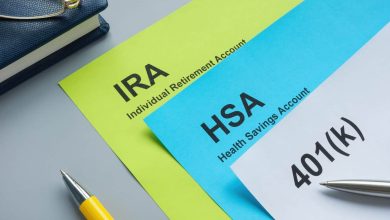
If you have a traditional IRA or an old 401(k), the IRS runs a quiet sale every time the market dips. It is baked into how the tax code prices a Roth conversion: you pay ordinary income tax on the dollar value of what you move, on the day you move it. When your portfolio is down, that bill shrinks even though your share count does not.
The Reveal: You’re Taxed on the Dip
A Roth conversion is valued at fair market value on the transfer date. If your traditional IRA held the same shares it held three months ago, but those shares are down 8.82%, you are converting the same ownership stake for a smaller taxable number. Every dollar of recovery after the conversion happens inside the Roth, tax-free forever, assuming you meet the holding rules. The market gives you the discount. The IRS honors it.
The Proof
Roth conversions live in Internal Revenue Code Section 408A(d)(3), which treats a conversion as a taxable distribution from the traditional account. IRS Publication 590-A spells out the valuation-on-transfer-date rule. And the Tax Cuts and Jobs Act of 2017 permanently killed Roth “recharacterization,” meaning once you convert, you cannot undo it. That single change is why timing the conversion into weakness matters more now than it did a decade ago.
Who Qualifies and Who Should Wait
Anyone with a traditional IRA, SEP-IRA, SIMPLE IRA, or an old 401(k) rollover can convert. There is no income limit on conversions (that ceiling was repealed in 2010). It is not for you if: you would land in a higher bracket in retirement than today, you need the converted money within five years, or you have significant pre-tax IRA balances alongside after-tax contributions. That last case triggers the pro-rata rule, which taxes conversions proportionally across all your IRAs.
How to Use It: The Math at $500,000
Say you are married filing jointly with a $500,000 traditional IRA and roughly $100,800 of other taxable income. The 22% bracket runs to $211,400 and the 24% bracket runs to $403,550 in 2026. The steps:
- Identify a market drop. The February 2 to March 27, 2026 S&P 500 slide of 8.82%, when the VIX peaked at 31.05, is the textbook window.
- Convert a slice sized to your bracket. A conversion that fills the 22% bracket costs the same tax rate on more shares when prices are down.
- Pay the tax from a taxable account so every share moves into the Roth intact.
- Repeat in chunks across years. As advisor Wes Moss put it, “the right way to do Roth conversions is in chunks spread out over time” because the conversion itself lifts your income.
- Log the conversion date. Each conversion starts its own five-year clock.
If the market then behaves as it has since March, recovering to a year-to-date gain of 8.82%, the rebound sits inside the Roth. You paid tax on the trough. You keep the recovery.
The Catch
Three traps to respect. First, the deadline is December 31 of the tax year. A conversion for tax year 2026 must settle by year-end. Second, the pro-rata rule blends pre-tax and after-tax IRA money across all your traditional accounts; you cannot cherry-pick the basis. Third, a large conversion can spike your modified adjusted gross income enough to trigger IRMAA Medicare surcharges, phase you out of ACA subsidies, or push long-term capital gains from 15% to 20%. Model the full return before you click convert. And remember: since 2018, there is no undo button.
Contact [email protected] for any questions or corrections.