Major global selloff in chip stocks
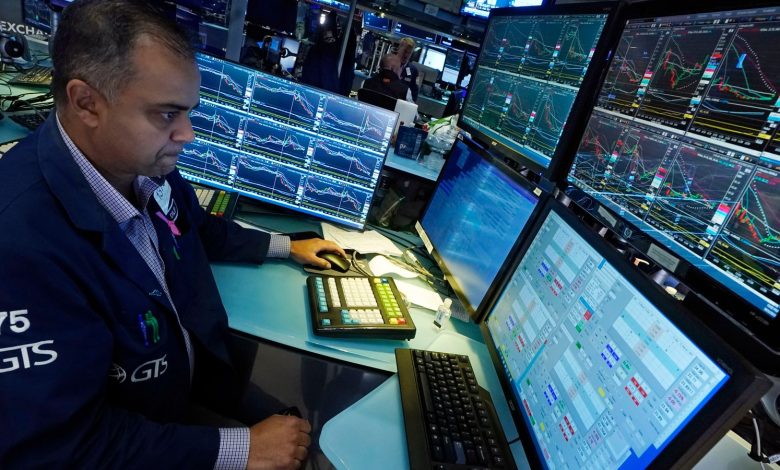
There are clear indications that the AI bubble, which has boosted the shares of chipmaking firms to record highs, is starting to rapidly deflate. Concerns are growing about the viability of the massive expenditure on data centres, centring on when they will start to earn a profit.
The past week has seen a sharp fall in the share price of major chipmaking firms, especially those in South Korea but now extending to Wall Street. There was a global selloff yesterday, with the falls in US chip and memory stocks leading to a drop in the tech-heavy NASDAQ index. It went down by as much as 1.8 percent during the day, taking its total loss since the beginning of June to almost 10 percent.
The fall on Wall Street was preceded by a major decline in Asia centred in South Korea. The Kospi index dropped more than 10 percent yesterday prompting a brief closure of the market because of the rapidity of decline—something which has become increasingly common in recent weeks—as shares in the chipmakers Samsung and SK Hynix were dumped.
Shares in SK Hynix fell 14.7 percent on Monday while Samsung dropped 13.4 percent. Both companies have lost more than a third of their market value this month but still remain higher by 138 percent and 83 percent respectively than at the start of the year.
Together the two companies account for more than half of the Kospi index. They are at the centre of the AI buildout, supplying the memory chips needed for the AI data centres being built by the US tech giants.
There was also a major selloff in Japan where the shares of major chipmaking firms fell sharply. The computer memory company Kioxia plunged more than 18 percent bringing its overall fall to 50 percent over the past month. At one point Kioxia was Japan’s biggest company by market value.
The fall in chip stocks pulled the Nikkei index down by 4 percent. It has now dropped by almost 15 percent since reaching a record high in June. A Financial Times (FT) report cited the comment of a senior equities trader who said: “I can’t remember seeing anything this bad or violent.”
The selloff also extended to Europe where the Dutch firm ASML, the world’s major manufacturer of chipmaking equipment, lost 2.9 percent.
While Wall Street’s S&P 500 index finished the day with a marginal increase of 0.2 percent there were big declines in AI-related stocks.
The memory group SanDisk dropped by 14.2 percent yesterday after an 11 percent fall on Monday. So far this month it has lost more than 50 percent of its market value, but its share price still remains four times higher than it was at the start of the year.
Other firms, including Western Digital, Micron and Advanced Micro Devices also experienced significant falls, as high as 8.9 percent in the case of Micron.
The sharp fall in the stocks of chipmaking firms has been triggered by concerns over the continued viability of the AI investment boom to which they are tied. First among these is whether AI buildout is going to generate a sufficient return on the massive investment outlays.
The AI “business model” assumes that the major US firms developing the AI platforms, the so-called hyperscalers such as Alphabet (Google), Microsoft and Meta (Facebook), will be able to reap super profits because they will retain the lead in producing superior AI platforms, giving them a monopoly position.
But this assumption is increasingly being called into question by the development of Chinese AI models which can rival the efficiency of those produced by the US firms OpenAI and Anthropic at a much-reduced cost.
Then there is the question of circularity in the AI boom. This issue, which has been of concern for some time, was highlighted again this week when the Wall Street Journal revealed that Nvidia, which supplies graphic processing units for AI, was engaged in talks to provide $250 billion for a massive OpenAI data centre project in Ohio.
The Journal said that the report “intensified investor concerns about circular financing in the artificial intelligence economy—and about the extent to which Nvidia is investing in its own customers, which in some cases need the chipmaker’s financial backing to purchase its chips.”
Needless to say, a situation in which a company supplies another firm the money with which to buy its products, enabling it to book a profit, is hardly a viable business model.
As a result of the revelation, Nvidia’s shares fell by 5 percent, losing its position as the world’s leading company by market value to Apple.
Circularity is not confined to Nvidia. According to a Bloomberg report: “Fears of so-called ‘circular’ deals are on the rise, as AI investments are increasingly becoming an interconnected web of dependencies between technology manufacturers and AI startups. That can magnify losses if demand for AI fails to match lofty expectations.”
In the words of one analyst cited in the report, “doubts over spending, returns and valuations are still deepening rather than fading,” and there was a “hesitation to buy the dip.”
These doubts are being reflected in financial arrangements. The FT has reported that the prices for credit default swaps, which are taken out as a kind of insurance on the corporate debt tied to major firms, including Oracle, SpaceX, Alphabet, Meta, Broadcom and Nvidia, have risen to record highs in recent days. The sharp move reflected that “investors have grown increasingly worried about the deluge of debt sold by these companies.”
“Credit markets don’t deal well with uncertainty, and the sheer unpredictability of the pace and cost of AI financing is triggering a serious crisis of confidence right now,” John Aylward, chief investments officer of credit manager Sona Management told the FT.
It also reported that Wall Street banks were demanding more collateral from hedge funds heavily invested in AI related stocks, to which they had extended credit, noting that the “collateral demands highlight the mounting fears on Wall Street about the scale and speed of the sell-off in AI stocks over the past fortnight, which has upended a rally in a sector favoured by many funds.”