The Iran war is fuelling the next oil, gold and silver rally
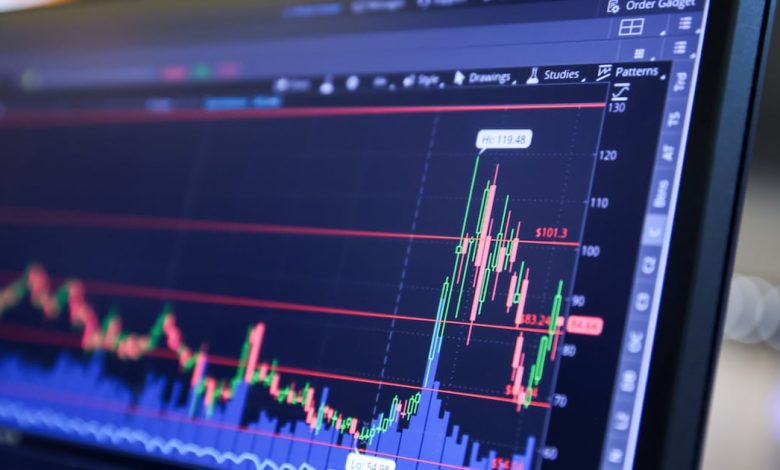
Oil surged nearly 20 per cent in July, with Brent topping $100 a barrel for the first time since May amid Middle East conflict.
Upstream energy producers are on course for a $495 billion cash windfall in 2026, according to Wood Mackenzie, assuming Brent averages $90 a barrel.
Gold has defied traditional safe-haven expectations, falling from a record $5,515 an ounce in January to around $4,050.
The FTSE 100 is among the key beneficiaries of the commodity rally, packed with major miners including Rio Tinto, Glencore, Anglo American and Antofagasta.
“Markets are pricing a chokepoint, not a shortage,” says Madhur Kakkar, founder and chief executive of Elevate Financial Services, warning geopolitical risk, not scarcity, is driving prices.
Live updates: Follow the latest news on US-Iran war
Investors have been so fixated on talk of an artificial intelligence bubble that they’ve largely ignored another looming threat to global stock markets. Until now.
The price of oil surged back towards $100 a barrel as the conflict in the Middle East intensified, raising fresh fears over inflation, interest rates and the global economy. Brent topped the $100 per barrel mark on July 23 for the first time since May. Crude has retreated in recent days but still climbed 20 per cent in July, having opened the month at $72.
Markets wobbled when the Iran war erupted on February 28, but soon recovered as hopes of a peace deal grew. Then came the SpaceX IPO on June 12, and suddenly, everybody was talking about AI again.
That excitement quickly evaporated. SpaceX shares have more than halved since hitting a post-flotation peak of $225 four days after listing.
Now investors have a much bigger headache. If oil prices stay high, inflation could prove stickier than expected, forcing central banks to keep interest rates higher for longer.
That’s bad news for equities in general, but especially US technology and other growth stocks, whose lofty valuations rely heavily on future earnings. Higher inflation chips away at those earnings in real terms.
Yet it’s proving a welcome boost for one corner of the market that many investors had written off: commodities.
Higher oil and gas prices are bad news for businesses and households, but they’re a boon for upstream energy producers. They’re on course to enjoy a $495 billion cash windfall this year, according to Wood Mackenzie. Its forecast assumes Brent crude averages $90 a barrel, far above the $60 a barrel many were budgeting for.
If the Middle East calms down, much of today’s commodity rally could unwind surprisingly quickly
“This is not a natural commodity cycle. The price surge reflects geopolitical conflict, not underlying demand, and companies are well aware of it,” says Fraser McKay, head of upstream analysis at Wood Mackenzie.
It may not be natural, but it is real. Investors with exposure to oil stocks have discovered one of their greatest strengths. They often move against the wider market, rising on bad news from the Gulf and acting as a shock absorber when other shares are falling.
Soft commodities climbing
Soft commodities are climbing too, as higher fuel, fertiliser and shipping costs push up the price of wheat, corn, soybeans and other crops, raising fears of another bout of food inflation.
Industrial metals have joined the rally. Aluminium has surged on higher energy costs and supply concerns, while iron ore and copper continue to climb. Copper sits at the heart of everything from AI infrastructure to defence systems, meaning any disruption can ripple across the global economy.
Commodity investors are already seeing the benefits. The Invesco Optimum Yield Diversified Commodity Strategy No K-1 ETF, the world’s largest broad-based commodity fund with assets of $6.7billion, is up 32 per cent this year.
Shares in BHP Group, the world’s biggest diversified miner with a market value of $306 billion, have risen by a similar amount this year.
Rio Tinto has joined the party too. On July 29, it reported a 43 per cent jump in underlying earnings to $6.9 billion, comfortably ahead of forecasts.
Britain’s FTSE 100 index is also benefiting, says Tom Stevenson, investment director at Fidelity International. “It’s packed with miners including Rio Tinto, Glencore, Anglo American and Antofagasta.”
Hopes of fresh stimulus from Beijing have added further momentum by boosting expectations for Chinese demand, he adds.
Investors’ quandary
Commodities used to move largely on fundamentals such as supply and demand. Not any more. Investors now have to factor in wars, shipping lanes, inflation and central bank policy too. Prices typically rise when the global economy booms, but that isn’t the case today. It’s because they carry a hefty geopolitical premium.
Madhur Kakkar, founder and chief executive of Elevate Financial Services, sums it up: “Markets are pricing a chokepoint, not a shortage.”
The world isn’t running out of oil. The fear is that it won’t get to where it’s wanted. Around a fifth of global supplies pass through the Strait of Hormuz, and every fresh flare-up in the Middle East pushes traders to add another risk premium to the price.
More expensive oil pushes up transport costs, manufacturing costs and, ultimately, inflation. If inflation refuses to come down, central banks have little choice but to hold interest rates higher for longer, or even increase them. That’s bad news for borrowers, consumers, companies and stock markets alike.
At the start of the year, investors expected the US Federal Reserve to spend much of 2026 cutting interest rates. Instead, new chair Kevin Warsh has been forced to keep policy tight as inflation remains stubborn. Another oil shock would make that job even harder.
Hamza Dweik, head of trading (Mena) at Saxo Bank, believes that’s the biggest risk facing markets. He warns that oil above $85 to $90 a barrel risks creating a “stagflationary backdrop where growth slows but inflation remains stubbornly high”.
It’s not just the war driving prices higher either. Mr Dweik points to tightening physical supplies, noting that “US inventory data showed crude stockpiles falling by approximately 3.3 million barrels in a single week, reinforcing concerns about tightening supply”.
The conflict has also sparked a flight into the US dollar. As most commodities are priced in dollars, they become more expensive for buyers using other currencies, adding another layer of inflationary pressure.
Gold loses out to cash
One commodity has bucked the trend though. Gold.
Normally, wars and inflation fears send investors piling into precious metals. This time, they’ve largely been happy to leave their money elsewhere.
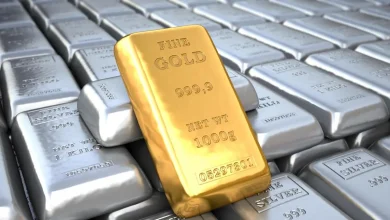
Gold hit a record $5,515 an ounce in January but has since slipped to around $4,050. Silver has fared even worse, tumbling from around $117 to roughly $57.
Unlike cash, bonds or dividend-paying shares, gold doesn’t generate any income, says Darren Clarke, trader at Lunaro Financial Services. “So when US interest rates rise, many participants may look to realign their portfolio.”
Investors can now earn an attractive return by leaving money in cash. That has taken some of the shine off gold despite all the geopolitical uncertainty.
Silver is also viewed as a safe haven, but it’s an important industrial metal too. Slower global growth has squeezed demand just as higher interest rates hit precious metals generally.
“Silver has been hit harder because it is a smaller and more industrially linked market. It’s taking the growth slowdown along with the rate shock,” Mr Kakkar says.
Despite the strong rally in general commodities, Mr Kakkar warns investors against chasing prices higher. “Commodities earn their place in a portfolio as an inflation hedge and a diversifier, but not as a directional bet,” he explains.
Joseph Purtell, portfolio manager at asset manager Neuberger Berman, warns that markets may still be underestimating the risks if the conflict drags on. While he thinks the inflationary shock is likely to be temporary and unlikely to fuel secondary shocks such as a wage-price spiral, that could change.
“A series of temporary shocks begin to not look temporary if they continue for far longer than the market expects,” Mr Purtell says.
For most of the last decade, investors only had to worry about inflation, interest rates and economic growth. Now, they’ve got to add wars and shipping lanes to the list as well.
If the Middle East calms down, the commodity rally could ease. Buyers therefore need to approach with caution. And they shouldn’t give up on US tech. Amazon and Microsoft posted spectacular results last week, suggesting AI bubble talk has been overdone. Last week’s winners can quickly become this week’s losers, and vice versa. As ever, long-term diversification is better than chasing trends.