India’s position in global gold reserves | Explained
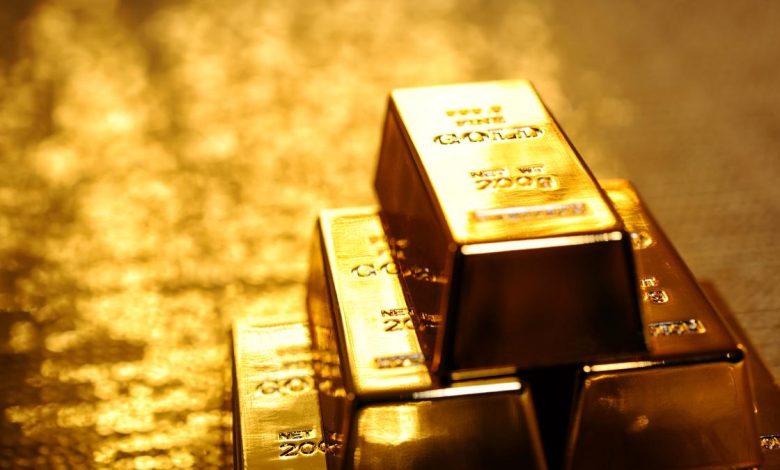
For centuries, gold has had a prime position in India’s economic and social landscape. It has been jewellery, a symbol of prosperity and wealth, and a hedge against uncertainty.
Gold has proved its timeless appeal, but global uncertainties and their disruptions have led to a structural change in its holding pattern in India, exhibiting a dual-track economy, one steeped in tradition (as wedding and festival buying to provide seasonal support) and another shaped by modern portfolio management.
The transition metal is increasingly being treated as a financialisation instrument rather than merely a consumption good, especially due to the fast-growing investment demand (comprising bars, coins and exchange-traded funds or ETFs), which now accounts for 70% of total gold demand.

India’s overall gold demand was up 2% year-on-year (YoY) to 282 tonnes in the first half (H1) of this year, driven by investment demand as ETFs hit a record high; while jewellery demand declined 17.1% to 141.2 tonnes (also the second-lowest first quarter or Q1 on record since 2000), according to the World Gold Council (WGC) data.
In the second quarter (Q2) alone, India’s overall gold demand was down 6% YoY to 131.4 tonnes, with jewellery demand (30% of overall gold demand, the lowest since the WGC began tracking the data in 2000) falling faster at 15% to 75.1 tonnes, the second-lowest in Q2 since 2000.
India was the world’s largest gold jewellery market in the quarter, accounting for 27% of global demand, only to be followed by China, the U.S., Saudi Arabia, Turkey, Russia, the U.A.E, Iran, Egypt, Hong Kong and Brazil, WGC data suggest.

Investment demand was seen softening in Q2 to 54 tonnes but was higher than the long-term quarterly average of 49 tonnes; hinting an above average demand and pointing towards sustained investment interest.
Q1 was a record for Indian gold ETFs, with net demand of 20 tonnes, driven by strong investor participation amid elevated gold prices and subdued domestic financial markets. Similarly, bars and coins saw a 21.3% and 105.5% surge in volume and value respectively in H1FY27.
The shift in allegiance to investment instruments such as ETFs, gold bars, and coins is palpable as the price of the yellow metal increased more than fivefold in the last 10 years, against India’s national average (economic growth), and is seen favourable from a current account perspective.
According to IIFL’s Capital Outlook 2026, the Reserve Bank of India (RBI), in 2025, stepped up gold purchases just as global gold prices rallied sharply.
The combination (household gold and the RBI purchases) helped cushion the impact of rupee depreciation and strengthened India’s external balance at a time when foreign portfolio flows were under pressure, it said.
Affordability pressures pushed jewellery demand down amid elevated prices, higher import duties and seasonally subdued buying. Yet, consumers’ gold purchases hit a record ₹1.98 lakh crore, reflecting the extraordinary jump in prices. The elevated prices may continue to constrain jewellery volumes, according to the WGC.
The domestic MCX spot gold price was broadly flat in Q2FY27, supported by the import duty hike and the rupee depreciation (down by 4% QoQ). Even with this quarterly moderation, the domestic prices remained substantially higher than a year earlier. To put it in perspective, 10 grams of gold jewellery bought in 2016 for about ₹28,000 and more than ₹89,000 in H1 last year would cost ₹1.5 lakh or more in 2026.
Given the scenario, jewellery’s monopoly as the preferred form of ownership started slowly fading, while financial gold made inroads and gained legitimacy among urban and younger investors, who preferred gold bars, coins and ETFs, which not only have lower making charges but also seen as better investment vehicles.
The rising popularity of investment gold comes amid a previous unsuccessful attempt by the government to encash it, although India has one of the world’s largest private gold stocks, estimated at more than 25,000 tonnes.
The Gold Monetisation Scheme, introduced in 2015, was designed to mobilise idle household gold by allowing individuals and institutions to deposit gold with banks and earn interest. But was met with lacklustre performance due to taxation concerns and procedural complexities.
Golden history
Historically, India has been one of the world’s largest gold consumers with demand largely jewellery-led. The post-global financial crisis saw strong investment buying, but jewellery continued to dominate. Sovereign measures —including import duty increases, compulsory hallmarking, restrictions on cash purchases and the introduction of Sovereign Gold Bonds —led consumers gravitate towards formal financial channels.
COVID-19 added pace to this transition as lockdowns disrupted jewellery purchases while digital investing expanded rapidly.
Third paradox
The apparent contradiction in India’s gold market—falling jewellery demand but rising investment appetite — is now accompanied by a third trend as households increasingly use the existing gold holdings as collateral rather than sell them or buy new jewellery.
According to the WGC, outstanding retail bank loans backed by pledged gold jewellery reached around ₹4.3 lakh crore by February 2026, rising 124% YoY.
The broader banking system has also seen an extraordinary acceleration in gold-backed lending, with gold loan portfolios reaching about ₹5.4 lakh crore by June 2026, registering close to 94% YoY growth.
Despite domestic gold prices being around 60% higher YoY, holders showed limited appetite to sell, preferring to monetise their gold holdings rather than liquidate them, keeping recycled supply “muted”, according to WGC.
Domestic credit rating agency Icra expects the organised gold loan market to see a compound annual growth rate of more than 30% during FY27 and FY28.
The rapid expansion of gold loans needs careful monitoring in view of financial vulnerabilities it can create.
The RBI strengthened its regulation to promote responsible lending, as it mandated borrowers to make full repayment of the principal and interest before repledging the asset.
In its latest directive, the banking regulator also replaced the uniform 75% loan-to-value cap with a tiered structure that significantly benefits small borrowers.
What next?
India’s gold story is compelling as it represents a rare combination of tradition and financial evolution.
India’s huge household gold stock can evolve from a passive store of wealth into an active financial asset, which could potentially ease some of the traditional pressure that gold imports place on the current account.
Time is not that far for India’s financial markets to see a better combination of monetisation schemes, financial innovation, recycling, market reforms and digital transparency for unlocking the huge pile of privately held gold.