I Saw The Spyker C8 Preliator XXV And Met The Billionaire Crypto Investor. The Car Looks Great But Something Feels Weird
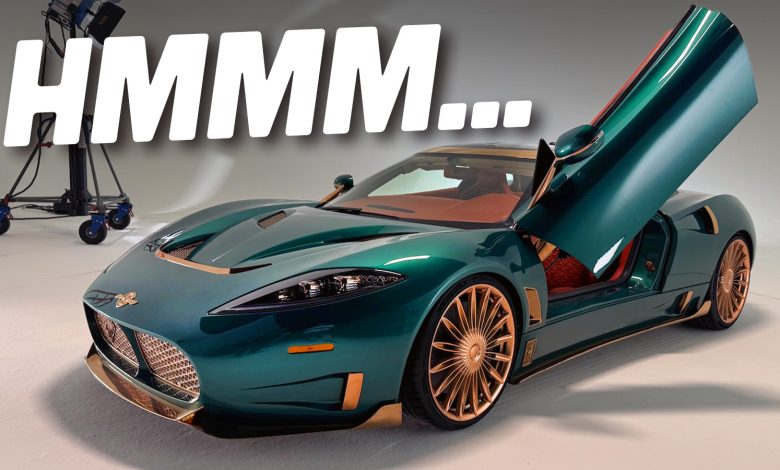
Victor Muller, one of the two men who brought the Dutch supercar brand Spyker to life 26 years ago, is back with a new car called the C8 Preliator XXV. And while it’s a nice looking car, it’s still not fully assembled, Spyker claims to have developed it in four months, and there’s a very new investor who’s in the business of crypto/blockchains. Let’s have a look at the machine, and discuss my conversation with Victor and this new investor.
Spyker invited me to Long Beach to have a peek at its new car, the C8 Preliator XXV, which had apparently just arrived in LA and was therefore not entirely complete. The top of the dashboard, for example, was not yet attached, the passenger’s side lower dash was non existent, and there was no A-pillar trim.

Here’s a look:

Beyond that, though, the car looked quite nice. As someone who has just driven a Spyker C8, I think the C8 Preliator XXV feels sufficiently Spyker-esque. From the quilted leather to the stylish HVAC vents to the enormous swath of mechanical switchgear on the center stack to that amazing exposed shifter linkage, there is lots of old-Spyker design in this new Spyker model.
But how new is it actually? That’s not entirely clear to me. Spyker’s press release says it’s entirely fresh:
Far more than the evolution of an existing model, the Spyker C8 Preliator XXV Coupé is an entirely new automobile. Conceived from a clean sheet of paper, it combines uncompromising craftsmanship, aviation inspired engineering and modern performance while remaining faithful to the design philosophy that has defined Spyker since the beginning: creating automotive art in motion, its designs akin to an aircraft for the road.
Per Muller, the vehicle went from a hand sketch (Victor says he designed the car himself) to a hand-built body-in-white between April 1 and June 10. That’s only just a couple of months to go from a sketch to an entire skeleton, and per Muller, that was all thanks to the coachbuilding experts at Coventry Prototype Panels.
I pressed Victor Muller on the idea of this car being developed on such a short timeline, saying that surely there must have been some borrowing from another chassis. “Absolutely,” he admitted, “there was [some existing chassis technology], but we modified everything about the chassis,” he told me, mentioning the new 800 horsepower Audi 4.0-liter V8 engine hooked to a six-speed Graziano Oerlikon manual transmission. “That’s a major change to the rear subframe,” he said. “Secondly, we moved the fuel tanks from the sills into the firewall. Major undertaking.”
So the car clearly started, at least a little bit, with an existing C8, but Spyker “dramatically re-massaged” it, as Muller put it. And they did so in a ridiculsouly short amount of time. The body came together in Coventry between April 1 and June 10th, when the car went to the Netherlands to be painted. On June 30th the body was complete and, in August, all the mechanicals and interior and electrical and, well, pretty much the entire car had been not just assembled, but ideated and built.
Can you build a car in four months? Yes. And if you look at other automakers like Tesla (with the Roadster) and Scout (with the Terra and Traveler), you’ll see that a number of automakers “cobble” together a concept car to bring in pre-orders and investment, only to then spend years doing the actual development work. I suspect that’s what’s going on here. That is to say: I doubt this vehicle is even close to being fully developed, especially if it’s meant to be all-new. Truly developing a car takes well over four months.
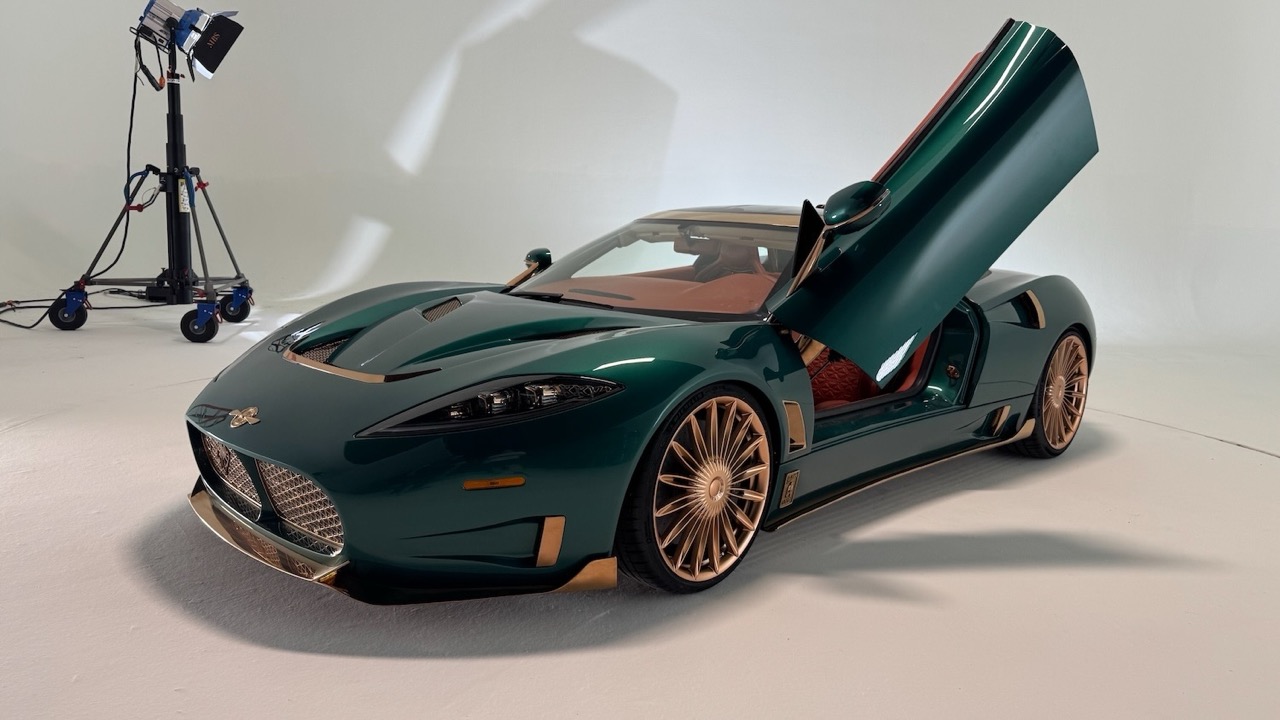
In any case, let’s have a look at some features.
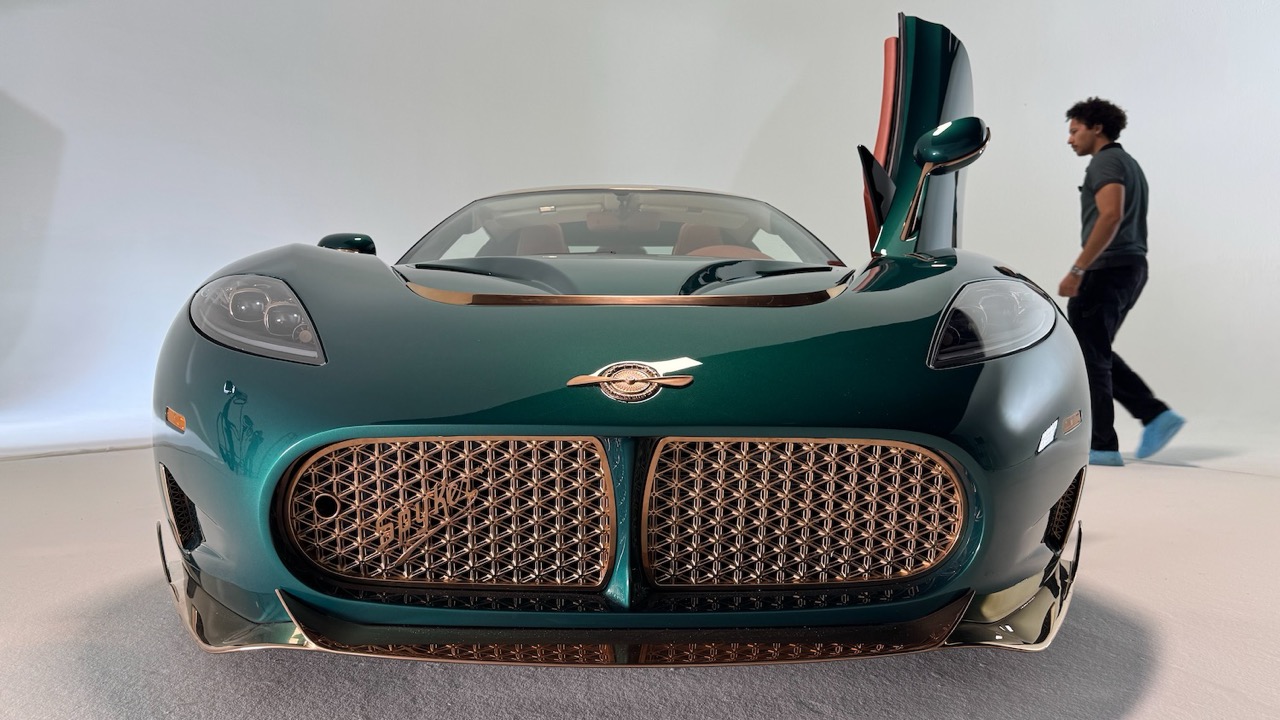
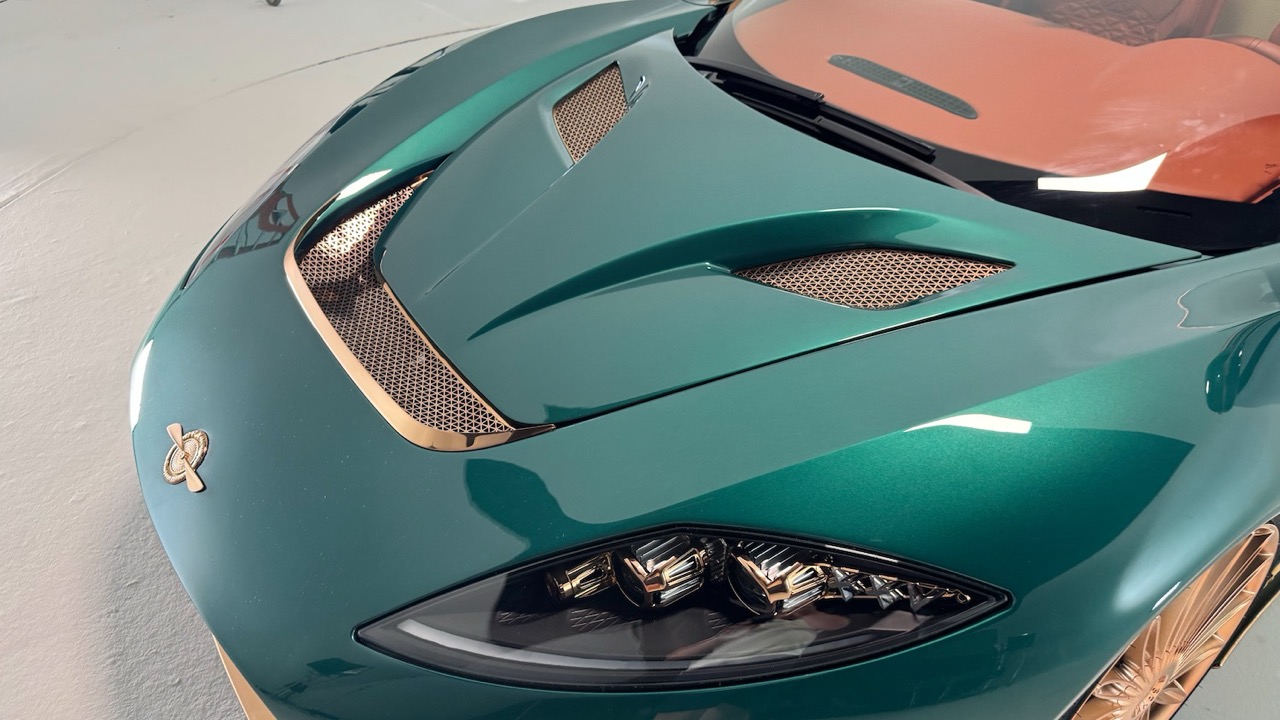
The front design looks great, with a big mesh grille and the Spyker badge prominently at the nose. There are lots of vents all over the car, especially on the hood; Victor Muller says all are functional.
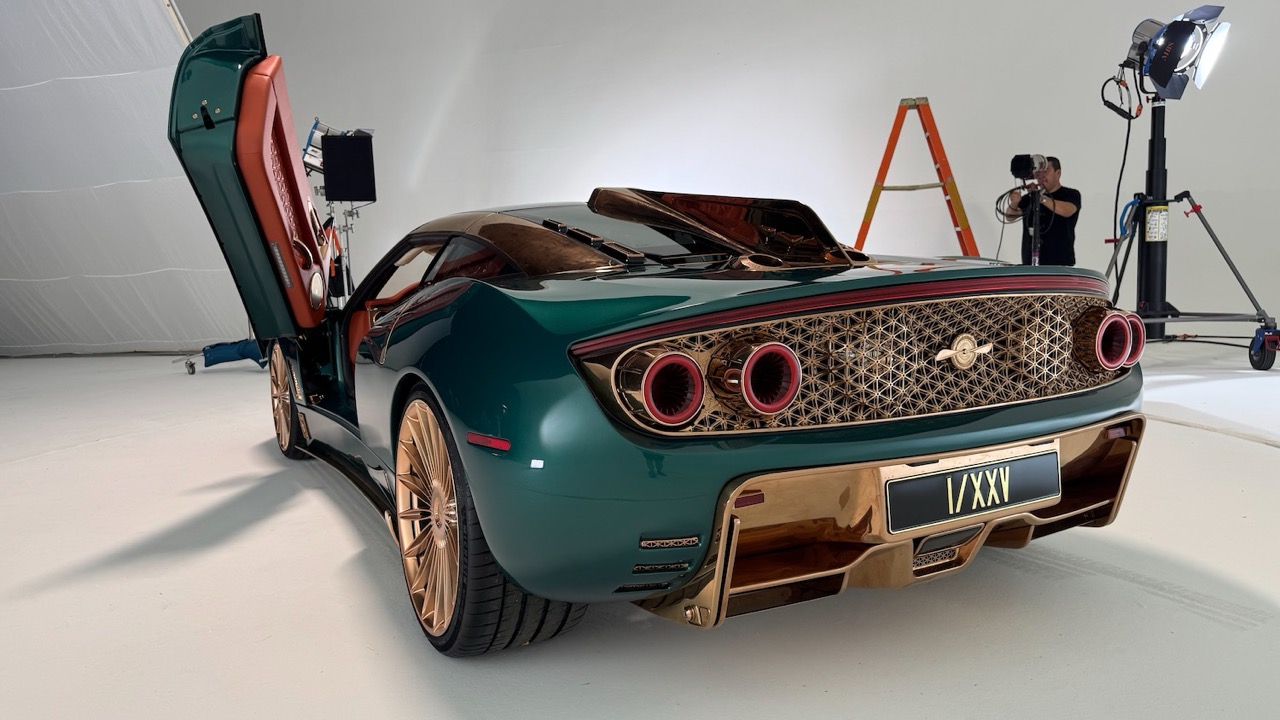
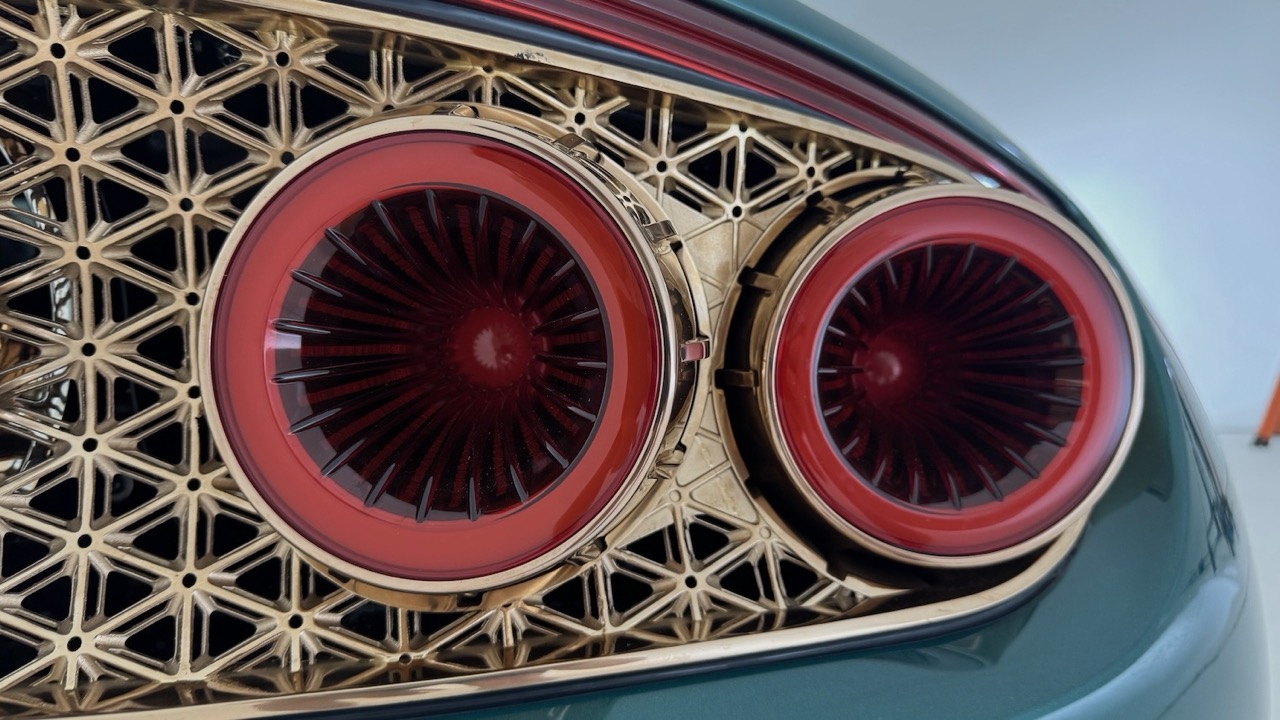
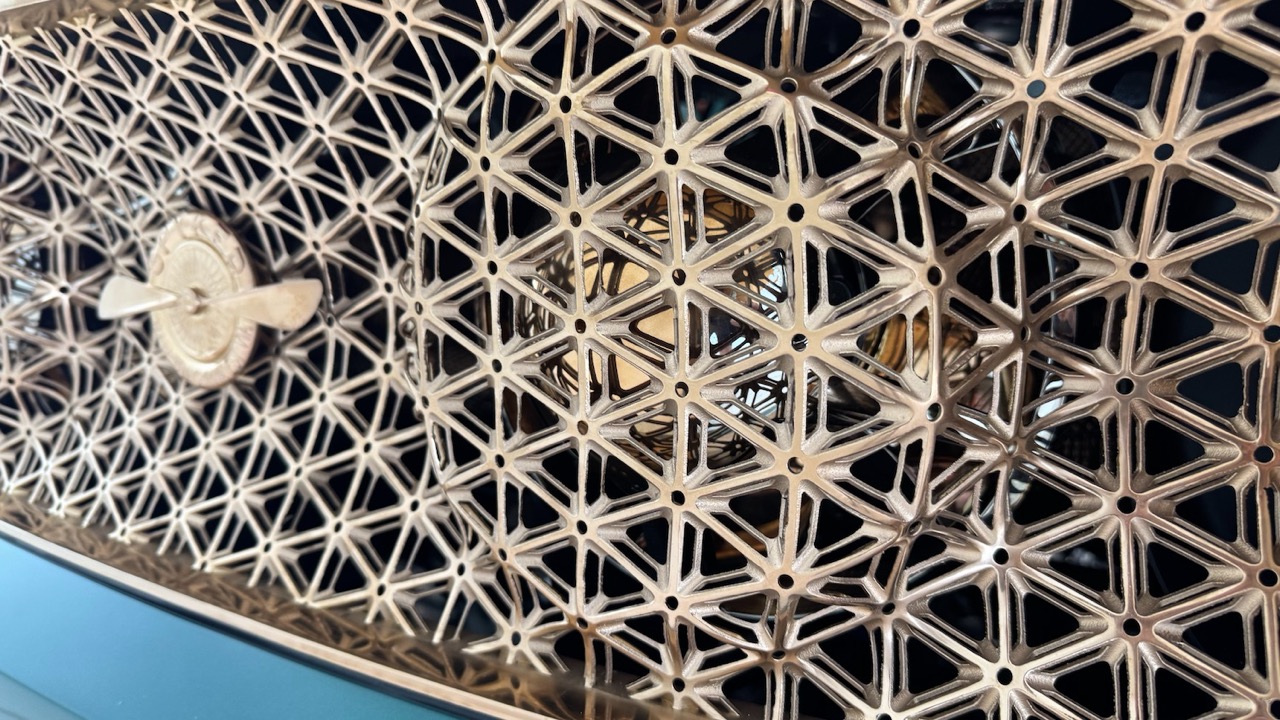
The XXV’s rear features what Spyker calls an “Isogrid” grille, with four “afterburner” taillights on the outside and two rose-gold cooling fans on the inside.
The interior is beautiful, with quilted leather and rose-gold everywhere, analogue gauges, mechanical switches, and the most amazing shifter ever.
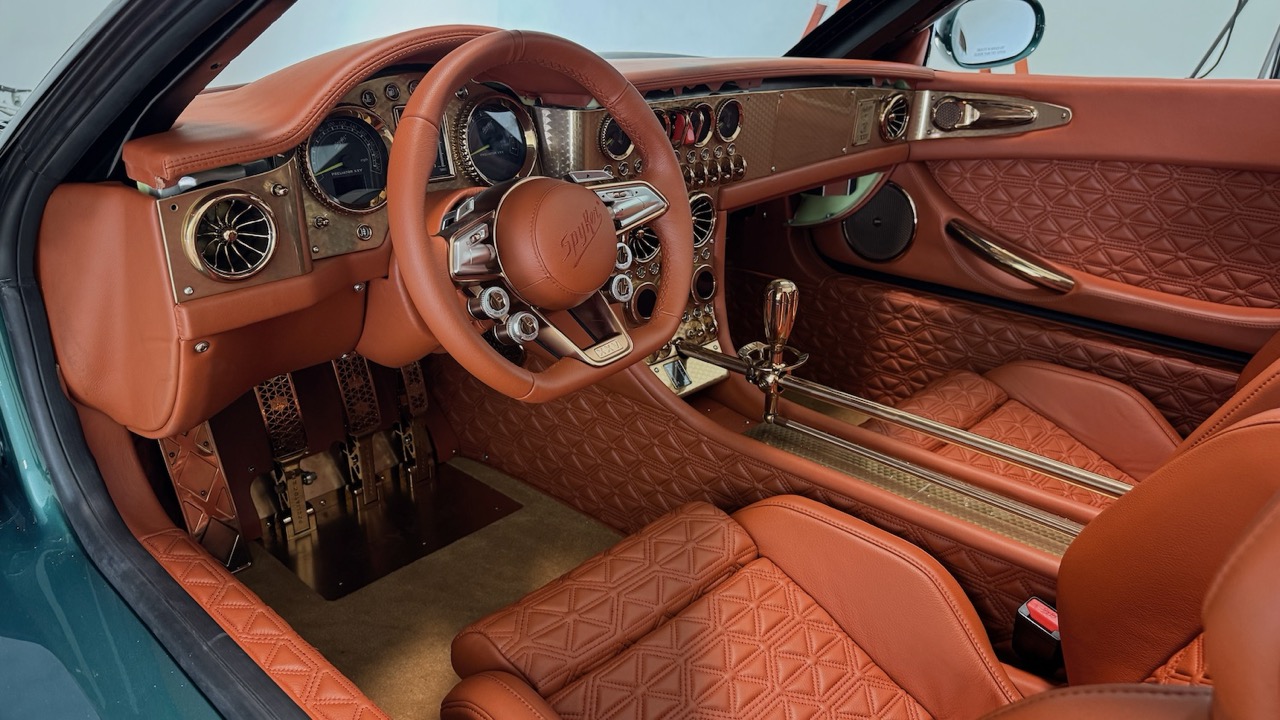
Here’s a close-up of that shifter, which felt a bit stiff when compared to the one I used in the C8 (this car has no miles on it, so perhaps that might loosen up a bit):
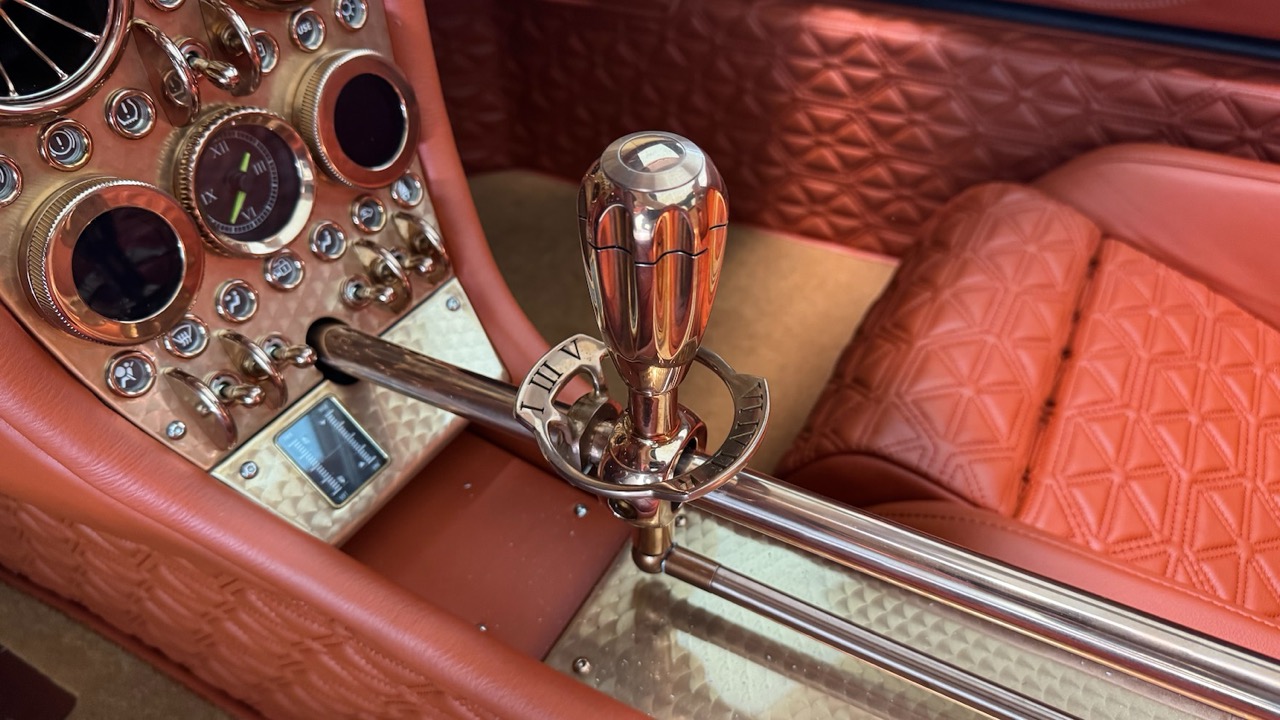
And check out these beautiful pedals:
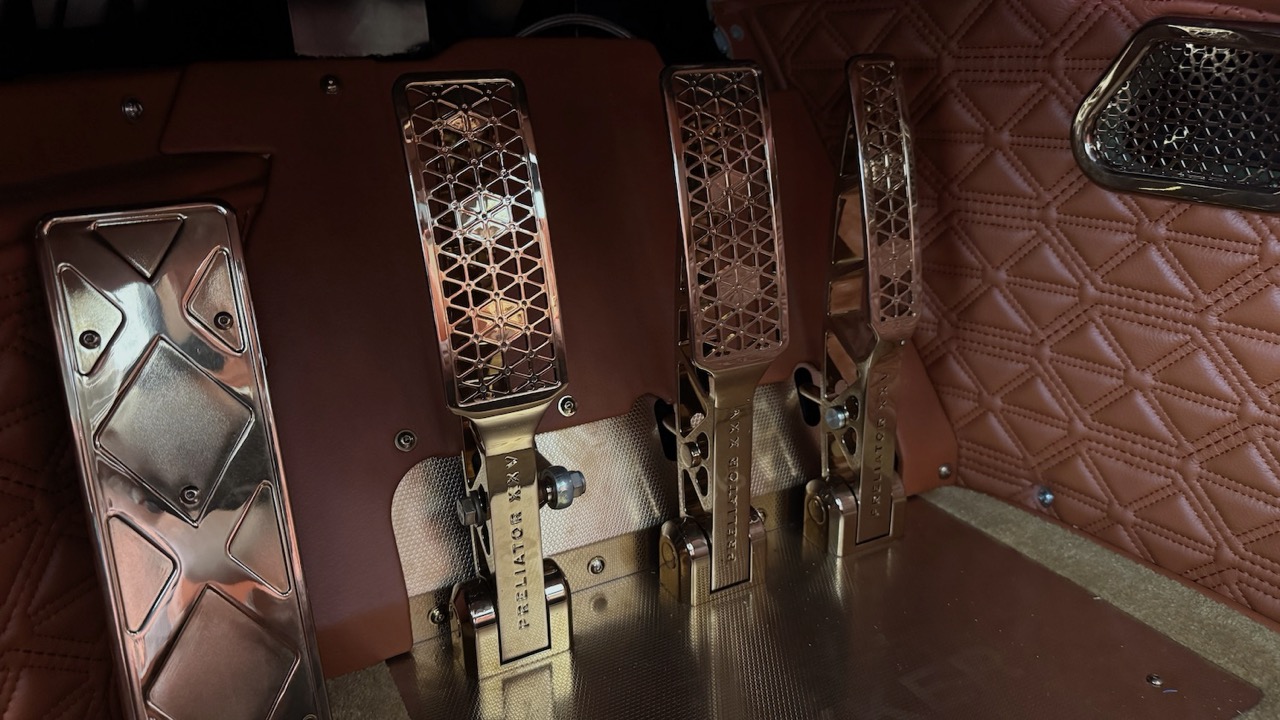
As for the oily bits, these are the only photos I managed to snag of the engine compartment behind the driver:
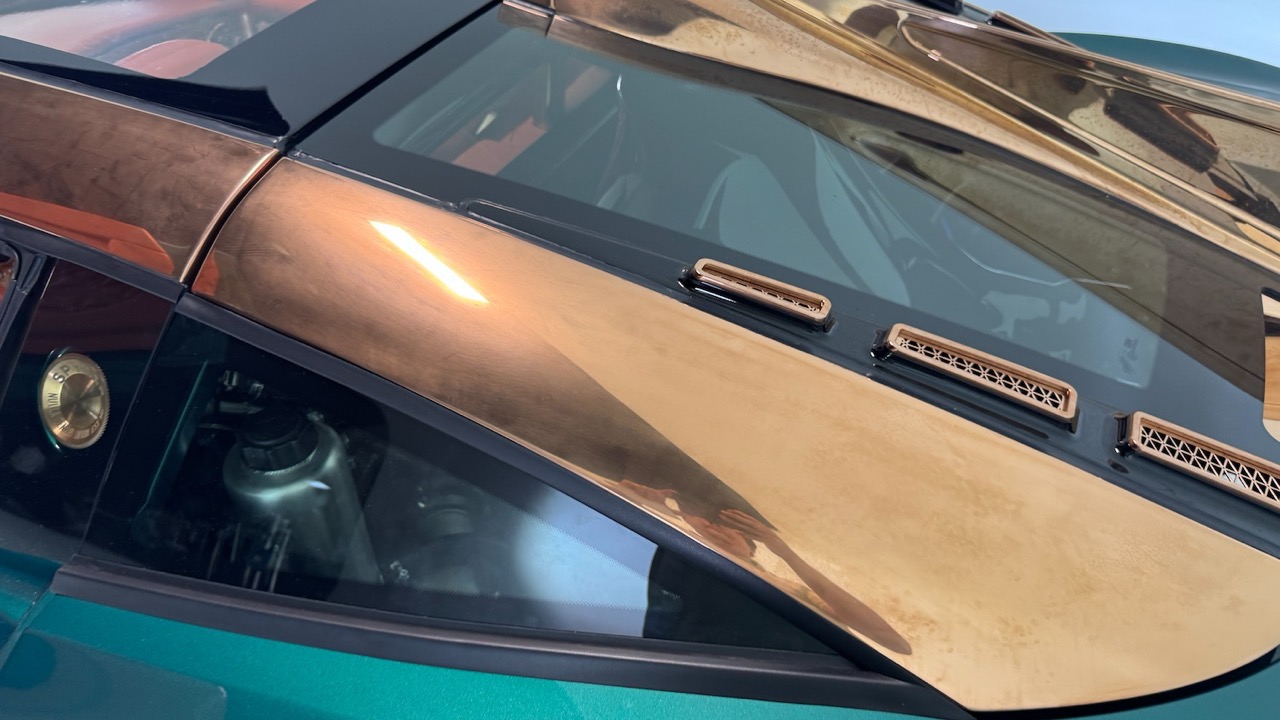
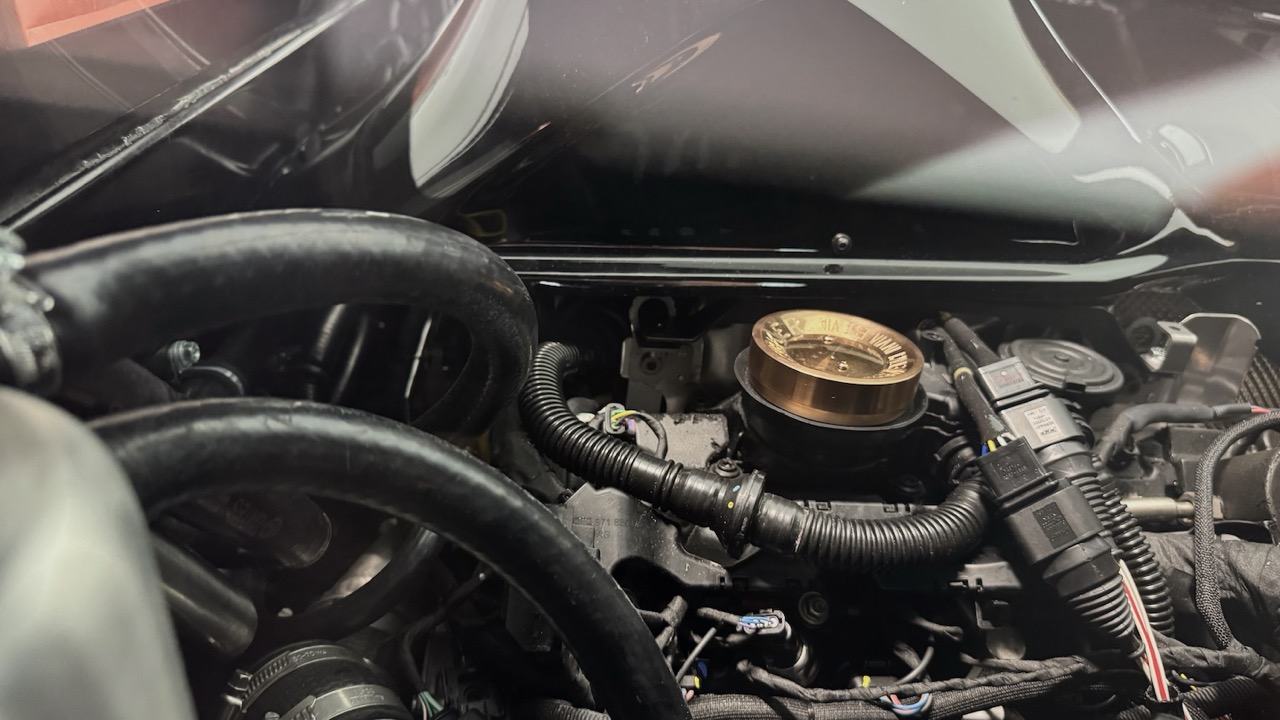
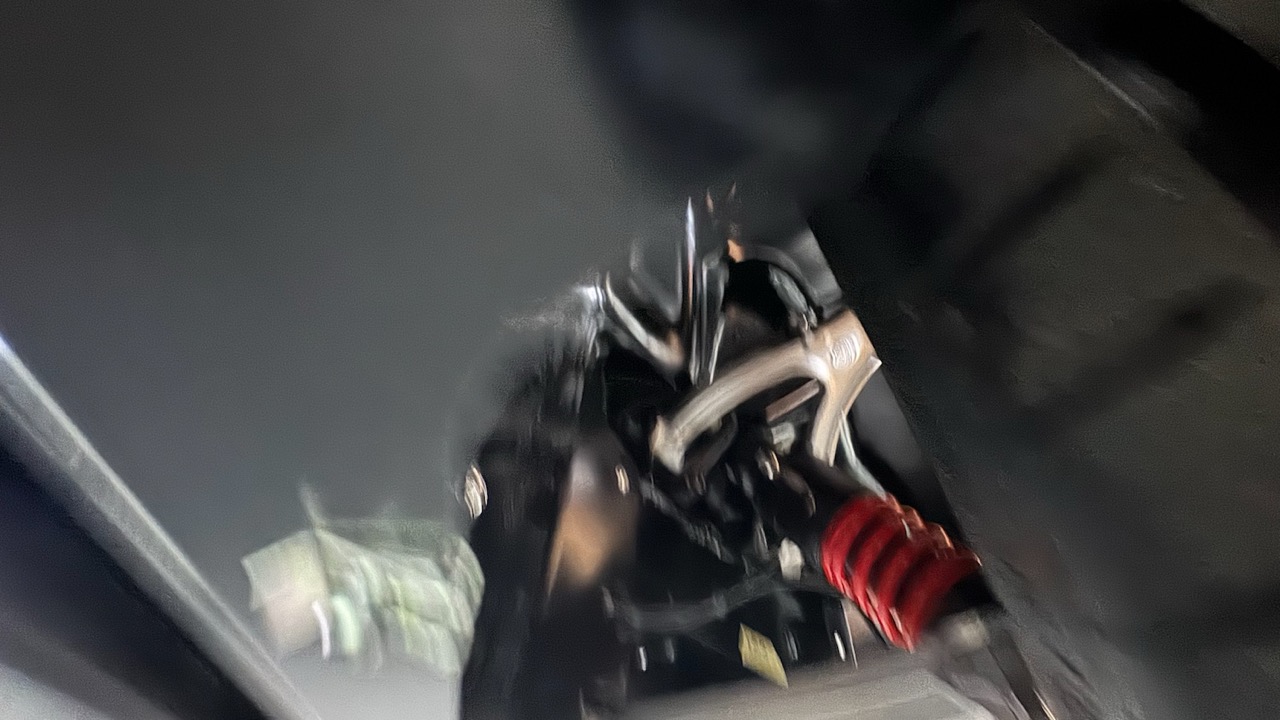
And here’s the only shot I got of the double wishbone, coilover-equipped front suspension (this is different than the C8 Spyder’s suspension; I suppose this could be somewhat based on the C8 Aeleron. I’m not entirely sure):
So that’s the car. It was put together in record time, and though I doubt it’s fully developed, the car does look great and it does look authentically Spyker.
This all comes after the brand only recently reached a settlement that gave Victor Muller back the IP rights to the brand:
Spyker’s history is a complicated one, involving financial turmoil, the brief ownership of Saab, and questionable investors including Vladimir Antonov (who was imprisoned for alleged fraud/financial crimes).
Naturally, when people hear that this new Spyker comeback involves a new investor/co-owner, they want to know who that person is. His name is Volodymyr Nosov, and he’s the President of fintech company W Group, as well as of an associated cryptocurrency exchange called Whitebit. You might think that this is an investor who wants to just get into the car business because he loves cars, but this is more than just an investment, it’s a partnership between Spyker and W Group.
Nosov himself says in Spyker’s press release that the plan is to somehow have Spyker work with Nosov’s blockchain company:
Our goal was never simply to bring a legendary name back. We want to build the next era of Spyker, preserving everything that makes the marque iconic while opening it to new technologies, new experiences and a new generation of clients. The C8 Preliator XXVCoupé is the firststatement of that ambition. And this is only the beginning.
Here’s another part of Spyker’s press release describing how Nosov’s blockchain/crypto companies might interact with Spyker:
But the C8 Preliator XXV Coupé is not simply a celebration of Spyker’s past. It is the starting point for what comes next. Its debut marks the beginning of a new era for Spyker following Volodymyr Nosov’s investment and his becoming co-owner of the marque, and a strategic partnership with W Group, a major European fintech group specializing in blockchain technology and digital infrastructure.
The partnership brings together two worlds: 146 years of automotive heritage, craftsmanship and engineering with technological expertise, digital capabilities, and a forward-looking approach to building global businesses. The ambition is not simply to bring a legendary automotive marque back. It is to build the next era of Spyker. That does not mean changing what makes a Spyker a Spyker. Spyker is not becoming a digital device on wheels. The hypercars will remain analogue. Instead, technology will strengthen the world around the car. W Group’s technological capabilities and digital infrastructure will support the development of new client experiences, a broader digital ecosystem and new ways for Spyker to engage with owners
I had a few minutes to chat with Nosov about how Spyker fits into his companies’ plans. “Our idea is not to implement the digital things inside of the Spyker … it’s about building infrastructure around the brand,” he said. “The company can be monetized also in the digital sphere with the blockchain like in a Real World Asset, and a lot of thing can connect it. We will present our digital things in a few months.”
I will admit that I’m ignorant when it comes to things like blockchains and cryptocurrency. But the way I understand it, blockchains have to do with the security of financial transactions, and Real World Assets is actually a cryptocurrency term that refers to traditional, physical assets that can be brought into the digital world, as financial services company Stone X states:
Real-World Assets, or RWAs, refer to physical or traditional financial assets that are brought onto the blockchain [ecosystem] through tokenization. Think of tangible assets like real estate, gold, or even invoices and government bonds. These are now represented as digital tokens that can be traded, owned fractionally, or used in decentralized finance (DeFi) ecosystems.
RWAs mark a pivotal shift in how value is represented and exchanged. They create a bridge between traditional markets and blockchain-based finance, offering new possibilities for liquidity, transparency, and access.
Why are real-world assets important?
Traditional financial assets like real estate, commodities, and private equity are some of the largest asset classes globally by market capitalization. Yet many of these assets are illiquid, difficult to divide, or slow to transfer. RWAs aim to solve these problems by enabling seamless, onchain representation and exchange.
By digitizing physical or off-chain value, RWAs allow investors to access high-value assets that were once out of reach. They also open up entirely new use cases in finance, including fractional ownership, 24/7 trading, and composability within DeFi protocols.
So it sounds like the Spyker XXV (which, by the way, will cost 1.6 million euros) might become an RWA? I’m not entirely sure, as I’m not well-versed in this world. And admittedly, this lack of knowledge might be contributing to me feeling that this next chapter of Spyker feels a bit weird.
I have to remind myself that Victor Muller pulled it off a quarter-century ago and built a truly amazing automobile. I’m sure folks found that fledgling company to seem a bit weird, as well. Hopefully, the outcome this time is as good or better than last time. Then again, a lot of strange stuff has happened since then…