Robotera Weighs Hong Kong IPO as Thousand-Unit Deployments Outpace Rivals in Queue
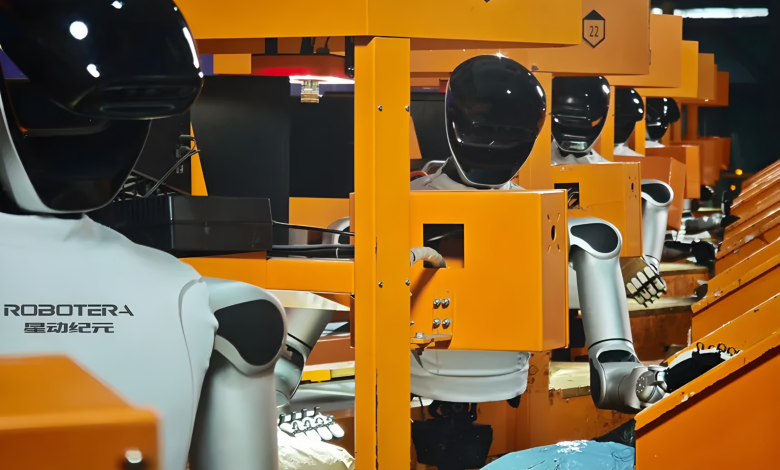
Beijing-based Robotera is weighing an initial public offering in Hong Kong, Bloomberg reported Monday, citing people familiar with the matter. No valuation, underwriter, or timeline has been disclosed — but the company arrives at this moment with a credential none of its fellow IPO candidates can yet match: it has already deployed humanoid robots at scale in real logistics environments, not just in demonstration labs.
That distinction matters in a queue that has grown crowded. As of early August, 51 robotics-related companies are lined up for Hong Kong listings, accounting for roughly 12.7 percent of all companies in the exchange’s pipeline, per South China Morning Post reporting on PwC Hong Kong data. AgiBot has formally engaged CICC, CITIC Securities, and Morgan Stanley as joint sponsors for a Hong Kong offering targeting HK$40–50 billion (approximately $5.10 billion to $6.37 billion USD). EngineAI filed confidentially for a Hong Kong listing in June. X Square Robot submitted a confidential filing in early August. Robotera is notable for what it has not yet done: engaged formal underwriters. It is notable for what it has done: put working robots in commercial facilities.
How Tsinghua Produced China’s Most Commercially Deployed Humanoid Startup
Robotera was founded in August 2023 by Chen Jianyu, an assistant professor and doctoral supervisor at Tsinghua University’s IIIS — the Institute for Interdisciplinary Information Sciences founded by Turing Award laureate Andrew Yao. Chen earned his bachelor’s degree in Tsinghua’s Precision Instrument department before completing his doctorate at UC Berkeley under professor Masayoshi Tomizuka, a member of the National Academy of Engineering and one of the foundational researchers behind Model Predictive Control. He returned to Tsinghua in 2020, recruited by Yao, and built his robotics lab before spinning out the company three years later.
The company is the only embodied AI firm with direct Tsinghua University equity — an institutional link that provides both reputational credibility and, given that Tsinghua is a state-affiliated institution, a structural tie to Chinese state capital that will be relevant to any US government review.
What the L7 Actually Does — and How
Robotera’s flagship system, the L7, is a full-size bipedal humanoid standing approximately 171 cm (5 ft 7 in) tall, designed for logistics and industrial applications. Its technical differentiation starts in the hand. The XHAND1 dexterous hand uses a full quasi-direct-drive transmission — meaning the motors drive the fingers through low gear ratios rather than the high-reduction harmonic drives common in Western robotics systems — giving the hand what engineers call backdrivability: the ability to respond naturally to contact forces, rather than fighting them. The hand has 12 fully active degrees of freedom, anatomically distributed across five fingers, and is designed to support both reinforcement learning and imitation learning — the two primary methods for teaching robots to handle objects they have not specifically been trained on.
The tradeoff that makes this possible is the same one Unitree made with its G1 actuators: quasi-direct-drive systems sacrifice peak payload capacity in exchange for iteration speed and force transparency. Companies sourcing harmonic drives from external specialists face supply chain iteration cycles of three to six months per design change; companies manufacturing their own quasi-direct-drive actuators can prototype and test a new joint design in weeks. Over 95 percent of Robotera’s core hardware components — including motors, reducers, and joint modules — are developed in-house, per the May 2026 press release. That figure puts Robotera in the same vertical integration tier as Unitree, whose in-house quasi-direct-drive actuator strategy underpinned 60 percent gross margins in 2025. Whether Robotera’s margins approach that level is not yet publicly disclosed — no financial statements have been released.
The L7’s embodied AI layer runs on the ERA-42 model, an end-to-end Vision-Language-Action architecture that the company says enables human-like reasoning for object handling in unstructured environments. Robotera’s hardware system has been adopted for research purposes by Boston Dynamics, NVIDIA, and Apple, according to the company’s May 2026 press release.
Thousand Units on the Warehouse Floor
In Q2 2026, Robotera crossed what the company describes as a deployment-stage milestone: it began thousand-unit deliveries of logistics humanoids, with revenue growth exceeding 300 percent over the same period, according to the company’s May 2026 announcement. Robots are operating across more than ten logistics centers through partnerships with China Post and SF Group — the latter also one of Robotera’s investors.
The company has reported cumulative orders exceeding RMB 500 million (approximately $74 million USD) as of its March 2026 fundraise, with 50 percent of orders from international clients, including nine of the world’s ten largest publicly listed technology companies, some placing repeat orders up to six times. That repeat-order rate, if accurate, is the clearest available signal that the robots are performing reliably enough in real conditions to justify continued purchase — a bar that the sector’s research-stage participants have not yet cleared.
In individual logistics scenarios, Robotera’s system achieves up to 70 percent efficiency relative to human performance, according to the company’s March 2026 press release. That figure is self-reported and has not been independently verified by a third-party auditor; it should be treated as directional rather than definitive.
A War Chest Built in Layers
Robotera has raised $825 million in total across six funding rounds since founding, with its latest being a Series C closed on July 6, 2026, according to Tracxn data. Its March 2026 strategic round raised RMB 1 billion (approximately $148 million USD), pushing the company’s valuation past RMB 10 billion (approximately $1.48 billion USD). Investors in that round included Gaocheng Capital, Singtel Innov8, Woori Venture Partners, Samsung (via CICC Porsche Fund), and Porsche, alongside existing investors Tsinghua Holding Tiancheng Asset Management and CDH Venture and Growth Capital.
The May 2026 follow-on raised more than $200 million, led by SF Group — Robotera’s own logistics deployment partner — with participation from HSG, IDG Capital, Hillhouse Investment, CICC Capital, and state-linked investors including ICBC Capital and funds affiliated with China Unicom. That investor list is notable for two reasons: it spans both commercial logistics capital (SF Group, which operates one of China’s largest freight networks) and financial heavy-hitters with wide Chinese-technology exposure (Hillhouse, IDG, HSG). HSG — the former Sequoia Capital China operation — has backed multiple companies now preparing for Hong Kong listings, including AgiBot.
“With proven deployment in logistics and ongoing expansion into automotive, electronics, and service industries, Robotera is entering a phase of rapid commercialization,” the company said in the May announcement.
Why the Window Is Real and Why It Is Closing
The urgency of the moment for Robotera — and every other humanoid company contemplating an IPO — was put bluntly by LimX Dynamics founder Will Zhang in July, when his company raised $200 million ahead of its own planned offering. “Listing is a must,” Zhang said to reporters. “Once the technology is mature, if the company doesn’t list, then like WM Motor, it may disappear.”
WM Motor — the Chinese electric vehicle maker that raised $5 billion in private capital before going bankrupt in 2023 — is the cautionary precedent every humanoid founder now cites. Zhang’s EV comparison is apt in another way: Chinese EV makers Nio, Xpeng, and Li Auto listed in the US between 2018 and 2020 precisely because a capital-market window had opened at the right moment in their commercialization trajectories. The humanoid window is open now in Hong Kong.
Hong Kong’s exchange hit a five-year high in the first half of 2026, raising HK$210 billion (approximately $26.8 billion USD) across nearly double the number of new listings compared to the same period a year earlier, according to PwC Hong Kong data. Robotics-linked IPOs have drawn strong retail and institutional demand — Robotphoenix rose sharply on its first trading day — reinforcing the exchange’s reputation as the preferred venue for China’s embodied-AI capital event. Morgan Stanley’s China industrials research team wrote in a recent note that most IPO proceeds from humanoid companies are expected to fund R&D, particularly the development of robot models — meaning the capital race is as much about training data and AI software as it is about hardware scale.
The arithmetic of waiting is unfavorable. Companies that have formally engaged underwriters — AgiBot, EngineAI — hold a structural timing advantage. Every month of further private fundraising means one more month of dilution, one more month of missing the pricing premium attached to early public listings in a hot sector, and one more month during which the queue lengthens and investor appetite for the sector becomes harder to read. Investment in China’s embodied intelligence sector reached RMB 93.5 billion (approximately $13.87 billion USD) in the first half of 2026 alone — a fivefold increase from the prior year, according to industry data. Thirty-two percent of that capital flowed into humanoid-specific companies in just the first four months.
What Every Robotera Robot Carries: The Legal Framework US Buyers Cannot Ignore
Regardless of how any IPO eventually prices, enterprise buyers evaluating Robotera’s logistics humanoids operate under a fixed legal condition that no commercial contract can override.
China’s National Intelligence Law (2017), Article 7, requires that “all organizations and citizens shall support, assist, and cooperate with national intelligence efforts in accordance with law.” This obligation applies to Robotera regardless of where its robots are physically deployed, where its customer data is stored, or what its privacy policy states. Legal scholar Jeremy Daum of China Law Translate has argued that Article 7’s scope is narrower than often claimed — that it was not clearly intended to require proactive data-sharing and that the provision lacks a direct enforcement mechanism. That scholarly nuance does not eliminate the obligation; it establishes its contested boundaries. China’s Cybersecurity Law (2017, amended effective January 2026) and Data Security Law (2021) add additional government-cooperation obligations for data-processing entities.
Tsinghua University holds equity in Robotera directly — making it the only Chinese embodied AI company with a state-affiliated university as shareholder. Tsinghua Holding Tiancheng Asset Management, a state-linked fund, has participated in multiple Robotera funding rounds and increased its stake in both the March and May 2026 raises. The state’s financial presence in the company’s cap table is not a hidden or marginal feature; it is a disclosed and growing one.
The robots themselves are sensor-equipped systems operating in logistics environments: the L7 collects environmental data to navigate, the XHAND1 generates tactile feedback data for manipulation tasks, and the broader system produces motion telemetry across 50-plus actuated degrees of freedom per unit. No independent third-party security audit of Robotera’s data collection, transmission, or firmware architecture has been publicly published as of August 17, 2026. That absence is a gap, not a reassurance.
The Federal Communications Commission’s July 28, 2026 Covered List designation bars all new Chinese-made advanced robotic devices from receiving US market authorization. Existing authorized models are not recalled, but future Robotera product generations cannot enter the US commercial market through normal authorization channels. A Department of War conditional approval pathway exists but requires demonstrating that national security concerns are addressed — a standard that the FCC’s own documentation describes as tied to manufacturing onshoring commitments, not purely technical security audits.
How Robotera Compares to the Rest of the IPO Field
The Chinese humanoid IPO candidates currently in various stages of the pipeline represent meaningfully different risk profiles:
Unitree Robotics, now publicly listed on Shanghai’s STAR Market, is the sector’s profitability benchmark: RMB 1.708 billion (~$253 million USD) in 2025 revenue, 60.27 percent gross margins, and a position as global volume leader — though first-half 2026 growth has decelerated sharply from the 335 percent pace of 2025, and its US commercial access has been closed by the FCC’s Covered List designation for future models.
AgiBot is the nearest comparable to Robotera in terms of shipping volume: the company produced approximately 8,400 units in H1 2026, capturing a 44 percent global market share according to Smart Analytics Global data released August 10, 2026. It has formally engaged underwriters and is actively in the listing process. Its disclosed revenue figure — approximately RMB 4 billion (approximately $593 million USD) in projected 2026 revenue — gives potential investors a financial scale reference that Robotera has not yet provided.
DEEP Robotics and EngineAI are in IPO queues but at earlier commercialization stages, with Robotera’s thousand-unit quarterly deployments representing a meaningful distinction.
Galbot, often described as the highest-valued unlisted Chinese humanoid company, raised approximately RMB 2.5 billion (~$371 million USD) in March at a valuation that puts it among the sector’s top-tier private companies; a Hong Kong listing is also reported to be in view.
For institutional investors, the relevant comparison is not just who has deployed the most robots, but who has deployed them profitably enough to demonstrate a path to public-market sustainability. Robotera’s 300-percent revenue growth is promising and is supported by real customers and repeat orders; it is not yet supported by publicly disclosed gross margin, unit economics, or net profit data.
What Comes Next for Buyers and for the IPO Window
For enterprise buyers evaluating Robotera’s logistics robots today, the decision framework requires holding four things simultaneously: the company’s genuine logistics deployment record, which is the most commercially substantiated of any company in the “considering” IPO tier; the technology’s current limitations, including the self-reported 70 percent efficiency ceiling and the lack of independent verification; the structural FCC Covered List constraint on future US commercial availability; and China’s National Intelligence Law, which applies to every unit regardless of geography.
For investors watching the Hong Kong queue, Robotera’s Bloomberg-reported consideration of a listing signals that the company may be closer to formal engagement than the absence of announced underwriters suggests. Its backer list — HSG, IDG, Hillhouse, SF Group — overlaps substantially with the investors who brought AgiBot to market, and HSG in particular has backed multiple companies now in formal HK listing processes.
LimX’s Zhang put the sector-wide urgency most directly: the companies that find themselves past the window, their technology mature but their listing delayed, risk the fate of WM Motor. Robotera’s logistics deployment record suggests it is not in that position. Whether it will convert that operational advantage into a formal listing before the window narrows further is the question its Monday Bloomberg report was designed, among other things, to answer.
Frequently Asked Questions
What makes Robotera different from other Chinese humanoid companies seeking Hong Kong IPOs?
Robotera has achieved what most of its IPO-queue peers have not: confirmed thousand-unit quarterly deliveries to real commercial logistics facilities, in partnership with China Post and SF Group, producing revenues the company says grew more than 300 percent in Q2 2026. Competitors including AgiBot have higher total unit counts but have not separately disclosed a comparable quarterly logistics deployment milestone. EngineAI and X Square Robot have filed confidentially for Hong Kong listings but are at earlier commercial stages. Robotera is the most operationally deployed company in the tier of candidates that has not yet formally engaged underwriters — a combination that makes the Monday Bloomberg report significant.
Does Robotera’s vertical integration make its robots better or just cheaper to build?
Both, in principle — though the practical outcome depends on the specific tradeoff. Robotera’s full quasi-direct-drive dexterous hand eliminates the supply chain dependency on external harmonic drive suppliers, which allows design iterations in weeks rather than months. That speed translates to more frequent improvement cycles in the field-deployed population, which in turn produces better training data for the ERA-42 VLA model. The efficiency gain is real: the company reports up to 70 percent of human performance in some logistics scenarios, which is the current ceiling for commercially deployed Chinese humanoid systems. The limitation is payload: quasi-direct-drive systems sacrifice peak force capacity for force transparency. Robotera’s logistics use case — package sorting and induction — is well within that constraint, but the architecture would need to evolve for heavy industrial assembly applications.
Is it safe to use Robotera robots in a non-Chinese facility?
This question has two distinct layers. The technical layer: no independent third-party security audit of Robotera’s hardware or firmware has been publicly released, which means there is no independent confirmation of what data the robots collect, where it goes, or whether it is transmitted to external servers. The legal layer: China’s National Intelligence Law (2017), Article 7, legally requires Robotera — as a Chinese-incorporated company with state-affiliated shareholders — to cooperate with Chinese government intelligence requests. No contractual arrangement with Robotera or choice of data storage location changes this. The FCC’s July 28, 2026 Covered List designation separately blocks new Robotera models from entering the US commercial market. Enterprise buyers outside China who are evaluating Robotera should treat these as structural conditions of the hardware’s origin, not risks to be weighed against price.
What would have to be true for Robotera to miss the Hong Kong IPO window?
The window risk is real and has a specific shape. If the Hong Kong exchange’s robotics IPO enthusiasm cools — driven by Unitree’s post-listing trading performance, a market-wide sentiment shift, or further US regulatory action that depresses valuations for Chinese humanoid companies globally — the pricing environment for late entrants deteriorates. Companies that have formally engaged underwriters (AgiBot) will price first and capture the premium. Companies still in “considering” status face the risk of entering a market that has already processed the sector’s initial enthusiasm. Robotera’s operational advantage — its deployment record — remains valuable regardless of market timing, but it does not guarantee favorable pricing if it arrives late in a narrowing window. LimX Dynamics founder Will Zhang’s comparison to WM Motor is the sector’s own diagnosis of what late-listing risk looks like in practice.