us attack on venezuela: Will oil, gold, silver and copper prices rise after US attack on Venezuela? Market impact explained
Will oil, gold, silver and copper prices rise after US attack on Venezuela? Initial market expectations
Will oil, gold, silver and copper prices rise after US attack on Venezuela is being closely watched by traders. Market experts expect a gap-up opening for crude oil, gold, and silver. They said Venezuela’s economy is limited in size, so the Indian stock market impact may remain contained. However, early buying interest may weaken due to uncertainty after the US action.
Commodity outlook after US strikes on Venezuela
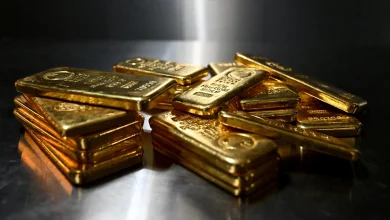
Explaining whether oil, gold, silver and copper prices rise after US attack on Venezuela, Anuj Gupta, Director at Ya Wealth, told Mint that geopolitical tension may fuel uncertainty. He expects a gap-up opening for gold, silver, copper, crude oil, and gasoline.
Gupta said COMEX gold closed at $4,345.50 per ounce and may move to $4,380 per ounce. COMEX silver may trade near $75 to $78 per ounce. Brent crude oil may move toward $62 to $65 per barrel.
Bullion prices and supply route concerns
Addressing if oil, gold, silver and copper prices rise after US attack on Venezuela, Sandeep Pandey, Co-founder of Basav Capital, told Mint the crisis has affected sea routes used by Peru and Chad, major silver exporters. This disruption may support silver prices. Gold prices may also rise due to risk concerns linked to geopolitical tension.
US confirms military operation and Maduro capture
After warnings of air strikes, the US conducted precision strikes in Venezuela. President Donald Trump confirmed the operation on Truth Social, stating that President Nicolas Maduro and his wife were captured and flown out of the country. Trump said the operation involved US military and law enforcement agencies and announced a press conference at Mar-a-Lago.Trump later said the US military caused a blackout in Caracas to support the operation. He added that no US personnel were killed and no equipment was damaged.
Oil market focus after US attack on Venezuela
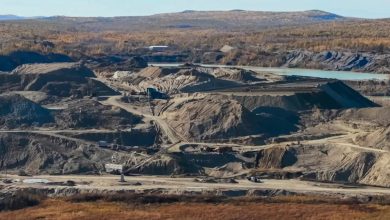
Will oil, gold, silver and copper prices rise after US attack on Venezuela also depends on oil supply conditions. Venezuela holds large proven oil reserves, but global crude prices remain near $60 per barrel. Exports have stayed limited due to US sanctions.
Reuters reported that PDVSA’s oil production and refining operations were normal after the strikes. Key oil facilities were not damaged. However, the port of La Guaira near Caracas suffered damage, though it is not used for oil operations.
US oil policy and sanctions remain
Trump said the US oil embargo on Venezuela will remain in place. He also said US oil companies would enter Venezuela to repair infrastructure and invest billions. Trump said the US would remain strongly involved in Venezuela’s oil sector during a transition period.
In December, the US announced a blockade on oil tankers entering or leaving Venezuela and seized two cargoes of crude. This led vessel owners to divert routes, increasing PDVSA’s inventories and forcing storage on tankers.
Venezuela oil production trends
Venezuela’s oil production fell to 192 million barrels in 2020, according to International Energy Agency data. Production recovered to around 5.5 to 6.3 lakh barrels per day in 2021. Output rose to 217 million barrels in 2022 and 264 million barrels in 2023 after sanctions eased under General License 44. In 2024, production reached 315 million barrels, supported by Chevron expansion and trade with India. In 2025, output peaked near 1.14 million barrels per day.
FAQs
Q1: Will oil, gold, silver and copper prices rise after US attack on Venezuela immediately?
Prices may see short-term movement due to uncertainty, but sustained gains depend on supply disruption, sanctions policy, and global demand trends.
Q2: How could US involvement in Venezuela’s oil industry affect global crude supply?
US involvement may reshape Venezuela’s oil output over time, but sanctions, infrastructure limits, and transition uncertainty mean immediate global supply changes remain unlikely in the short term.