Oil hits one-week low as investors shrug off Iran sanctions
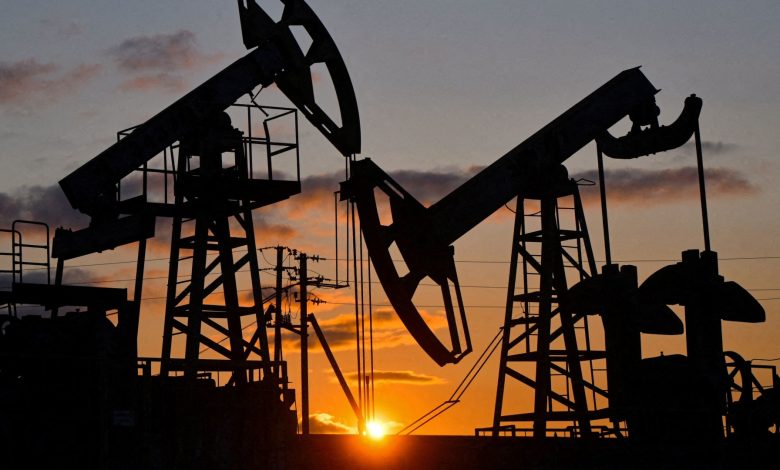
Oil prices inched up on Tuesday after Iran and Israel left the door open to a possible resumption of attacks, despite calling a halt to hostilitie.
Alexander Manzyuk | Reuters
Oil prices fell to a one-week low on Tuesday as traders shrugged off the latest U.S. sanctions threat against Iran, viewing economic pressure as posing less risk to oil supplies than a military escalation.
Brent crude futures fell 35 cents, or 0.38%, to $91.82 a barrel by 0810 GMT, while U.S. West Texas Intermediate crude was down 41 cents, or 0.48%, at $84.60. Brent crude fell to its lowest level since August 19, while U.S. West Texas Intermediate touched its weakest level since August 17.
The shift from an escalation in military conflict to economic pressure in the U.S.-Israeli war with Iran has reduced some of the oil market’s anxiety, said Saxo Bank head of commodity strategy Ole Hansen, adding that the U.S. sanctions announcement was not as forceful as the market had feared.
Iran promised to retaliate against expanded U.S. sanctions the Trump administration said would cut its economic lifeline, with Tehran expressing confidence that major trading partners would resist the Washington’s pressure campaign.
Washington warned countries to cut their business ties with Iran or risk secondary sanctions. However, the Treasury Department stopped short of actually imposing penalties. U.S. Treasury Secretary Scott Bessent declined to identify the countries that would be targeted or reveal when those penalties would take effect, saying he would instead provide them time to comply with the new directive.
While U.S. Defense Secretary Pete Hegseth said on Monday the U.S. would not rule out using military force against Iran, Washington is turning towards more economic coercion, which analysts said removed concerns about further threats to Middle Eastern oil supply because of the war.
Supply disruption risks remain
“Iran still retains the ability to respond by disrupting shipping, which continues to keep a residual premium in the oil price,” said Tim Waterer, chief market analyst at KCM.
Risks to shipping in the region remain. An oil tanker was struck on Tuesday by an unidentified projectile and disabled about nine nautical miles (16.7 km) northeast of Oman’s Ash Shishah, the United Kingdom Maritime Trade Operations said.
Just two tankers transited the key the Strait of Hormuz on Monday, for the lowest daily tally of commodity vessels since early May, with both entering the Gulf, shipping data showed.
The conflict has heightened concerns over the Strait of Hormuz, the waterway through which roughly one-fifth of global oil consumption used to typically pass before the U.S.-Israeli war with Iran began on February 28, raising fears of broader supply disruptions.
The supply disruptions have prompted countries to draw down commercial and strategic oil reserves. Elsewhere, the Novoshakhtinsk oil refinery in Russia’s southern Rostov region was damaged by a Ukrainian drone overnight and suspended its operations, the regional governor said.