DeepSeek founder’s quant fund piles into China tech IPOs
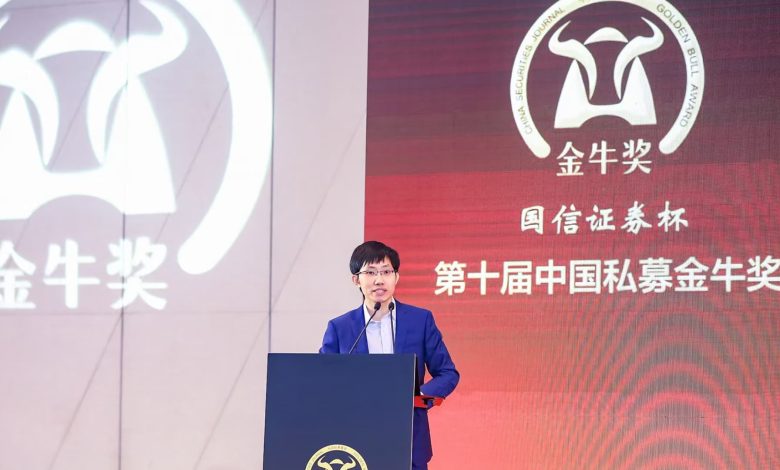
Liang Wenfeng, founder of startup DeepSeek, delivers the keynote speech during the 10th China Private Equity Golden Bull Awards on August 30, 2019 in Shanghai, China.
Vcg | Visual China Group | Getty Images
DeepSeek, the lab that put Chinese artificial intelligence on the map last January, has long been financed by High-Flyer Quant, its founder Liang Wenfeng’s hedge fund.
The fund used AI and deep learning to trade stocks for years before supplying DeepSeek with early funding and computing power.
Now, DeepSeek has turned to outside investors to fund its growing ambitions, while High-Flyer has secured allocations across some of China’s hottest hard-tech IPOs, from chips to robotics.
Pre-IPO placements – shares secured before trading begins – can deliver outsized paper gains for hedge funds, particularly when sought-after stocks rally on their debuts.
But recent volatility in AI and chip stocks exposed funds like High-Flyer to sharp drawdowns. As DeepSeek’s capital and compute needs grow, it may be unable to rely on High-Flyer, whose revenue has become “unstable,” said Rhodium Group research analyst Ciel Qi.
Beijing’s push for strategically important tech firms to list at home has created “lucrative pre-IPO investment opportunities” for funds, she said. “Maximizing returns in China’s market increasingly requires investing in line with Beijing’s strategic agenda.”
High-Flyer and DeepSeek did not respond to requests for comment.
Trading the AI volatility
The quant fund’s affiliates, Zhejiang High-Flyer Asset Management and Ningbo High-Flyer Quantitative Investment Management, have secured private placements in China’s leading memory chipmaker CXMT and robot maker Unitree Robotics, as well as companies spanning chip packaging, electronic components and renewable energy, according to CNBC’s analysis of IPO data.
CXMT was by far the two funds’ largest allocation, with a combined $26 million, or 175 million yuan, worth of pre-IPO shares, according to data compiled by Shenzhen PaiPaiWang Investment & Management, a consultancy that tracks private funds in China.
The memory chipmaker surged more than fivefold in its Shanghai debut in July, quickly becoming China’s most valuable company, and has gained another 20% since then as of Thursday.
Unitree’s IPO drew investments not only from Liang’s funds but also DeepSeek itself. The two funds were allocated a combined $5.8 million in shares, according to PaiPaiWang. Separately, DeepSeek received 2.31% of the offering as one of nine strategic investors and agreed to a 36-month lock-up period, a much longer commitment than the 12 months accepted by most strategic backers.
Unitree soared 460% the day of its IPO in Shanghai last week, but has retreated some 27% since then, according to LSEG data. Unitree’s recent slump has raised concerns about how Beijing may boost emerging strategic sectors without stoking a speculative frenzy.
A global AI-chip rout spilled into the momentum-driven quant trades in July, when eight of High-Flyer’s nine products recorded losses, according to state-backed media. Performances at Chinese quant funds have rebounded in August.
‘Financial bonus’ for riding Beijing’s agenda
Nearly half of the two High-Flyer affiliates’ allocations this year went to semiconductors and their supply chain, according to available data from PaiPaiWang. In addition to CXMT, they include advanced-packaging specialist SJ Semiconductor and chip-equipment and testing companies.
While High-Flyer’s pre-IPO picks have largely aligned with China’s national priorities, its own priority is still potential investment upside, industry experts say.
“DeepSeek’s founding team, including Liang, are still traders at heart and inclined to chase maximum upside,” said Ke Zong, portfolio manager at a Shanghai-based hedge fund.
High-Flyer traded Unitree as an investable asset, while DeepSeek invested in the humanoid robot maker as a strategic partner, said Hutong Research tech analyst Sigrid Wang.
“There’s a genuine distinction between the quant funds seeking returns and DeepSeek selectively using its corporate balance sheet to build strategic relationships around the future AI stack,” Wang said.
As Beijing tries to marshal private investment into AI, robotics and other priority sectors, the investments have become “a kind of financial bonus for playing a role in boosting China’s broader tech sector,” said Kyle Chan, a fellow at the Brookings Institution.
Having star backers like DeepSeek or Liang’s quant funds could be a powerful signal, “bringing attention and legitimacy to the IPO,” Chan said, giving its valuations a potential extra lift.
Beijing’s endorsement of DeepSeek and Liang has also helped open doors and improved their access to marquee listings.
Policy support improves a company’s commercial prospects and lowers some of the risks associated with long-term technology investment, said Wang at Hutong Research. While Liang’s ties with the government have strengthened, his tech bets appear to be a convergence with Beijing’s priorities rather than state-directed, Wang noted.
The Deepseek logo appears on a smartphone screen in this illustration photo in Reno, United States, on January 2, 2026. (Photo Illustration by Jaque Silva/NurPhoto via Getty Images)
Nurphoto | Nurphoto | Getty Images
Funding DeepSeek’s AGI ambition
DeepSeek’s decision to open up to external funding for the first time this year was seen as a sign of AI’s ballooning capital demands, and mounting pressure to retain talent amid intensifying competition.
DeepSeek has become “too large and capital-intensive to remain simply a side project of the quant fund,” said Wang, noting that DeepSeek’s first funding round of 50 billion yuan ($7.4 billion) amounted to more than 60% of High-Flyer’s 80 billion yuan in assets.
The AI lab is reportedly in talks with investors to raise at least another $7.4 billion in a second funding round that would value it at $74 billion, according to the Wall Street Journal. Investors in the first round included investment firms Monolith Management, Tencent, JD.com, NetEase, and battery maker Contemporary Amperex Technology.
The follow-on round is expected to close by the end of August. Liang briefly paused fundraising in July after remarks from a meeting with investors were leaked online, including comments that China’s gap with the U.S. in AI mainly lies in constraints in computing resources.
Investors are also betting on a future DeepSeek listing in the mainland, said Wayne Shiong, managing partner at Argo Venture Partners, as the startup risks an exodus of senior engineers without financial incentives to stay.
Liang’s stakes in DeepSeek have made him the world’s richest AI founder as of July, according to Bloomberg, leaving him with far greater control than many U.S. founders, who have diluted ownership to secure funding for computing power.