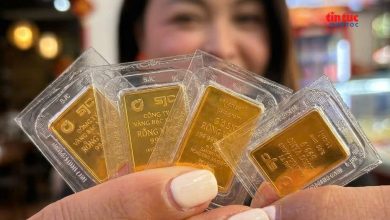
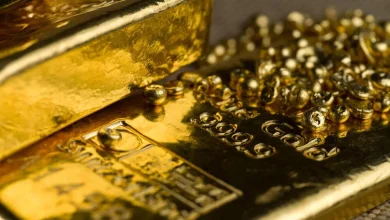
HK gold market hinges on policy planning as firms seek own storage facilities, Christopher Hui says
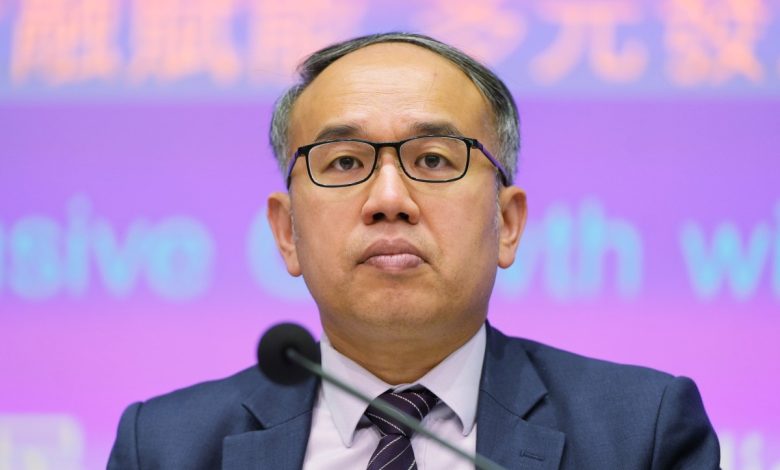
With more financial institutions expressing their hopes of establishing their own gold storage facilities, Hong Kong’s gold market development will inevitably be tied to policy planning, said Christopher Hui Ching-yu, Secretary for Financial Services and the Treasury of Hong Kong.
Hui noted that the government’s role is not only to address market problems, but also to act as a “market operator”. He said the settlement system is only one part of the gold value chain, highlighting that the government has already planned to build a precious-metals storage facility at the Hong Kong International Airport, and gold development will be one of the key focuses in Hong Kong’s first Five-year plan, which will be announced on September 16.
He pointed out that Switzerland is currently the largest gold refiner and provider, and with Hong Kong launching its first trial operation of the gold central clearing and settlement system in July, the government will further strengthen Hong Kong’s gold storage and settlement system for Asia. Hui also noted that numerous refining companies from both mainland China and overseas are already hoping to come to Hong Kong.
Another key focus of the plan is to expand Hong Kong’s financial strengths and extend its benefits to the broader society, Hui added, providing clearer direction on consolidating the city as an international financial hub, such as expanding the strengths in financing, risk management, and fund management.
Meanwhile, Hui said Hong Kong is implementing various tax reforms to attract companies to the city. Since the company re-domiciliation regime took effect, he said the government has received 70 applications, two-thirds of which have been approved, with many from insurance companies. As the largest cross-border wealth management center, Hui said Hong Kong has seen the number of family offices rise from 1,600 to 3,000.
In addition, Hui said Hong Kong will further encourage various overseas enterprises to use the yuan not only for trade financing but also for other forms of financing.
He noted that this year is the right time to advance yuan internationalization, given the People’s Bank of China’s plan to expand its yuan business facility in Hong Kong to 500 billion yuan (HK$583 billion), the fact that yuan financing rates are currently lower than US-dollar funding costs, and Hong Kong’s position as a trusted offshore yuan hub.