Treasury yields fall as investors monitor U.S.-Iran war escalation
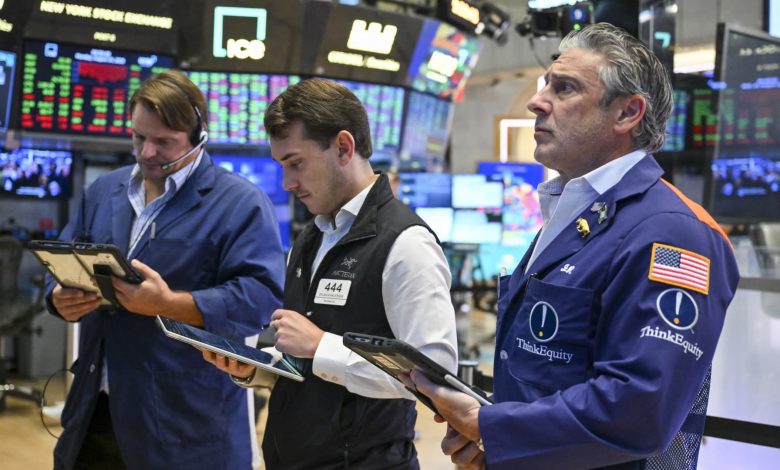
Treasury yields were marginally lower on Monday, as investors monitored developments in the Middle East and comments made at the Federal Reserve’s annual symposium in Jackson Hole, Wyoming.
At 2:37 a.m. ET, the yield on the benchmark 10-year Treasury note was 1 basis point lower at 4.712%. The yield on the longer-dated 30-year Treasury was flat at 5.21%, while the 2-year Treasury yield fell 2 basis points to 4.327%.
One basis point equals 0.01%. Bond prices move inversely to yields.
On Friday, the 2-year Treasury yield — which is the most sensitive to policy expectations — jumped more than 12 basis points to settle at around 4.354%, after Fed Chair Kevin Warsh struck a hawkish tone at Jackson Hole.
Markets are now pricing in a higher chance of an interest rate hike at the Fed’s next Federal Open Market Committee meeting in September. According to the CME’s FedWatch tool, money markets now see a 59.9% chance the central bank will raise rates next month, up from 35.4% the day before Warsh gave his Jackson Hole address.
In a Monday morning note, strategists at Barclays said their economists were now anticipating two 25-basis-point hikes this year, one in September and another in December.
“Kevin Warsh signaled a willingness to hike rates if inflation does not move toward target, and highlighted ‘concerning’ inflation trends over the past year,” they said.
But Mark Haefele, chief investment officer at UBS Global Wealth Management, said in a note on Monday that his team’s base case remains that “steady progress in underlying inflation will allow the Fed to keep rates unchanged this year.”
“Although the risk of a September hike has increased, the latest sequential inflation data remain consistent with further disinflation,” he said. “For investors, this reinforces the case for locking in yields.”
Investors will be monitoring a swathe of economic data releases this week for further clues on the trajectory of U.S. monetary policy, including the ISM Manufacturing PMI and JOLTS data due Tuesday, and non-farm payrolls figures set for release on Friday.
The Iran war also remains in focus, after the U.S. launched strikes on Iranian targets for the first time in weeks overnight. Tehran said it had attacked U.S. bases in Jordan in retaliation.
Brent crude oil futures jumped almost 3% on Monday morning after the flare-up in hostilities, with prices last seen trading up around 2% at $89.84 a barrel.
U.S. West Texas Intermediate oil futures also moved higher, adding 1.68% to trade at $84.80 per barrel by 3:37 a.m. ET.