Why turmoil in the bond market could make borrowing more expensive
WASHINGTON (TNND) — Market concerns about a flare-up in the war with Iran, mounting government debt around the world and stubborn inflation have fueled a chaotic week in global bond markets, pushing up yields that feed into higher borrowing costs for American consumers.
Treasury yields, the interest rate investors in exchange for buying and holding U.S. debt, are approaching some of their highest levels in years amid a global bond sell-off. Those yields are used by lenders as a benchmark for setting interest rates for loans like mortgages and auto loans, making it more expensive for consumers to borrow money.
Investors typically demand higher interest rates to buy bonds during times of uncertainty about the direction of inflation. The turmoil in the market jumped after new tit-for-tat strikes between the U.S. and Iran, driving up oil prices that have been a major contributor to inflation.
Mortgage rates are one of the most visible ways bond yields hit consumers. Rates, which are closely tied to yields on the 10-year Treasury, have been inching higher since the war with Iran started and are approaching their highest levels in a year. The average rate on a 30-year, fixed-rate mortgage was 6.71% as of Thursday, according to mortgage buyer Freddie Mac.
Elevated mortgage rates add to the already-high costs of buying a home, squeezing out many first-time buyers who can’t afford to buy homes that have continued to go up in asking price despite four years of slumping sales.
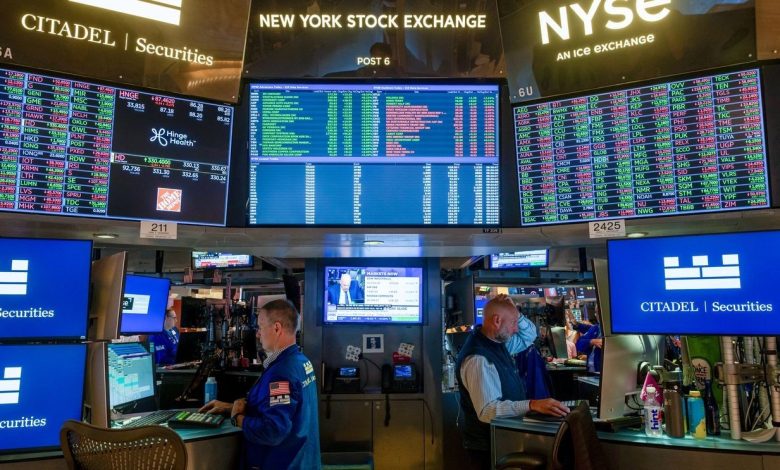
Traders work on the floor of the New York Stock Exchange during morning trading on July 30, 2026 in New York City. (Photo by Michael M. Santiago/Getty Images)
The effects can also add to costs for consumers who aren’t trying to buy a home. Higher bond yields also affect the rental market, making it more expensive for developers to build more units and putting upward pressure on rents. Asking rents have climbed at the fastest rate since 2022 this year as new construction slows and more renters are forced to stay put instead of buying a home.
Americans in the market for a new vehicle could also face higher costs if the Treasury sell-off continues. Buying a car has already become more expensive after pandemic-era supply chain woes and have faced additional pressure from President Donald Trump’s tariffs.
Auto loans track medium-term Treasury yields like the five-year, which are at their highest level since the start of 2025. Higher interest rates are pushing more buyers to take on longer loans to afford their monthly payments, creating a scenario where many owners owe more on their vehicle than it is worth.
The additional squeeze on borrowers comes as progress on taming inflation has been tough for the Federal Reserve to come by, building pressure on the central bank to raise its benchmark interest rate later this year.
This week’s rise in oil prices amid renewed fighting with Iran is compounding concerns about inflation and raising questions about how long the Fed will be able to “look through” the energy shock. There is growing pressure inside the central bank that officials will need to raise rates to get a handle on inflation, a scenario chairman Kevin Warsh acknowledged in his speech at the economic symposium in Jackson Hole.
Markets believe the Fed will raise rates at some point this year, but the timing of the increase is unclear. Odds of a hike coming out of the September meeting dropped from 70% to a coin flip after Fed governor Christopher Waller said he would be inclined to hold off unless inflation data comes in higher than expected.
Higher rates from the Fed would also raise costs for consumers to borrow money, adding to interest rates on credit cards and other kinds of debt that are more sensitive to changes in short-term interest rate. Raising rates helps the Fed contain inflation by slowing economic activity through higher borrowing costs but adds to the challenge facing consumers who need to borrow money to keep up with higher prices.
A continued run in the bond market could also hit the stock market that has climbed to new highs over the last two years and helped support consumer spending and the artificial intelligence build-out that is a major source of growth for the U.S. economy.
Other countries’ bonds are also a part of the sell-off as investors grow increasingly concerned about growing levels of government debt, stubborn inflation and minimal indications lawmakers plan to address ballooning budget deficits.
Treasury Secretary Scott Bessent has brushed off concerns about the rise in yields, arguing other countries have seen bigger increases.
“I don’t think we are in any kind of a dire situation,” Bessent told Fox Business at the G-20 meeting on Tuesday. “The U.S. has the best performing bond market. What happens over a month doesn’t matter.”